
Architecture and Design Principles of Decentralized IoT Platforms
As educational environments continue evolving under the influence of the Internet of Things (IoT), the shift toward decentralized platforms has become a major focus for researchers and technologists. Modern classrooms are now defined by adaptive learning systems, real-time data interactions, smart devices, and distributed networks. Centralized architectures have proven limited in scalability and security, prompting the rise of decentralized IoT infrastructures designed to handle these emerging requirements.

Modular Architecture and Data Flow of Decentralized IoT Platforms
In decentralized IoT ecosystems, data processing and decision-making occur at multiple nodes rather than being directed through a single central hub. This approach enhances performance, reduces latency, and mitigates the risk of single-point failures. Smart classrooms benefit directly from these attributes, as connected sensors, learning devices, and monitoring tools can exchange data seamlessly while maintaining operational independence.
| Component | Role in Decentralized IoT Platform | Key Benefits |
|---|---|---|
| Edge Nodes | Perform on-device processing and local analytics | Reduces bandwidth usage and enhances real-time decision making |
| Blockchain Layer | Ensures transparent and immutable record management | Improves trust and traceability for digital credentials |
| Distributed Middleware | Supports connectivity and protocol translation between devices | Promotes interoperability and seamless integration |
| Cloud Interface | Provides broader data aggregation and AI-driven insights | Offers scalability and advanced analytics capabilities |
This modular design underlines the principle of *local intelligence, global coherence*, ensuring that each classroom node contributes independently while remaining aligned with institutional objectives.
Core Design Principles: Security, Scalability, and Interoperability
Decentralized IoT systems rely on deliberate design principles to maintain trust and functionality in dynamic educational environments. Each principle not only strengthens infrastructure reliability but also encourages cross-platform collaboration among smart educational tools and digital learning services.
Key Principles Driving Effective IoT Decentralization:
- Security & Privacy: Emphasizing encryption, distributed identity management, and token-based access to protect sensitive academic data.
- Scalability: Enabling seamless addition of new IoT devices without compromising performance through peer-to-peer communication and dynamic load balancing.
- Interoperability: Employing open protocols like MQTT, CoAP, and REST APIs to facilitate smooth interactions between diverse hardware and software ecosystems.
- Resilience & Redundancy: Implementing fault-tolerant architecture where device networks continue operation despite localized disruptions.
- Ethical Data Governance: Prioritizing transparency and compliance with global educational data regulations to foster responsible digital environments.
The strategic blend of these design principles creates a reliable digital ecosystem capable of supporting the next wave of personalized, connected, and secure smart learning experiences across classrooms worldwide.
Blockchain Integration for Secure Data Sharing in Smart Classrooms
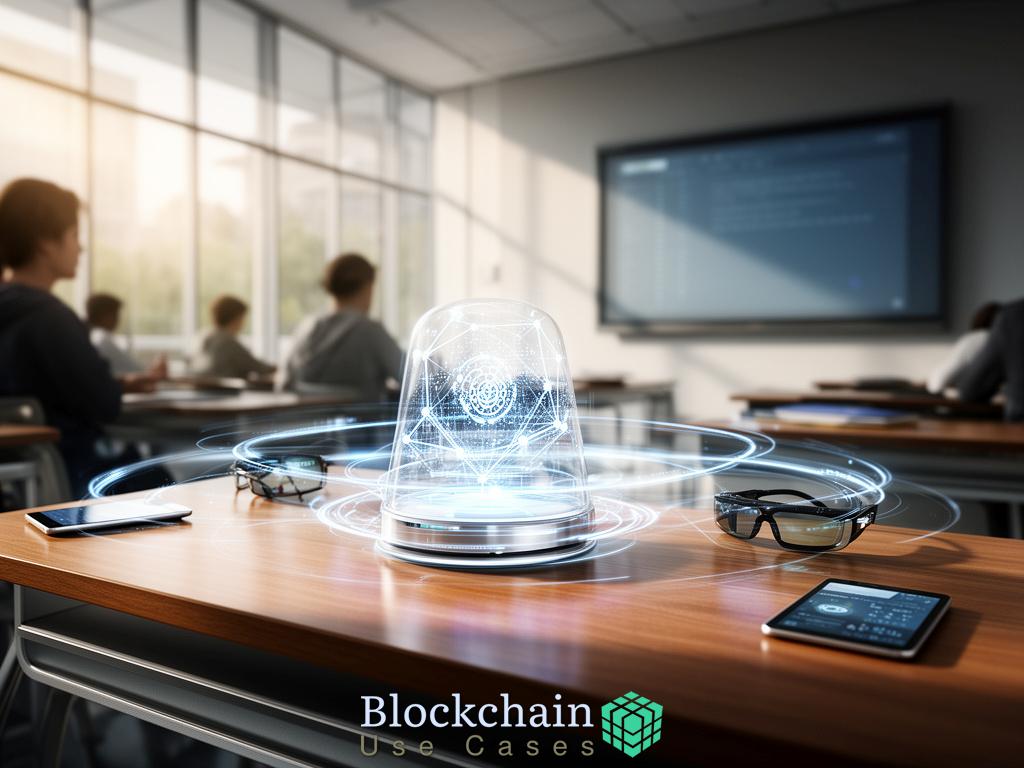
The transition to decentralized IoT platforms in modern educational environments has introduced a new paradigm for managing data, collaboration, and real-time learning analytics. As institutions seek to enhance transparency, ensure privacy, and maintain data integrity, blockchain technology has emerged as a transformative layer within the architecture of smart classrooms. By combining distributed ledger systems with IoT-based educational tools, blockchain ensures that every interaction — from attendance tracking to performance evaluation — is recorded, verified, and securely shared across trusted networks.
Decentralized Trust Through Blockchain-Enabled Ecosystems
In a typical smart classroom network, various IoT devices continuously collect and exchange data related to learner engagement, device usage, and environmental conditions. Integrating blockchain into this structure enables tamper-proof verification of data transactions among connected nodes. This decentralized verification eliminates the need for a central authority, empowering educational institutions with an autonomous trust framework. Each record created within a blockchain ledger becomes immutable, safeguarding against unauthorized modifications while providing complete transparency in educational interactions.
Unlike traditional centralized databases that are prone to breaches or manipulation, a blockchain-based IoT ecosystem validates every transaction through decentralized consensus mechanisms such as proof-of-authority or proof-of-stake. The result is a scalable and trustworthy data-sharing network that preserves the authenticity of educational records while enabling controlled data access for students, teachers, and administrative systems. Furthermore, smart contracts automate validation processes, ensuring real-time synchronization of lesson plans, attendance, and assessments without compromising confidentiality.
Enhancing Data Sovereignty and Ethical Learning Analytics
Beyond security, blockchain integration amplifies the notion of data sovereignty within educational technology. Students and educators gain more control over their digital identities and learning data, deciding who can access, share, or analyze their information. In doing so, decentralized networks adhere to global privacy standards such as GDPR and FERPA, reinforcing ethical and compliant data governance practices. Each participant in the system, whether a device or a user, is identified through cryptographic keys, making unauthorized data usage virtually impossible.
This decentralization not only fosters equitable data ownership but also lays the foundation for intelligent analytics that operate with full traceability. Blockchain’s immutable records can feed AI-driven algorithms to develop adaptive curriculum recommendations, while ensuring that the provenance of every dataset is traceable. As educational systems evolve toward more personalized and interconnected learning experiences, blockchain-integrated IoT frameworks will play a key role in maintaining secure yet accessible learning infrastructures across global institutions.
Ultimately, the fusion of blockchain and decentralized IoT technologies is redefining digital trust in education. It enables a future where smart classrooms operate not merely as connected spaces, but as autonomous networks of reliability, accountability, and innovation — anchoring the next generation of educational technology on verified truth and secure collaboration.
Interoperability and Scalability in Education-Centric IoT Networks
As educational ecosystems increasingly rely on connected devices and real-time analytics, interoperability and scalability have emerged as critical enablers of success for decentralized IoT infrastructures in academic environments. The ability of these systems to orchestrate seamless communication among diverse technologies while expanding effortlessly to accommodate evolving learning demands defines the next frontier of smart classroom innovation. In this dynamic landscape, interoperability ensures that devices from multiple manufacturers and platforms exchange information coherently, while scalability guarantees that educational institutions can expand their digital footprint without overhauling their architectural frameworks. Together, these capabilities allow decentralized IoT networks to evolve in alignment with pedagogical objectives and technological advancements.
Interoperability as the Foundation of Connected Learning Ecosystems
The concept of interoperability extends beyond technical compatibility; it represents the unification of fragmented learning systems into a cohesive and cooperative ecosystem. Modern classrooms are populated by varied IoT-based tools — ranging from biometric attendance sensors to AI-enhanced interactive boards — all generating critical streams of data. In a decentralized framework, interoperability ensures that this data converges meaningfully across networks through open communication protocols and standardized data models.
Effective implementation of interoperability strategies relies on technologies such as RESTful APIs, MQTT, CoAP, and semantic metadata exchanges, which enable heterogeneous devices and applications to operate as a single intelligent network. This approach dismantles data silos, promoting fluid collaboration between educational analytics platforms, cloud interfaces, and blockchain-secured databases. Moreover, interoperability enhances pedagogical flexibility, empowering institutions to integrate emerging tools without disrupting existing infrastructures. The outcome is a system that nurtures innovation while preserving continuity, where the value of shared educational data exponentially increases through interconnected intelligence.
Scalability as a Catalyst for Sustainable Digital Expansion
While interoperability focuses on communication, scalability addresses the ability to support growth and transformation. In decentralized IoT architectures, scalability is achieved through distributed processing, virtualization, and modular node design, each working collectively to ensure that increased device volumes or data loads do not compromise performance. Educational institutions experience continuous expansion not only in student populations but also in the scope of digital resources, and a scalable infrastructure must accommodate these fluctuations intuitively.
The decentralized nature of such platforms inherently supports linear scalability by allowing new edge nodes, classrooms, and devices to join the network autonomously. Instead of depending on centralized control, these nodes contribute their processing and storage capacities locally, thereby reducing latency and improving system responsiveness. Furthermore, the integration of blockchain and AI-driven middleware enhances scalability by automating load distribution and orchestration, ensuring that resource allocation remains balanced throughout the educational network.
What distinguishes scalable decentralized IoT frameworks in education is their ability to evolve alongside technological trends without massive reinvestments. Institutions adopting such architectures benefit from future-proof learning infrastructures, where adaptations to new technologies—such as 6G connectivity or quantum-ready algorithms—become smooth, incremental transitions rather than disruptive overhauls.
In today’s education-driven IoT innovation landscape, interoperability and scalability jointly shape an era where connectivity and growth coexist harmoniously. Their combined influence transforms smart classrooms from static technology-enabled spaces into dynamic ecosystems of continuous improvement and collaboration. As decentralized platforms mature, these principles will remain central to building educational infrastructures capable of supporting the limitless evolution of digital learning worldwide.
Ethical and Privacy Considerations in Decentralized Educational Systems
As decentralized IoT systems increasingly underpin the digital foundation of smart classrooms, ethical and privacy considerations have become pivotal in shaping responsible innovation. The transformation toward distributed educational infrastructures introduces both new opportunities and profound challenges in balancing data utility, learner autonomy, and institutional accountability. In a realm where sensors, analytics platforms, and intelligent networks interact continuously, safeguarding ethical data practices is no longer optional—it’s essential for maintaining public trust and educational integrity.
Responsible Data Stewardship and Learner Autonomy
The shift to decentralized educational ecosystems grants students and educators stronger ownership over their digital identities, yet it also demands structured principles for responsible data stewardship. Every transaction within a decentralized IoT classroom—whether captured via biometric sensors, academic dashboards, or adaptive learning tools—constitutes an interaction with personal data that must be ethically managed.
Ensuring compliance requires the implementation of transparent governance frameworks, where consent management, data anonymization, and participatory rights become embedded functions of the network rather than afterthoughts. Students, in particular, should maintain full authority over their data trajectories—deciding when, how, and to what extent their information is shared across institutional and third-party systems. This model not only reinforces privacy-by-design philosophies but also redefines the relationship between learners and digital infrastructures as one rooted in mutual respect and clarity.
Algorithmic Fairness, Bias, and Trust Mechanisms
Artificial intelligence and machine learning algorithms form the cognitive core of decentralized educational platforms. These systems assist instructors and administrators in generating learning insights and advancing personalization, yet they also pose risks of algorithmic bias and opaque decision-making. Ethical AI integration demands that educational systems be designed around fairness, explainability, and auditability principles.
Transparency mechanisms—such as distributed logging on blockchain-based ledgers—can ensure that algorithmic recommendations, evaluations, and performance metrics remain traceable. This transparency not only strengthens accountability but empowers all stakeholders to challenge potential biases in data-driven conclusions. The next generation of smart classrooms must foster a dual framework of innovation and ethics, where technology enhances equity rather than inadvertently amplifying disparities.
Key Pillars Supporting Ethical Decentralization in Smart Classrooms:
- Data Autonomy: Empowering learners to control access and usage permissions dynamically.
- Transparent AI Governance: Implementing interpretable and certifiable machine learning models.
- Privacy-by-Design: Embedding encryption, anonymization, and zero-knowledge proofs into early architectural stages.
- Distributed Accountability: Leveraging blockchain consensus for tamper-evident reporting and monitoring.
- Regulatory Compliance: Aligning with GDPR, FERPA, and emerging global data protection frameworks.
Ethical Risk Management and Institutional Responsibility
While decentralization decentralizes control, it also redistributes responsibility across multiple stakeholders. Institutions must therefore establish ethical oversight bodies capable of continuously auditing decentralized networks for compliance and integrity. These committees should evaluate data practices through multidimensional lenses—considering technological procedures, psychological impacts on learners, and sociocultural implications of automated decisions.
The following table outlines a comparison between centralized and decentralized models with respect to ethical and privacy guarantees:
| Aspect | Centralized System | Decentralized System |
|---|---|---|
| Data Control | Institution-controlled databases | User-governed nodes with cryptographic access |
| Transparency | Limited auditability | Immutable, chain-based verification |
| Privacy Protection | Vulnerable to single-point breaches | Distributed encryption and consent management |
| Ethical Oversight | Central committees with delayed response | Real-time decentralized compliance validation |
| Scalability of Compliance | Complex and time-consuming | Automated through smart contracts |
Ultimately, the ethical trajectory of decentralized educational technologies will depend on the collective willingness of educators, policymakers, and technologists to embrace integrity-driven innovation. The future of IoT-based smart classrooms lies not solely in the power of connectivity, but in the conviction that intelligent systems must always preserve human dignity, trust, and the right to privacy.
Future Prospects and Innovation Trends in Smart Classroom Technologies
The educational landscape is undergoing a rapid transformation driven by decentralized IoT infrastructures, which are redefining how knowledge is delivered, managed, and personalized. With advancements in blockchain, artificial intelligence, and edge computing, the future of smart classrooms promises unprecedented levels of autonomy, adaptability, and security. As technological and pedagogical boundaries continue to blur, the next generation of educational systems will no longer merely integrate digital tools—they will evolve into self-learning ecosystems that interpret data ethically and respond dynamically to learners’ needs.
Emerging Technologies Empowering Decentralized Smart Classrooms
Decentralized education systems are integrating cutting-edge technologies that work synergistically to enhance engagement, optimize operations, and foster innovation. The convergence of IoT and distributed computing models has already proven essential in creating resilient networks, but upcoming developments are pushing these boundaries even further. Technologies such as AI-driven edge analytics, quantum-resilient encryption, and extended reality (XR)-based sensory learning are poised to redefine how students interact with digital environments.
AI-driven learning assistants integrated with blockchain verification systems will enable personalized, verifiable educational journeys. Students will experience adaptive learning experiences powered by real-time data derived from IoT sensors within classrooms. Meanwhile, renewable energy-powered edge nodes will contribute to sustainable education infrastructure, reducing reliance on centralized servers. These combined innovations ensure that decentralized platforms not only remain future-proof but also align with global sustainability and inclusivity goals.
Key Innovation Areas Shaping the Future of Smart Classrooms:
- AI-Powered Predictive Learning: Algorithms capable of predicting learning patterns and adapting to individual student needs in real time.
- Quantum-Safe Cryptography: Future-ready data protection ensuring privacy and integrity amid quantum computing advancements.
- Augmented and Virtual Immersive Classrooms: Realistic simulations and tactile learning environments enhanced by IoT-connected XR tools.
- Decentralized Credentialing Systems: Blockchain-based digital diplomas with verifiable authenticity accessible globally.
- 5G and Beyond Connectivity: Lightning-fast communication enabling immersive collaboration across decentralized educational frameworks.
Human-Centric Design and the Role of Intelligent Interfaces
As smart classroom technologies evolve, one critical focal point will be human-centered integration—ensuring that technology supplements rather than overshadows learning. Intelligent interfaces powered by decentralized AI models are being designed not only to interpret voice and gesture inputs but to emotionally interpret learner engagement through biometric data analytics. The result is a multi-sensory educational experience where technology acts as an intuitive collaborator rather than a tool.
Additionally, data sovereignty and ethical governance will remain foundational. Future decentralized platforms are expected to include decentralized identity (DID) frameworks, allowing each learner to maintain lifelong academic records and digital reputations that transcend institutional boundaries. This paradigm shift will empower students to own, share, and monetize their learning achievements securely in an interconnected global marketplace of education.
| Aspect | Current Framework | Future Decentralized Trend |
|---|---|---|
| Data Management | Institutionally hosted storage with limited portability | Distributed ledgers ensuring lifelong learner record ownership |
| AI Interaction | Cloud-based adaptive systems | Edge-driven AI with individual device learning intelligence |
| Connectivity | Traditional Wi-Fi and local networks | 5G/6G-supported mesh networks with federated computing |
| Assessment Models | Centralized evaluation systems | Transparent blockchain-assisted, competency-based assessment |
Global Innovation Landscape and Institutional Adaptation
The global shift toward decentralized IoT ecosystems in education has ignited a wave of cross-disciplinary collaboration among technology companies, universities, and policy institutions. Emerging pilot projects in Asia, Europe, and North America are experimenting with decentralized classroom nodes connected through blockchain-based microgrids to promote digital inclusion and equitable data distribution. Meanwhile, governments are recognizing the growing need for interoperable standards that bridge local policy frameworks with global education networks.
Future innovation will not only depend on technological progress but also on governance frameworks that balance openness with regulation. Educational institutions that embrace these trends early will establish a strategic advantage by offering flexible learning models, real-time curriculum updates, and verifiable outcome analytics. As the convergence of IoT, AI, and blockchain continues, smart classrooms are transitioning from experimental spaces into autonomous learning ecosystems—defined by trust, transparency, and transformative connectivity.
Ultimately, the fusion of decentralized platforms with ethical and human-focused design will define the future of intelligent learning environments. The upcoming decade promises a revolution in educational technology—one that empowers individuals, enhances inclusivity, and establishes education as a truly borderless and continuously evolving experience.