
Blockchain-Based Models for Sustainable Land Financing
The global push for environmental sustainability is redefining how land resources are managed and financed. Traditional models often encounter barriers such as bureaucratic inefficiency, opaque funding flows, and limited access for small stakeholders. Enter blockchain technology — a disruptive force that promises to address these core challenges through transparency, traceability, and decentralization. By integrating blockchain-based systems into land use financing, investors and communities can collaborate with renewed trust and measurable impact.

Smart contract technology is revolutionizing financing mechanisms in sustainable land management. These self-executing contracts automatically enforce agreements between investors, landowners, and environmental agencies without intermediaries. The transparency of blockchain ensures that every transaction — from land lease agreements to financial disbursements — is recorded immutably, fostering confidence among stakeholders.
In this model, digital tokens or assets can represent land ownership or project shares, promoting fractional investment opportunities for individuals and organizations. This inclusivity enables global participation in local environmental projects while enhancing liquidity in land-based assets.
Beyond traditional financial instruments, tokenization introduces a new paradigm in land-based sustainability efforts. By converting physical assets such as forest areas or agricultural zones into digital tokens, blockchain democratizes access to financing for sustainable projects. Token buyers become stakeholders in sustainability, with smart contracts ensuring that funds flow only to projects meeting pre-defined environmental benchmarks.
Moreover, blockchain establishes a verifiable chain of accountability, allowing regulators, NGOs, and investors to track the social and environmental performance of each project. This creates a more credible and measurable impact finance system that was previously elusive.
Comparison of Traditional vs. Blockchain-Based Land Financing Models:
| Criteria | Traditional Financing | Blockchain-Based Financing |
|---|---|---|
| Transparency | Limited; often centralized and opaque | High; all transactions visible on immutable ledgers |
| Accessibility | Restricted to institutional investors | Open to global participants and micro-investors |
| Transaction Costs | High due to intermediaries | Reduced through automation and peer-to-peer models |
| Accountability | Difficult to monitor environmental outcomes | Directly trackable via smart contract metrics |
Despite the promise, several challenges remain — regulatory ambiguity, scalability issues, and the need for standardized protocols stand out. However, as governments and private sectors increasingly recognize the potential of blockchain for sustainability, initiatives are being introduced to establish trust frameworks and compliance guidelines.
Emerging models are integrating AI-driven data validation and IoT-enabled environmental sensors with blockchain to ensure accurate land monitoring and sustainable use tracking. These technological synergies may soon enable a fully traceable, automated system for sustainable land financing — securing both financial growth and ecological preservation.
Key Components Driving Blockchain Adoption in Land Financing:
- Enhanced transparency and traceability of financial flows
- Democratized investment through fractional token ownership
- Real-time environmental impact tracking
- Automated compliance via smart contract governance
In essence, the movement toward blockchain-based sustainable land financing represents more than just technological innovation — it signifies a global shift toward accountability, inclusivity, and environmental stewardship. As this ecosystem matures, it holds the potential to reshape how humanity values and finances the planet’s most essential asset: land.
Enhancing Transparency in Environmental Project Funding
As sustainability initiatives gain momentum across the globe, one recurring challenge continues to compromise progress — the lack of transparency in environmental funding. Traditional reporting mechanisms, often fragmented and reliant on manual data inputs, make it difficult to ensure that financial resources reach their intended purposes. In this opaque landscape, blockchain technology emerges as a transformative tool, offering unparalleled clarity, traceability, and stakeholder trust.
Transparency in sustainable land financing is not merely a policy aspiration — it is a prerequisite for accountability and investor confidence. Blockchain’s decentralized ledger technology ensures that every transaction, from donations to large-scale investment flows, is immutably recorded and accessible to all authorized parties. This revolutionizes auditing processes, removing the dependence on intermediaries that can obfuscate or delay critical information.
Through this mechanism, stakeholders — including regulators, developers, and civil society — gain instant visibility into how funds are allocated and utilized. Such real-time access to verifiable data creates a system where trust is embedded into the very structure of financial operations. It also mitigates the risks associated with mismanagement and fraudulent reporting, both of which have historically undermined environmental funding efforts.
The integration of blockchain-based platforms with IoT and AI-enhanced sensors is transforming how environmental projects are monitored and reported. Each investment or land-use transaction generates a digital footprint that can be linked with satellite imagery, ground sensors, or field data. These data points are automatically validated through smart contracts, creating a self-auditing ecosystem that highlights performance and compliance in near real-time.
This synergy enables investors and policymakers to not only track financial transactions but also verify environmental outcomes, such as soil regeneration, forest preservation, or carbon sequestration. By linking economic incentives to verified results, blockchain-driven systems are fostering a new era of performance-based funding — where every dollar spent can be traced to a measurable environmental benefit.
To achieve credible transparency in sustainable financing, emerging blockchain platforms are utilizing several interlocking mechanisms that streamline oversight and data accuracy. Below are some essential components defining this transformation:
- Immutable Record-Keeping: Each transaction and environmental impact report is stored on tamper-proof distributed ledgers, ensuring unalterable traceability.
- Automated Data Verification: Integration of IoT devices ensures that environmental metrics are validated before any financial release occurs.
- Open Access Dashboards: Public or semi-public dashboards enable communities, NGOs, and investors to observe project progress transparently.
- Smart Contract Triggers: Pre-defined environmental milestones determine financial disbursements, reinforcing accountability at every step.
By leveraging these mechanisms, blockchain-based systems are not only reducing corruption risks but also incentivizing accurate and ethical reporting practices. The shift from paper-based auditing to encrypted, automated validation has the potential to redefine public trust in environmental project funding.
To comprehend the structural difference blockchain brings to transparency, the following table summarizes key contrasting features between legacy frameworks and distributed-ledger-based funding systems:
| Aspect | Conventional Environmental Funding | Blockchain-Enabled Funding |
|---|---|---|
| Data Accessibility | Fragmented; restricted to financial intermediaries | Unified and accessible to all approved stakeholders |
| Audit Efficiency | Dependent on manual data collation | Instant automated verification via smart contracts |
| Risk of Misallocation | High due to opaque reporting channels | Significantly reduced through traceable on-chain transactions |
| Stakeholder Trust | Variable, built on traditional reputational systems | Strengthened by verifiable digital transparency |
In conclusion, blockchain’s transparency-enhancing capabilities are setting a new standard for ethical and efficient environmental project funding. With each verified transaction and milestone, this technology is not simply reshaping how funds flow — it is reshaping how societies perceive accountability in sustainability. As adoption grows, the line between financial empowerment and ecological preservation continues to blur, opening the door to a truly transparent era of sustainable development.
Decentralized Verification of Land Use Outcomes
The evolution of sustainable land use financing is rapidly accelerating through blockchain-enabled decentralization, marking a pivotal transformation in how environmental outcomes are verified and validated. For decades, progress in land conservation and climate resilience projects has been hindered by opaque reporting systems and unreliable data verification. With blockchain at the core, however, these inefficiencies are giving way to a model rooted in distributed verification and immutable record-keeping. Decentralized verification ensures that the success of any environmental or land-use project can no longer rest solely on the claims of a single institution—it must be substantiated by data integrity embedded across a network of trusted participants.
In the context of sustainable land use, decentralized verification transforms the traditional, hierarchical validation process into a synchronized, multi-stakeholder ecosystem. Each participant—from farmers and local cooperatives to government regulators and investors—interacts with a unified ledger, where every environmental milestone is logged transparently. What makes this system revolutionary is the elimination of subjective reporting: improvements in soil quality, forest density, or carbon reduction can be confirmed through verifiable digital evidence stored on the blockchain.
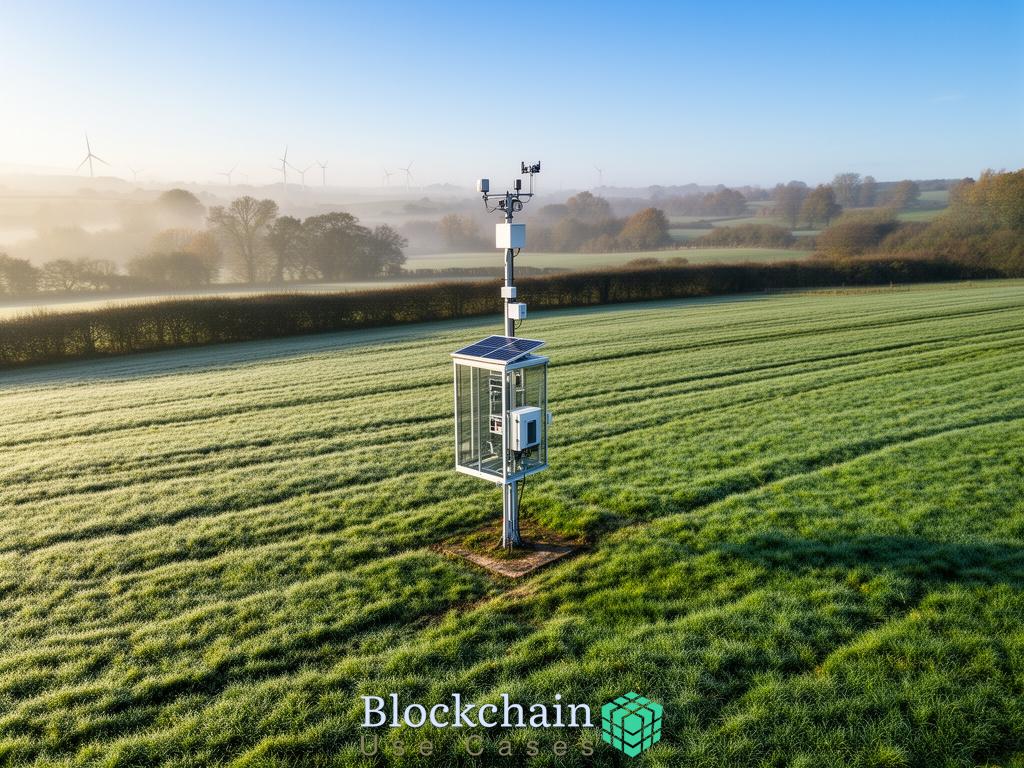
Data oracles play a central role by connecting blockchain ledgers with real-world data sources such as satellite imagery, drone surveys, and IoT-based ground sensors. When environmental metrics are captured, they are cross-verified across nodes through consensus algorithms, ensuring that no single party can manipulate outcomes or inflate success rates. This convergence of verified digital data and environmental performance reporting enhances both investor confidence and policy credibility, strengthening financial structures that prioritize measurable impact over speculative promises.
The trust crisis that once plagued environmental reporting is being systematically dismantled through the rise of trustless verification systems. In such systems, accountability emerges not from institutional reputation but from cryptographic proof. Blockchain platforms automatically timestamp every stage of project development—be it reforestation, watershed restoration, or sustainable agriculture—creating a seamless trail of verifiable progress. Smart contracts oversee these processes by executing fund releases only when independent oracles confirm that environmental benchmarks have been met.
This model introduces a profound shift in the governance of sustainable finance. Instead of relying on costly audits and third-party verifications, stakeholders can now view immutable proof of performance directly from the distributed ledger. Communities benefit from increased transparency, investors enjoy data-backed ROI assurance, and environmental agencies gain reliable tools for long-term monitoring. The democratization of environmental verification, backed by decentralized protocols, empowers a more inclusive approach to sustainability—where power and responsibility are shared equally among participants rather than concentrated in a few centralized hands.
Ultimately, the decentralized verification of land use outcomes redefines what it means to build trust in environmental finance. By merging technological transparency with ecological accountability, blockchain ensures that every hectare rehabilitated and every ton of carbon stored is not just a claim—but a fact, verifiable by anyone, anywhere, at any time. This convergence of digital integrity and environmental stewardship signifies a crucial leap toward a more sustainable, measurable, and equitable future for our planet’s land resources.
Integration of Smart Contracts in Ecological Investments
As global economies strive to align growth with sustainability, smart contracts are emerging as a foundational component in the digital transformation of environmental finance. Within blockchain-based sustainable land use frameworks, these automated agreements are redefining how ecological projects are funded, monitored, and verified. The integration of smart contracts into ecological investments moves beyond eliminating intermediaries—it ensures objective, data-driven accountability in environmental performance. By embedding rules, milestones, and conditions directly into code, smart contracts establish an ecosystem where funds, compliance, and ecological results operate in seamless harmony.
At the heart of blockchain’s contribution to sustainable land financing lies its ability to automate trust. Smart contracts enable stakeholders to engage in environmental projects without dependence on centralized authorities. Whether the goal is reforesting degraded lands or promoting regenerative agriculture, these digital agreements independently execute when predefined ecological metrics are met. For instance, if a reforestation project achieves a verified increase in tree cover, a smart contract can instantly release payments to participating communities or developers, bypassing lengthy administrative reviews.
This automation ensures precision and fairness in every transaction. Data collected from IoT sensors, drones, or satellite imagery automatically feeds into smart contract protocols, triggering outcomes only when genuine progress is detected. Such implementations not only minimize human error but also protect against falsified reporting—one of the most persistent obstacles in environmental finance. Investors gain assurance that their contributions directly lead to measurable impact, while project managers operate within transparent, immutable frameworks validated by distributed networks.
Integrating smart contracts into ecological investments fundamentally bridges the gap between capital allocation and environmental results. In conventional green funding schemes, delays and discrepancies often occur between when funds are distributed and when outcomes are delivered. Blockchain circumvents these inefficiencies by embedding both financial logic and ecological conditions into a single programmable layer. This tight coupling ensures that every disbursement is intrinsically linked to verifiable ecological milestones, such as carbon sequestration rates, biodiversity indices, or soil restoration metrics.
Smart contracts also encourage the creation of hybrid financial models where sustainability achievements translate into digital rewards or tradable environmental assets. These systems turn carbon credits, water usage rights, or conservation outcomes into traceable blockchain tokens—each governed by self-enforcing smart contracts. The result is a high-integrity financial structure where environmental and economic incentives coexist under transparent governance. Below is a comparative view highlighting how smart contracts transform ecological investment mechanisms:
| Aspect | Conventional Ecological Investment | Smart Contract-Enabled Investment |
|---|---|---|
| Fund Disbursement | Manual release subject to paperwork and reviews | Automated execution based on validated environmental data |
| Transparency | Limited, with centralized oversight | Fully transparent and machine-verifiable on blockchain |
| Accountability | Dependent on third-party audits | Embedded into coded performance conditions |
| Risk of Misallocation | Relatively high due to human-led reporting | Significantly reduced through oracle-driven verification |
The integration of smart contracts into sustainability frameworks is redefining how governance and stakeholder collaboration function across global ecological projects. With digital consensus replacing bureaucratic checkpoints, decision-making becomes distributed, faster, and inherently more reliable. Governments and NGOs benefit from real-time project audits, while communities participating in conservation efforts receive instant compensation tied to field data. In this sense, smart contracts serve as both regulatory instruments and empowerment tools, driving inclusivity within the sustainability economy.
Beyond regulatory modernization, this technology fosters an interoperable ecosystem where multiple digital systems—such as tokenized finance platforms, environmental registries, and sustainability tracking tools—connect seamlessly. The next frontier involves integrating smart contracts with predictive analytics powered by AI, enabling adaptive funding models that adjust automatically to evolving ecological conditions. The result is a digitized, trusted, and resilient infrastructure capable of aligning finance with planetary well-being.
By intertwining automation, accountability, and ecological precision, smart contracts are poised to become the strategic bedrock of the next generation of environmental finance. Their capability to translate environmental promises into verifiable action is not just a technical advantage—it signals a profound shift toward transparency, efficiency, and trust in the stewardship of our planet’s natural resources.