Enhancing Transparency in Crop Insurance Claims
The agriculture industry faces increasing challenges with unpredictable climates, rising operational costs, and complex insurance processes that often leave farmers waiting for fair and timely compensation. Blockchain technology has emerged as a potential solution to address these inefficiencies, particularly in crop insurance claims where transparency and trust are crucial. As agricultural ecosystems evolve, blockchain’s incorruptible digital ledger offers an innovative approach to safeguard yield protection mechanisms and ensure accountability among all parties involved.
Revolutionizing Trust Between Farmers and Insurers
Traditional crop insurance systems often suffer from delayed payouts and inaccurate claim processing due to unreliable data sources and manual verification steps. This lack of trust leaves farmers vulnerable to financial loss, especially during natural disasters or market disruptions. Implementing blockchain technology transforms this dynamic by creating transparent, immutable records of every transaction—from planting to harvest to claim payout.
By recording insurance contracts and claim data on a decentralized ledger, both farmers and insurers gain real-time access to verified information. This approach minimizes disputes, reduces fraudulent activity, and provides assurance that each claim follows verified data paths rather than subjective assessments. As blockchain automatically validates terms through smart contracts, farmers can receive compensation almost immediately once pre-agreed conditions, such as drought severity or flood extent, are met.
Improving Operational Efficiency and Data Accuracy
The integration of Internet of Things (IoT) sensors, satellite imaging, and blockchain technology is streamlining how insurers evaluate crop damages. Farmers no longer need to depend solely on manual assessments; instead, sensors transmit accurate yield data directly into a blockchain system. This data-driven mechanism fosters more precise insurance premium calculations and claim determinations while eliminating redundancy and human error.
Furthermore, blockchain’s transparency helps regulators and agricultural organizations maintain oversight on payments and claim verification processes. By allowing third parties to monitor transactions without compromising data privacy, the system reinforces accountability throughout the agricultural insurance chain.
Key Advantages of Blockchain in Crop Insurance:
- Transparency: All transactions are permanently recorded and viewable by authorized participants.
- Accuracy: Real-time data integration ensures claims reflect actual field conditions.
- Speed: Automated smart contracts trigger immediate payouts based on weather data and pre-set thresholds.
- Security: Decentralized storage prevents tampering, ensuring the integrity of financial and agricultural records.
- Efficiency: Reduced administrative bottlenecks lower operational costs for insurers and increase trust among farmers.
Comparing Traditional vs. Blockchain-Based Insurance Frameworks
To fully understand the revolutionary potential of blockchain, it’s essential to compare it with the traditional crop insurance models that have served the sector for decades. The following table highlights the main distinctions in key operational areas:
| Aspect | Traditional Crop Insurance | Blockchain-Based Insurance |
|---|---|---|
| Claim Verification | Manual assessment with potential for delays and errors | Automated data-driven validation using IoT and smart contracts |
| Transparency | Limited visibility between stakeholders | Full access to real-time, immutable transactions |
| Payment Timeframe | Weeks to months after initial claim | Instant payout once conditions are verified |
| Fraud Risk | High due to inconsistent data reporting | Reduced through verifiable digital records |
| Operational Cost | High administrative expenses | Lower due to automation and reduced human intervention |
By aligning advanced data verification technologies with blockchain’s distributed ledger capabilities, the agriculture insurance industry is stepping into a new era of transparency and reliability. The adoption of these systems not only empowers farmers with greater financial security but also builds sustainable trust between insurers, regulators, and agricultural cooperatives. In a world where food security and agricultural resilience are vital, blockchain is fast becoming an essential ally for protecting both crops and livelihoods.
Smart Contracts for Automated Payouts
Smart contracts represent one of the most transformational components of blockchain technology in the agricultural insurance ecosystem. As crop insurance becomes increasingly data-driven, these programmable digital agreements are bridging the long-standing gap between policy initiation and payout execution. By embedding pre-set conditions directly into tamper-proof blockchain code, smart contracts enable faster decisions, eliminate intermediaries, and ensure farmers receive compensation precisely when it’s due. This automation is redefining financial resilience in agriculture, particularly during disaster scenarios where time-sensitive support is essential for recovery.
Redefining Efficiency in Insurance Settlements
Traditional insurance frameworks often operate through layers of bureaucracy that slow the relief process for farmers affected by adverse weather or yield loss. Smart contracts revolutionize this structure by converting insurance terms into self-executing scripts. Once external data sources—such as weather or yield data—confirm that the conditions defined in the policy have been met, the contract triggers an immediate payout to the farmer’s account. This process not only ensures transparency but also eliminates the risk of human error or institutional bias in claim evaluation. It transforms what once took weeks into a matter of minutes, creating a powerful safety mechanism within the agricultural value chain.
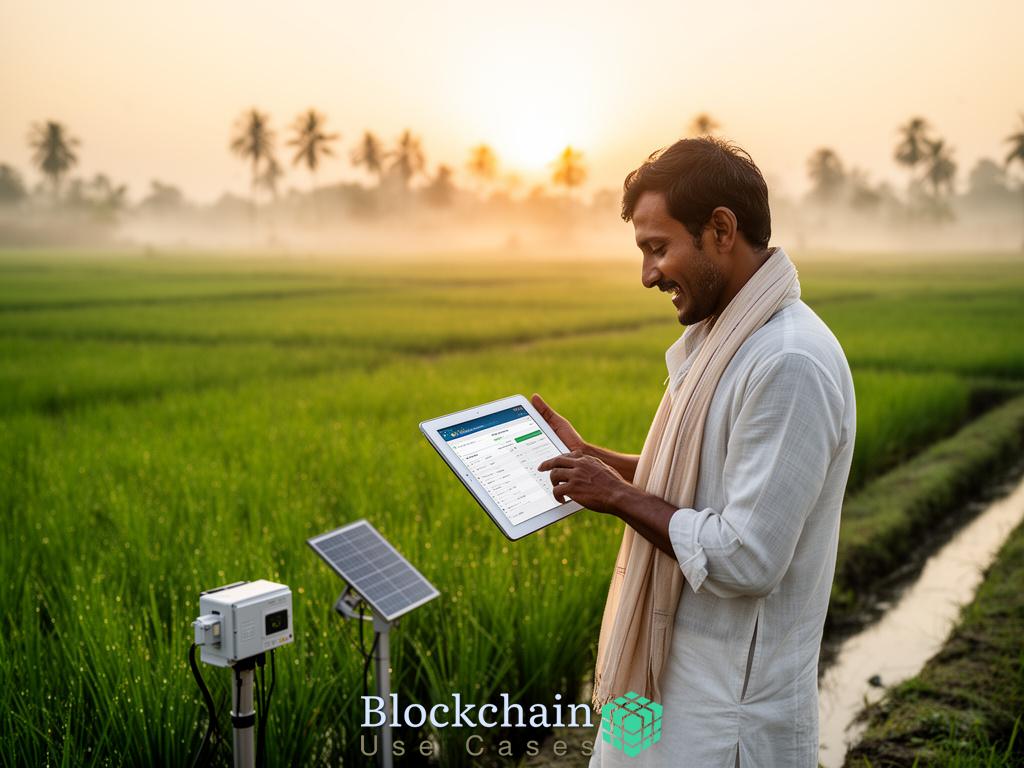
Furthermore, by leveraging IoT sensors, remote sensing technologies, and satellite-based weather analysis, smart contracts integrate multi-layered data inputs into their decision process. Each input is verified through blockchain’s immutable ledger, meaning that every action—from rainfall measurement to yield calculation—is permanently recorded and verifiable by all stakeholders. This level of accountability builds a new dimension of trust, ensuring that compensation flows exactly as intended, without manipulation or delay.
Data Synchronization and Real-Time Automation
One of the most potent advantages of blockchain-enabled smart contracts lies in their ability to synchronize vast streams of agricultural data. Insurers, government bodies, and financial institutions can all connect through decentralized blockchain networks that validate environmental metrics in real time. When pre-agreed parameters such as soil moisture, temperature deviation, or rainfall deficiency are detected, the smart contract autonomously computes the eligible claim amount and disburses funds to the insured party’s digital wallet. This process diminishes administrative bottlenecks and ensures data accuracy at every stage of the payout pipeline.
The reliability of smart contracts becomes even more critical during high-risk agricultural seasons. Automated interactions minimize paperwork, administrative delays, and potential disputes regarding damage assessments. In this model, both farmers and insurers benefit—farmers enjoy instant access to financial support while insurers improve operational efficiency and credibility. By linking data verification with blockchain automation, the system delivers an equitable method of risk settlement that enhances sector-wide financial stability.
Comparative Overview: Manual vs. Smart Contract-Based Payouts
The contrast between manual claim handling and blockchain-based automation reveals how deeply smart contracts influence the efficiency and fairness of crop insurance. The table below highlights the major functional differences between these two approaches:
| Aspect | Traditional Claim Process | Smart Contract-Based Payouts |
|---|---|---|
| Verification Source | Human assessment and third-party reporting | Automated data validation from IoT and satellite feeds |
| Processing Duration | Weeks or months | Immediate once predefined conditions are met |
| Transparency | Limited, often constrained by institutional control | Full, recorded on decentralized ledgers visible to all authorized users |
| Human Intervention | Extensive, including auditors and adjusters | Minimal, except for oversight or validation of code logic |
| Fraud and Error Risk | High, due to manual entry and selective reporting | Substantially reduced through verifiable and immutable digital records |
As the agriculture sector embraces automation through smart contracts, the broader implication extends beyond speed or efficiency—it fundamentally redefines the ethics of financial fairness for farmers globally. The new model ensures that payouts are not merely transactional responses, but part of a dynamic, traceable ecosystem that aligns with sustainability, inclusion, and accountability principles. In this context, blockchain is no longer just a technological tool, but a powerful enabler of agrarian resilience and economic continuity.
Data Reliability Through Blockchain Integration
As the agricultural landscape rapidly evolves under the pressures of climate unpredictability and market volatility, the reliability of data has emerged as the cornerstone of effective crop insurance models. Reliable data not only ensures fair claim settlements but also safeguards trust among farmers, insurers, and policymakers. Amidst this digital transformation, blockchain technology stands out as a powerful mechanism for authenticating agricultural data at every stage of the farming and insurance continuum. Its decentralized and tamper-proof nature transforms data reliability from a chronic challenge into a sustainable asset for global agriculture.
Establishing Data Integrity Across Agricultural Systems
Conventional data management within agricultural insurance often faces inconsistencies due to fragmented databases and siloed information sources. In contrast, blockchain introduces a system of distributed verification and immutability, ensuring that every entry—whether a soil analysis, rainfall record, or yield report—is securely recorded and verifiable. Each transaction or data point, once added to the blockchain, cannot be modified without consensus from the network participants. This means insurers and regulatory bodies can trace the origin and accuracy of data in real time, eliminating the common disputes that arise from unverifiable or contradictory statistics.
Beyond mere recordkeeping, the synchronization between IoT sensors, satellite imaging, and blockchain architecture creates an ecosystem where automated trust is embedded into every claim process. Sensor data capturing temperature, humidity, or crop health metrics is encrypted and stored directly on distributed ledgers. This minimizes the risk of data manipulation and fosters a transparent relationship between field-level realities and insurer databases. Such interconnectivity ensures that the data utilized to trigger insurance payouts remains not only timely but also scientifically verifiable, laying the groundwork for precision-driven agricultural resilience.
Ensuring Accuracy Through Collaborative Data Validation
In the past, agricultural stakeholders operated in isolation, leading to data fragmentation and delayed decision-making. Blockchain’s integration, however, fosters a collaborative data validation model where every stakeholder—farmers, insurers, government agencies, and third-party auditors—can confirm the authenticity of recorded information. Each participant acts as a node within the network, collectively maintaining the accuracy and consistency of the dataset. This multi-party validation process dissuades fraudulent claims and inaccurate reporting, a critical improvement over traditional insurance systems burdened by manual entry errors and subjective evaluations.
Furthermore, blockchain’s compatibility with smart contract infrastructure allows for data-driven automation that is both reliable and auditable. When embedded data—such as drought index values or pest infestation severity—matches predefined contractual conditions, the system automatically validates eligibility for compensation. This dynamic level of accuracy is what sets blockchain-integrated insurance apart, allowing insurers to design fairer policies while offering farmers immediate, verifiable proof of their claims. The result is a self-sustaining digital framework that doesn’t just process data but continuously strengthens its reliability through perpetual verification cycles.
Building Long-Term Trust Through Data Transparency
The agricultural insurance sector thrives on confidence, and blockchain fortifies this by embedding transparency at its core. Every data transaction—from the moment seeds are planted to the final claim settlement—is permanently recorded on an immutable ledger accessible only to authorized entities. This traceable data chain eliminates ambiguity, ensuring that every stakeholder can view, audit, and validate transactions in a controlled, transparent environment. Over time, this creates a cumulative repository of trustworthy agricultural records, invaluable not only for insurance but also for policy formulation, climate adaptation strategies, and global food security initiatives.
In essence, blockchain transforms agricultural data into a living record of trust and accountability. Its integration brings a paradigm shift—from reactive insurance models plagued by disputes to proactive risk management systems powered by verified data intelligence. The assurance that each metric is genuine and tamper-proof enhances investor confidence, regulatory oversight, and ultimately, the resilience of millions of farmers worldwide. In this new digital era, blockchain is not merely a supporting technology but a fundamental pillar of agricultural reliability—ushering in a future where every byte of data holds undeniable proof and unquestionable value.
Mitigating Fraud and Risk in Agricultural Insurance
In an era where agricultural resilience determines both economic stability and food security, the insurance industry faces an enduring challenge: fraud prevention and risk mitigation. Traditional crop insurance frameworks often struggle with fraudulent claims, false reporting, and lack of verifiable data sources, creating costly inefficiencies for insurers and leaving farmers frustrated by slow and uncertain compensation. Blockchain technology transforms this fragile ecosystem into one defined by accountability, security, and transparency. By reshaping how agricultural data and claims are verified, blockchain introduces a powerful defense against deliberate manipulation and systemic risk, opening the door to a fairer and more efficient insurance environment.
Strengthening Fraud Detection through Immutable Records
Fraudulent claims have long plagued the agricultural insurance sector, particularly in regions with limited monitoring capabilities. Blockchain addresses this vulnerability by embedding immutable, time-stamped records for every transaction across the crop insurance lifecycle. From field data collection and planting verification to weather indexing and claim settlement, each activity is recorded on a decentralized ledger that no single entity can alter. This creates an incorruptible chain of evidence that exposes inconsistencies the moment they occur. The use of smart contracts further tightens security by ensuring payouts occur only when objective, verifiable data sources confirm that loss conditions have been met. Insurers can cross-verify data from multiple independent nodes—such as weather stations, IoT sensors, and satellite feeds—without relying solely on manual reports or subjective assessments. As a result, intentional misreporting or data tampering becomes virtually impossible, revolutionizing trust between insurers and policyholders.
Reducing Systemic Risk through Decentralized Oversight
Beyond individual case fraud, the agricultural insurance sector must also address systemic risks such as policy manipulation, corruption, or institutional bias. Blockchain’s decentralized architecture disperses control across a network of participating entities—insurance providers, regulators, agricultural cooperatives, and even farmers themselves—ensuring transparency and balance in data governance. This shared verification model minimizes the influence of any single authority, allowing for impartial review and fostering multi-layered accountability. Each stakeholder can view or audit transactions proportionate to their level of authorization, reinforcing legitimacy in all claim-related activities. The ability to store and access unaltered historical records also supports predictive modeling, enabling more accurate risk assessments and premium settings based on data integrity rather than estimations. Thus, blockchain not only deters fraud but also equips insurers to manage long-term financial risk with precision.
Empowering a Culture of Fair Risk Sharing
The integration of blockchain into agricultural insurance does more than deter fraud; it nurtures a culture where risk-sharing becomes transparent and equitable. Every stakeholder—farmer, insurer, reinsurer, and regulator—operates within a single, verified ecosystem. When combined with IoT-based field monitoring and smart contracts, blockchain ensures that compensation mechanisms are guided by authentic field data rather than discretionary evaluations. This transparency encourages compliance and accountability at every level. Over time, trusted historical datasets can inform better agricultural forecasting, fairer pricing structures, and refined policy frameworks that respond to emerging risks such as climate volatility. The result is a system where financial trust and agricultural sustainability coexist, embodying blockchain’s true potential as both a technological advancement and a socioeconomic equalizer within the farming community.
By eliminating avenues for fraud and establishing real-time verification mechanisms, blockchain does more than strengthen the backbone of agricultural insurance—it safeguards the livelihoods of farmers worldwide. In a world increasingly shaped by climate unpredictability and digital innovation, this technology stands not just as a technical upgrade but as a strategic necessity for those seeking to protect the future of food production.