Integration of IoT Data Streams for Smart Contract Execution
As the global agricultural landscape undergoes rapid digital transformation, smart contracts are emerging as a pivotal tool for ensuring transparency, fairness, and efficiency in crop insurance management. When combined with real-time Internet of Things (IoT) data streams, these automated contracts can revolutionize how insurance claims are processed — shifting from traditional manual verification to instantaneous, data-driven execution.
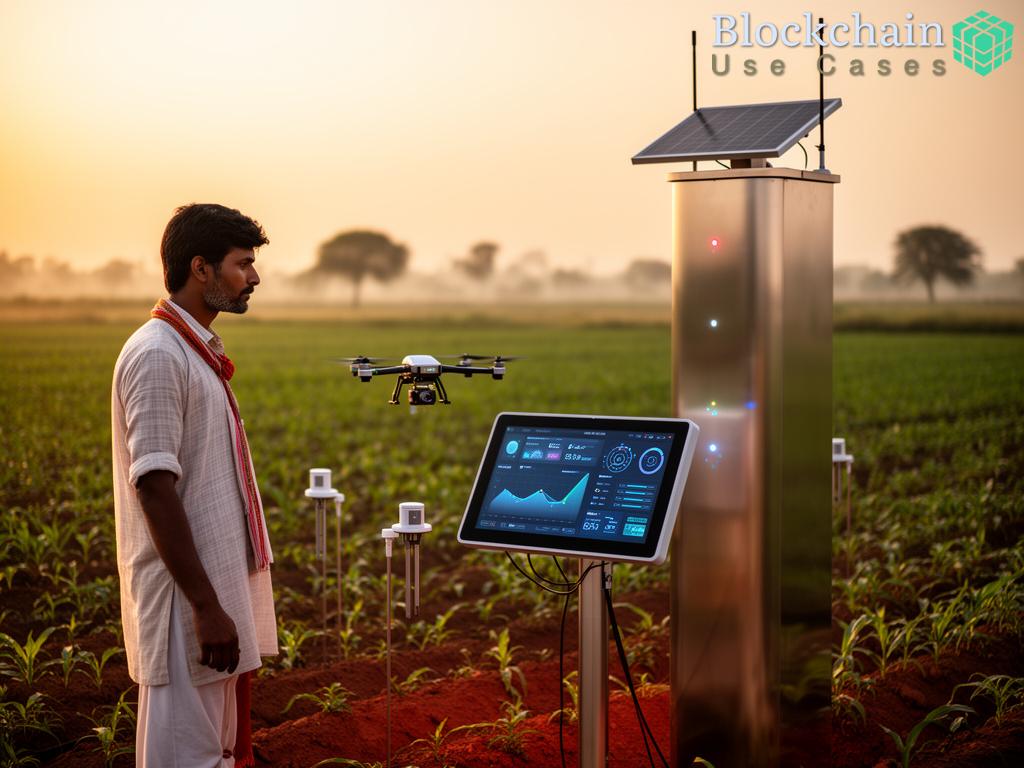
The incorporation of IoT sensors across farmlands enables continuous collection of environmental, soil, and crop condition data. Parameters such as humidity, temperature, soil moisture, and rainfall are transmitted to a decentralized blockchain system, forming the backbone for automated policy enforcement. When specific data thresholds are met — for example, prolonged drought or excessive rainfall — the smart contract triggers claim execution without human interference, significantly reducing disputes and administrative overhead.
| IoT Parameter | Captured Data Type | Smart Contract Function |
|---|---|---|
| Soil Moisture | Volumetric water content | Triggers drought-related payouts |
| Rainfall Sensor | Precipitation level readings | Initiates flood or drought insurance executions |
| Temperature Control | Local climate data | Calculates weather-based yield risks |
One of the most compelling aspects of integrating IoT data into smart contracts lies in trustless automation. With blockchain technology serving as a secure ledger, insurance providers and farmers interact through predefined digital agreements that continuously validate data inputs. The elimination of intermediaries, combined with immutable data logging, ensures that claims are executed based solely on factual IoT metrics—removing subjective bias and ensuring timely payouts.
Moreover, real-time synchronization of IoT sensors with blockchain nodes ensures that all stakeholders maintain up-to-date visibility of risk events. This facilitates proactive risk management, helping farmers mitigate losses even before adverse events occur.
Implementing IoT-driven smart contracts in crop insurance requires a structured approach. Below are key steps designed to promote operational efficiency and system reliability:
- Data Calibration: Establish uniform data collection standards to ensure consistency across multiple IoT devices and regions.
- Interoperability Setup: Develop APIs and data gateways that enable cross-platform communication between IoT systems and blockchain networks.
- Contract Logic Design: Define conditional clauses that interpret sensor readings into precise contractual outcomes.
- Testing and Validation: Simulate contract executions using historical and live data to detect anomalies or system vulnerabilities.
- Audit and Compliance: Incorporate monitoring algorithms that guarantee regulatory adherence and verify contract authenticity.
Through the seamless fusion of IoT and blockchain, the agricultural insurance industry is entering a new era of accountability and automation. The dynamic integration of live sensor data and autonomous contract logic not only enhances risk assessment accuracy but also strengthens trust between insurers and farmers across the entire agricultural value chain.
Automated Claims Processing through Blockchain Oracles
As precision agriculture continues to redefine the contours of modern farming, the introduction of Blockchain Oracles in smart contract ecosystems is reshaping the backbone of automated crop insurance systems. These oracles act as trusted bridges between blockchain-based contracts and real-world IoT data streams, ensuring that insurance events are triggered by verified, tamper-resistant data. The synergy between IoT sensors and blockchain oracles is enabling unprecedented transparency and operational agility — making the insurance claim process not just faster, but also inherently more reliable.
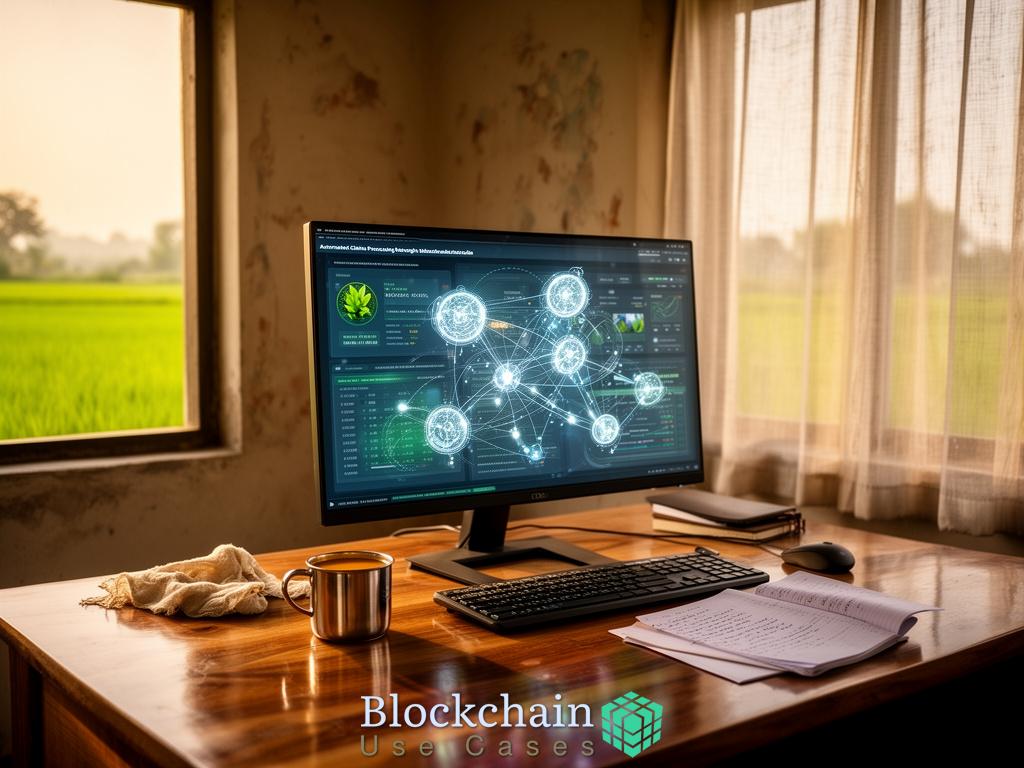
In traditional insurance workflows, external data validation often poses significant challenges, from data manipulation risks to long verification cycles. Blockchain oracles overcome these limitations by securely importing off-chain IoT data onto decentralized ledgers. When drought, flooding, or pest thresholds are breached, oracles transmit authenticated data to pre-defined smart contracts, initiating instantaneous claim assessment and execution. Unlike legacy systems, this integration minimizes latency and fraud, as the execution logic becomes fully dependent on verified environmental facts rather than intermediary approvals.
What makes blockchain oracles indispensable is their ability to consolidate multiple sensor feeds and satellite imagery into a unified decision-making structure. This not only enhances data reliability but also strengthens the analytical backbone of insurance algorithms. The outcome is a system where every claim is validated by a complex, data-driven oracle layer that harmonizes IoT data, ensuring that payouts align precisely with the actual conditions recorded on the field. These digital sentinels eliminate discrepancies that often arise from human interpretation, establishing trustless automation as a new paradigm in agricultural risk management.
The integration of blockchain oracles into IoT-based insurance systems is also driving advancements in predictive risk analysis. As oracles continuously collect and relay real-time input to smart contracts, insurers gain access to actionable insights that facilitate proactive risk forecasting. Rather than responding to agricultural losses after they occur, automated systems can anticipate potential yield disruptions, enabling timely interventions that minimize damages. This evolution represents a critical shift from reactive insurance models to intelligent, preventive frameworks where risk is managed dynamically rather than post-factum.
Moreover, oracle networks built with multi-source verification methods ensure a higher degree of data integrity by cross-referencing information from diverse points of origin — including IoT sensors, satellite feeds, and weather databases. Such hybrid configurations significantly enhance decision intelligence within smart contracts, allowing them to differentiate between temporary anomalies and genuine loss events. As a result, automation becomes smarter, more adaptive, and firmly anchored in verifiable evidence.
In essence, Blockchain Oracles are not merely passive data conduits; they are the cognitive layer that empowers smart contracts to make judicious, transparent decisions. In the broader context of IoT-enabled agricultural insurance, their role is set to grow exponentially, laying the foundation for a new era of trust, efficiency, and predictive resilience across global farming ecosystems.
Enhancing Transparency and Trust in Agricultural Insurance
The agricultural insurance landscape is undergoing a profound transformation as smart contracts and IoT technologies converge to deliver unprecedented levels of transparency, accountability, and trust. Traditional insurance systems have long suffered from inefficiencies, lack of clarity, and disputes arising from subjective assessments. However, by encoding policies into immutable smart contracts and linking them with authenticated IoT data, insurers and farmers now operate within a shared ecosystem of validated truth. This digital synergy eliminates ambiguity, defines clear performance benchmarks, and ensures that every transaction remains auditable and trustworthy.
At the core of this transformation lies the blockchain ledger—a decentralized record that guarantees the authenticity of every insurance-related activity. Each event, from policy issuance to claim resolution, is immutably logged, giving farmers and insurers a shared, tamper-proof history of interactions. Unlike traditional paper-based agreements that rely on third-party mediation and manual records, blockchain-based smart contracts introduce an auditable trail that ensures full disclosure of decisions and actions.
Through the integration of IoT sensors capturing data such as temperature fluctuations, soil humidity, and rainfall levels, claims are triggered automatically once predefined parameters are met. This direct linkage of IoT data streams to contractual logic not only speeds claim settlements but eliminates potential conflicts arising from inconsistent reporting. Every stakeholder—be it an insurer, farmer, or regulator—can trace the origin and validity of each data point underpinning a payout decision, fortifying mutual trust across the ecosystem.
| Core Aspect | Traditional Insurance | IoT-Enabled Smart Contracts |
|---|---|---|
| Data Verification | Manual inspection and delayed validation | Automated through authenticated IoT sensors |
| Transparency of Records | Controlled by intermediaries | Immutable, shared blockchain ledger |
| Claim Execution | Dependent on manual assessment | Triggered automatically by verified data conditions |
| Dispute Resolution | Time-consuming with subjective evaluations | Instantaneous and objective via predefined rules |
This transparent framework ensures that both parties operate in full alignment with agreed-upon terms, greatly diminishing the scope for fraud or misinformation. Moreover, the immutable nature of blockchain enhances accountability, as every sensor reading or contract trigger leaves a verified footprint within the system’s historical ledger.
Beyond mere transparency, trust engineering represents the next evolution of IoT-based insurance ecosystems. Farmers, particularly in developing regions, have historically faced challenges in establishing confidence in financial institutions due to opaque policy terms and delayed payouts. Smart contracts, when reinforced by IoT data and blockchain validation, create a trusted transactional environment where outcomes are data-driven, neutral, and verifiable by all parties involved.
This approach extends far beyond efficiency—it fundamentally reshapes stakeholder relationships. Insurers benefit from reduced operational risk and fraud prevention, while farmers gain immediate clarity on policy triggers and coverage outcomes. Additionally, regulators can access verifiable blockchain records to ensure compliance, conduct audits, and assess system fairness. Each entity, thus, participates in a loop of trust reinforced by real-time data integrity and algorithmic precision.
In practice, this evolution fosters a new economic dynamic where agricultural stakeholders confidently rely on autonomous mechanisms rather than opaque administrative channels. The fusion of IoT devices, blockchain technology, and smart contracts sets a new benchmark for ethical transparency and trustworthy automation—ultimately transforming the agricultural insurance model into a system of shared digital credibility and long-term resilience.
Risk Prediction and Mitigation Using Real-Time IoT Analytics
The evolution of smart contracts within IoT-driven agricultural frameworks is entering its most transformative phase yet—where predictive analytics, real-time sensor data, and autonomous decision-making unite to form the backbone of intelligent risk management. As data streams from interconnected sensors become increasingly granular, farmers and insurers alike are now empowered to anticipate threats before they escalate into losses. By leveraging machine learning algorithms and blockchain-backed automation, this new ecosystem offers the ability not just to respond to risks but to predict and prevent them in real time.
Real-time IoT analytics redefine how agricultural risk is perceived and managed. Traditional insurance models relied heavily on retrospective loss assessments and historical climate averages, which often failed to capture the dynamic nature of environmental variability. In contrast, modern IoT-enabled systems interpret live sensor data—from soil pH and nutrient density to rainfall distribution and crop stress indicators—to build predictive models capable of foreseeing potential yield deviations days or even weeks in advance. When these insights feed directly into smart contract infrastructures, policy clauses adapt dynamically, updating risk evaluations without human intervention. This proactive intelligence allows farmers to implement timely irrigation corrections, apply adaptive fertilization, or deploy pest deterrents before damage materializes, thus transforming risk management from a defensive mechanism to an anticipatory framework.
The integration of predictive analytics also enhances insurer operations by providing a continuously updated risk profile of each policyholder. Through historic trend analysis, combined with real-time IoT inputs, insurers can recalibrate coverage terms and premium models based on evolving field conditions. This synchronized ecosystem not only improves accuracy in risk forecasting but ensures that both insurer and farmer share a transparent, data-based understanding of operational vulnerabilities and opportunities.
While predictive analytics enhances foresight, autonomous risk mitigation closes the loop between data interpretation and action execution. By embedding advanced AI algorithms within IoT networks, smart contracts can autonomously trigger predefined interventions—such as activating irrigation during moisture deficits or issuing early pest-control recommendations upon detecting temperature or humidity anomalies conducive to infestation. These intelligent systems ensure continuity of agricultural productivity while minimizing exposure to loss. The automation of such interventions doesn’t just support farming efficiency—it redefines insurance performance metrics by reducing claim occurrences through preemptive event management.
Equally important is the synchronization of predictive claim alignment. As IoT analytics project potential damage probabilities, smart contracts adjust coverage triggers dynamically, recalibrating thresholds in accordance with forecasted conditions. When combined with blockchain’s immutable ledgers and oracle-verification layers, these dynamically adjusted contracts ensure that every claim execution aligns with the most current, verified data. The result is a self-regulating insurance environment where intervention and indemnity become two facets of a single, automated continuum—optimizing both risk response time and fiscal stability across the entire value chain.
Ultimately, risk prediction and mitigation through real-time IoT analytics stands as a cornerstone of the new digital agri-economy. By merging data-centric forecasting with autonomous response protocols, agriculture transitions from uncertainty to informed precision. The collaborative interaction among sensors, smart contracts, and decentralized data infrastructures is driving the dawn of a proactive, self-correcting insurance paradigm—one that redefines resilience, efficiency, and trust in global food security frameworks.