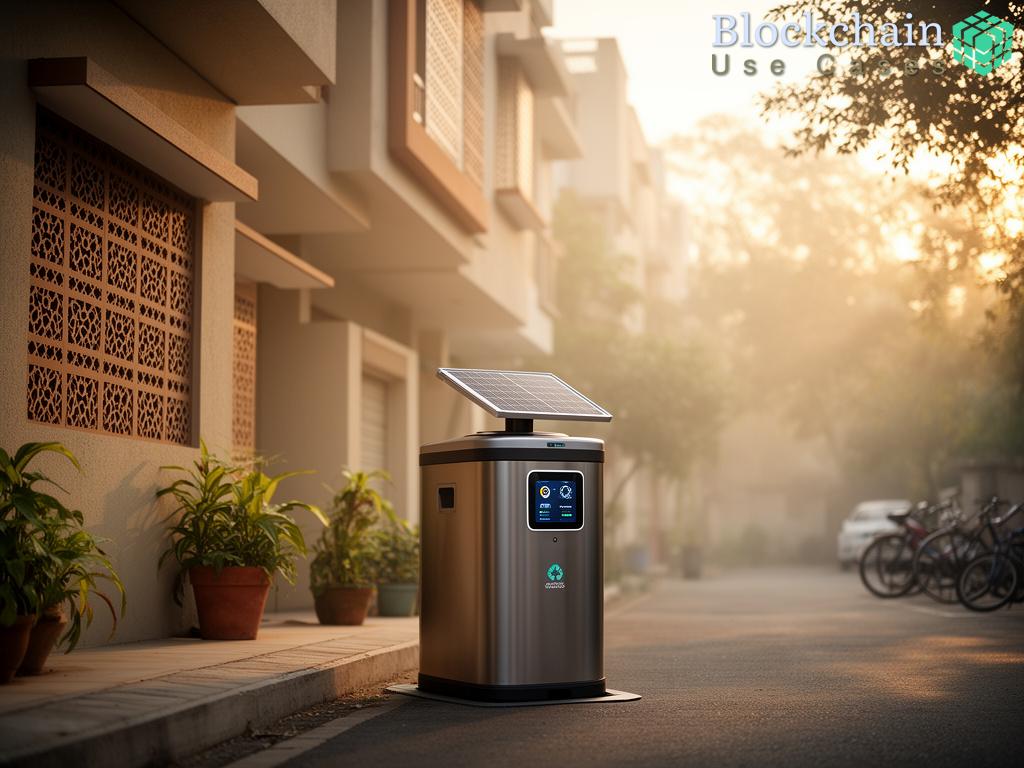

Blockchain-Based Transparency in Maintenance Requests
The integration of blockchain technology into public facility management is redefining how maintenance requests are handled, verified, and completed. With governments and municipalities striving for higher transparency, the deployment of smart contracts provides a secure and tamper-proof solution that brings efficiency and trust to citizens and service providers alike. The new era of digitalized maintenance workflows is driven by one essential element—transparency backed by immutable ledger technology.

In traditional facility maintenance systems, the process often suffers from paper-based inefficiencies, untraceable approvals, and lack of accountability among maintenance parties. Smart contracts on a blockchain eliminate such flaws by automating essential workflows and keeping every step recorded for public audit. Each maintenance request—from submission to completion—is immutably documented, preventing data alteration or corruption. This transformation ensures real-time visibility and equal access to procedural updates for all stakeholders involved.
Beyond simplification, this transparency fosters a sense of shared accountability. Municipal contractors, administrators, and citizens can track the progress of maintenance work without relying on intermediaries or opaque reporting systems. By coding service-level agreements (SLAs) into smart contracts, payments are automatically released only upon verified completion, reducing the potential for disputes and ensuring public resources are spent effectively.
The deployment of blockchain-based solutions in maintenance request management boosts operational efficiency while improving public trust. Smart contracts remove redundant manual steps, streamline reporting, and establish a digital trail of all actions. Citizens gain confidence in the fairness and authenticity of maintenance workflows, knowing that outcomes are governed by transparent digital rules rather than subjective discretion.
The benefits are not limited to transparency alone; cost-efficiency and service reliability also improve significantly. The following table illustrates a comparison between traditional and blockchain-based maintenance systems, highlighting the advantages offered by decentralized automation.
| Aspect | Traditional System | Blockchain-Based System |
|---|---|---|
| Record Integrity | Prone to data loss or alteration | Immutable and easily auditable records |
| Efficiency | Manual verification and slow updates | Automated validation and rapid execution |
| Transparency | Limited visibility into process stages | Complete real-time transparency for all participants |
| Public Trust | Dependent on institutional reputation | Strengthened through verifiable digital evidence |
Successful implementation of blockchain in public maintenance management requires a structured approach. Governments and municipal bodies must assess their technological readiness, engage in pilot programs, and establish policy frameworks that facilitate blockchain usage while ensuring data privacy. The synergy between smart contracts and Internet of Things (IoT) devices can further enhance automation by sending live data directly to the blockchain. This connection ensures that every asset status report automatically triggers contract conditions without human intervention.
Below is a simplified breakdown of essential steps for adopting blockchain-based maintenance systems sustainably.
Key Stages in Implementing Blockchain-Driven Maintenance Systems
- Assessment: Evaluate existing maintenance workflows and identify inefficiencies suitable for decentralization.
- Pilot Deployment: Launch controlled projects to test smart contract functionality and data integration.
- Stakeholder Collaboration: Establish partnerships between technology providers, administrators, and citizens for shared governance.
- Policy and Regulation: Develop standardized protocols and legal frameworks for blockchain documentation and auditing.
- Scalability Planning: Gradually expand deployment across multiple facilities and incorporate IoT-enabled sensors.
Through these stages, public administrations can uphold accountability, reduce costs, and pave the way for more transparent and citizen-centered urban maintenance ecosystems. As blockchain adoption accelerates, it promises to redefine not only how maintenance is managed but also how public trust is built in the age of digital governance.
Automated Contract Execution for Service Providers
As cities and municipal administrations embrace blockchain-based maintenance management, the automation of contract execution emerges as the next transformative step. Service providers who participate in public maintenance operations now experience faster, more secure, and error-free processes governed by smart contracts. These digital agreements are coded to respond to verified actions, making every transaction traceable, transparent, and self-executing. Automation not only accelerates project timelines but also ensures consistent compliance with predefined service conditions.

The integration of smart contracts has redefined how service-level obligations are tracked and enforced. Each maintenance task—whether it involves street lighting repair, sanitation upkeep, or facility inspection—is linked to a programmed contract embedded with verifiable milestones. Once these conditions are met and validated through authenticated data feeds, payments and approvals are released without manual intervention. This system eliminates bottlenecks stemming from administrative delays or human error, enabling technicians and contractors to focus entirely on service quality.
Unlike traditional contractual processing that depends on multiple intermediaries, automated blockchain execution provides an environment of absolute clarity. Every stakeholder, from government supervisors to local contractors, can review progress in real time. By embedding digital rules and automated payments, administrations minimize operational friction and create a culture of performance-driven accountability.
Automation in public maintenance contracts does more than reduce paperwork—it redefines efficiency, accuracy, and trust. The system responds instantly to validated data, establishing an agile operational flow suited for complex public service delivery environments. The following list outlines the critical benefits that automated execution offers to service providers and public authorities alike:
- Timely Payments: Once deliverables are confirmed through blockchain verification, payment transfers occur automatically, removing administrative lag and dispute over compensation.
- Operational Accuracy: Smart contracts ensure that only approved tasks trigger payment or completion status changes, minimizing misreporting risks.
- Performance Traceability: Each completed activity is recorded on a decentralized ledger, supporting audit readiness and service evaluation without additional documentation.
- Reduced Administrative Overhead: With automated validation and execution, municipal staff can redirect resources from manual supervision toward strategic planning.
- Better Contractor Engagement: Transparent procedures encourage more competitive bidding and higher-quality maintenance outcomes thanks to trust in automated, unbiased execution.
The true potential of automated smart contracts unfolds when integrated with IoT technologies. Connected devices such as environmental sensors, energy monitors, and maintenance tools provide live data to the blockchain network. These inputs automatically activate pre-coded contract functions—for instance, initiating repair work when sensors detect a fault in public infrastructure or confirming resolution upon system normalization. This combination leads to an ecosystem where machines communicate with contracts directly, ensuring no service delay or manual data entry is required.
Through such technological orchestration, public facilities achieve an unprecedented level of responsiveness. Blockchain automation, coupled with IoT-driven triggers, represents not just a digital innovation but a structural advancement in public asset management. It shifts maintenance operations from reactive responses to predictive and self-executing systems, placing the foundation for smarter and more accountable governance in urban environments.
Data Security and Integrity in Public Infrastructure Management
The rise of blockchain-enabled maintenance workflows has marked a turning point in how cities handle data security and integrity within public infrastructure systems. As maintenance data transitions from traditional databases to decentralized ledgers, governments face both emerging opportunities and unprecedented responsibilities. Ensuring that sensitive infrastructure information remains protected, uncorrupted, and accessible only to authorized parties is now paramount. The use of smart contracts introduces a paradigm where security and trust are built into the technology itself—resulting in a resilient ecosystem where data authenticity becomes verifiable by design.

Public infrastructure data has historically been one of the most vulnerable targets for manipulation and unauthorized access due to centralized record-keeping structures. With the introduction of blockchain-based frameworks, data integrity takes center stage. Every maintenance request, update, and approval is stored securely within an immutable ledger, guaranteeing that all information remains tamper-proof and chronologically traceable.
Unlike conventional IT systems where a single-point breach can compromise vast amounts of administrative data, decentralized storage and cryptographic hashing mechanisms prevent such risks. Each party—whether a contractor, municipal officer, or citizen—can rely on verifiable entries that cannot be retroactively altered. This digital architecture substantially reduces dependency on manual verification processes while reinforcing trust between institutions and stakeholders.
| Data Security Aspect | Traditional System | Blockchain-Integrated System |
|---|---|---|
| Data Accessibility | Restricted to specific databases | Permission-based decentralized access |
| Integrity Assurance | Corruption potential through human error or system failure | Immutable records validated by cryptographic consensus |
| Audit Process | Complex and time-intensive manual review | Instant verification via distributed ledger inspection |
| Cybersecurity Risk | Centralized vulnerabilities prone to attacks | Reduced attack surface due to distributed structure |
Data authenticity forms the backbone of reliable public facility management. Smart contracts enhance this reliability by embedding cryptographic validation protocols within every operational interaction. Each update or transaction recorded on the blockchain undergoes digital signature verification, ensuring that only trusted entities contribute data to the ecosystem. This not only protects against internal manipulation but also against external cybersecurity breaches aimed at altering operational records.
Furthermore, integrating identity management systems anchored on blockchain technology elevates institutional control over data access. It allows municipalities to monitor information flows, trace the origin of entries, and prevent unauthorized tampering in real time. In effect, blockchain-driven validation becomes a proactive security guard, ensuring that transparency never compromises confidentiality.
Below is a list summarizing the Key Mechanisms that Ensure Data Integrity within Blockchain-Based Maintenance Systems:
- Hash Encryption: Each record is assigned a cryptographic identifier that validates originality and prevents data modification.
- Consensus Validation: Network nodes collectively approve transactions, safeguarding against malicious interference.
- Zero-Trust Architecture: Eliminates the need for centralized administrators by enforcing rule-based, automated verification.
- Multi-Layered Access Control: Data visibility can be segmented by roles, enabling secure yet transparent participation.
- Continuous Auditing: Distributed records offer perpetual traceability for post-event analysis or accountability review.
As cities adopt smart contracts across public maintenance frameworks, they are not only automating workflows—they are institutionalizing digital integrity. Each repair record, inspection log, or payment release becomes part of a verifiable chain of trust. This evolution enables civic authorities to safeguard critical infrastructure data while fostering public confidence in governance processes.
Ultimately, the intersection of blockchain security and infrastructure management redefines how government entities approach operational transparency and data stewardship. By anchoring every digital transaction in immutable proof, public administrations create a secure environment where efficiency, integrity, and accountability coexist—laying the groundwork for safer, more reliable urban ecosystems in the years ahead.
Efficiency and Cost Reduction through Smart Contract Integration
The adoption of smart contracts in public facility maintenance management represents a paradigm shift from traditional bureaucratic operations to intelligent, automated ecosystems. As civic organizations confront rising operational costs and increasing pressure for transparent governance, smart contracts emerge as the digital backbone that streamlines administrative tasks, ensures verifiable compliance, and cuts unnecessary spending. By embedding programmable logic into maintenance processes, local authorities can now operate systems that act automatically on verified data—bringing both fiscal responsibility and operational agility to the forefront of urban service delivery.
One of the most tangible benefits of implementing smart contracts lies in their ability to optimize resource utilization. Unlike conventional maintenance systems that depend on manual approvals, paper trails, and hierarchical supervision, smart contracts execute pre-defined conditions instantly. When maintenance requests meet verified criteria—such as confirmation of task completion or sensor-based fault validations—the system autonomously approves payments, orders supplies, or schedules further inspections. This eliminates redundant labor, mitigates administrative delays, and ensures that every unit of public funding serves its intended purpose efficiently.
Moreover, with blockchain-backed workflows, decision-making becomes data-driven rather than discretionary. Service-level expectations coded within smart contracts ensure that maintenance vendors comply with contractual standards before financial releases occur. This creates an ecosystem of accountability where service quality parallelly influences financial efficiency. The result is a leaner, faster, and more transparent operational model that aligns execution speed with fiscal prudence.
Economic sustainability within public infrastructure management is deeply influenced by how effectively expenditures are monitored and verified. Through smart contract integration, municipal administrations experience measurable reductions in administrative costs, auditing expenses, and resource wastage. Automated verification systems diminish the need for extensive manual review, thereby shortening approval cycles and increasing overall throughput.
When combined with decentralized recordkeeping, this automation further enhances budget predictability. Every transaction—from procurement to task closure—carries an immutable timestamp, providing insight into cost flow, consumption patterns, and service frequency. Planners can then use this data to forecast maintenance budgets, preempt future inefficiencies, and reinvest saved funds in public welfare initiatives. Over time, this intelligent automation does not merely save operational costs; it redefines fiscal governance by turning real-time data into actionable financial intelligence.
Key Elements That Contribute to Efficiency and Cost Reduction:
- Real-Time Validation: Smart contracts validate completion metrics instantaneously, removing delays in payment approvals and work confirmation.
- Predictive Expenditure Planning: Immutable transaction history supports accurate cost forecasting and budget optimization.
- Reduced Administrative Burden: Automated task delegation and performance verification minimize redundant oversight roles.
- Energy and Material Efficiency: Integrated IoT feedback loops reduce overuse of materials by tracking asset lifespan and performance in real-time.
- Fraud Prevention and Dispute Minimization: Immutable documentation ensures transparent accountability, discouraging fraudulent claim submissions.
At a larger scale, smart contract integration is redefining how cities perceive fiscal responsibility within digital governance. With automated control of maintenance life cycles and real-time audit capabilities, governments no longer depend solely on post-event reporting to assess financial health. Instead, blockchain-enabled infrastructures offer a live performance window into every contracted task—allowing decision-makers to redirect funds dynamically based on verified operational needs. This evolution contributes to developing cities that are not just smart in name but intelligent in financial governance as well.
Ultimately, the synergy between automation, transparency, and cost-efficiency transforms public maintenance into a well-coordinated, economically resilient mechanism. Through continuing adoption of blockchain-powered smart contracts, municipalities worldwide are poised to achieve a future where efficiency is not an aspiration but a built-in feature of every digital transaction that governs urban life.