Blockchain Foundations for Biomethane Smart Contracts
The integration of blockchain technology into the renewable energy sector is transforming how biomethane is produced, traded, and distributed. As transparency, traceability, and automation take center stage, smart contracts are becoming vital instruments in ensuring efficiency and trust across the biomethane ecosystem. This article explores the foundational aspects of blockchain that make these intelligent contracts work effectively within sustainable energy networks.

The core appeal of blockchain lies in its ability to provide a decentralized ledger that records every transaction with immutable accuracy. In the biomethane supply chain—comprising producers, distributors, and consumers—this ensures that environmental and commercial data remain secure, verifiable, and transparent. Through automation via smart contracts, stakeholders can facilitate energy trading, carbon credit allocation, and certification of green gas origin without intermediaries.
Blockchain’s architecture allows each transaction to be validated collectively, ensuring consensus and reducing risks associated with fraud or data manipulation. As a result, the technology directly supports compliance with sustainability standards, enabling regulators and environmental agencies to track production volumes and emissions across borders seamlessly.
Smart contracts function as self-executing agreements encoded within blockchain networks. They eliminate manual oversight by enforcing pre-set conditions automatically, thus reducing operational delays and transaction costs. In biomethane networks, this automation facilitates intelligent grid management—adjusting supply based on demand, confirming energy origin, and ensuring timely settlements among participants.
When coupled with IoT devices that monitor gas quality and volume, smart contracts can initiate responses in real time. For instance, if certain sustainability metrics fall below designated thresholds, the system can automatically trigger alerts or halt distribution until conditions improve. Such responsiveness enhances accountability throughout the supply chain.
Key comparative aspects of Blockchain & Traditional Systems
| Feature | Traditional System | Blockchain-based Smart Contract System |
|---|---|---|
| Data Management | Centralized and prone to tampering | Decentralized, immutable records |
| Transaction Speed | Requires intermediaries and manual checks | Automated and instantaneous execution |
| Transparency | Limited, often closed to stakeholders | Fully auditable across all participants |
| Cost Efficiency | High due to administrative layers | Reduced via automation and direct exchange |
The deployment of blockchain and smart contracts across biomethane grids requires a collaborative strategy that balances innovation, regulation, and practical adoption. Both public and private entities are exploring pilot programs that link biogas facilities with digital marketplaces, aiming to streamline certification, enhance liquidity, and expand investor trust.
Below is a structured overview of key steps necessary for effectively implementing blockchain infrastructure within biomethane value chains.
Implementation Roadmap for Biomethane Smart Contracts
- Conduct an initial feasibility assessment, focusing on technical integration and stakeholder readiness.
- Develop standardized data protocols for biomethane certification and transactional reporting.
- Establish regulatory alignment to ensure compliance with energy market and environmental legislation.
- Integrate IoT-enabled monitoring tools for real-time performance tracking.
- Educate industry participants to foster adoption and trust in decentralized solutions.
As blockchain technology continues to mature, its role in decarbonized energy infrastructures becomes increasingly apparent. By merging transparency with automation, smart contracts provide the digital foundation necessary for scaling biomethane as a reliable and sustainable energy resource. The future of biomethane distribution may very well depend on how effectively this technology is embraced and optimized across the global energy landscape.
Automation of Supply Chain and Distribution Processes
The transition toward a low-carbon future is not only reshaping energy generation but also redefining how renewable fuels like biomethane move through the global economy. As industries intensify efforts to decarbonize, *automation powered by blockchain-based smart contracts* is proving to be a critical enabler of a more agile, transparent, and equitable renewable gas market. Integrating digital intelligence into each stage of production and distribution creates a synchronized ecosystem where *data-driven decisions replace manual inefficiencies*, paving the way for a fully optimized biomethane value chain.
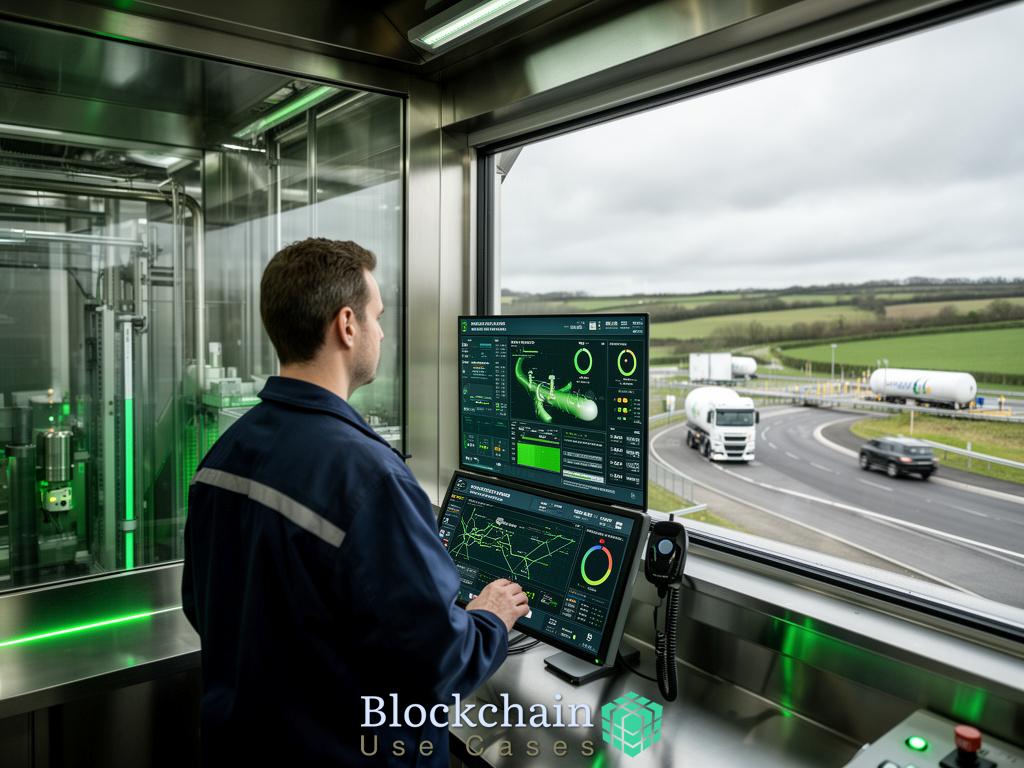
Across the biomethane sector, traditionally fragmented processes—from feedstock procurement to end-user distribution—are being interconnected through automated smart contracts. These systems act as intelligent coordinators, executing predefined instructions once specific conditions are met, without external intervention. Producers can automatically verify the origin and quality of feedstocks through IoT-linked sensors that communicate with blockchain nodes, ensuring each production batch meets sustainability criteria. This automation extends to logistics, where transport scheduling and delivery documentation are dynamically updated based on verified digital records, reducing human error and operational delays.
The inherent *interoperability between blockchain and IoT devices* introduces a new dimension of reliability. As biomethane is produced, stored, and distributed, each transaction and movement is immutably recorded on a decentralized ledger. This creates a self-regulating system in which discrepancies or latency are identified instantly. Automatic triggers in smart contracts enable real-time adjustments—such as rerouting supply if demand spikes in one region or suspending distribution when emission targets deviate from sustainable thresholds. These new mechanisms transform the biomethane supply chain into a *responsive digital network*, able to anticipate and act rather than simply react.
In the distribution stage, the advantages of automation become even more evident. Smart contracts reduce the need for intermediaries by enabling *peer-to-peer trading models* that link producers directly with consumers or energy retailers. Each trade executes once the system validates contractual conditions, financial guarantees, and sustainability certifications. The result is a faster, less costly market with *transparent pricing and verifiable environmental value*. For instance, energy utilities can instantly adjust procurement volumes based on smart meters and IoT signals, ensuring that green gas allocations always match consumption demand.
Another crucial benefit lies in *regulatory compliance and environmental reporting*. Automated workflows ensure that every tonne of biomethane distributed is accompanied by incontrovertible data trails verifying its carbon intensity and production standards. This continuous, automated verification simplifies audits for regulators and boosts investor confidence in verified green gas projects. Over time, such mechanisms will not only modernize traditional supply chain paradigms but also redefine how trust and accountability operate in energy trade. As digital integration deepens, automation through smart contracts will become the backbone of biomethane logistics, ensuring that sustainability objectives align seamlessly with operational performance.
Ultimately, the automation of supply chain and distribution processes reflects a broader vision for the biomethane economy—a system that is intelligent, transparent, and sustainable from its origins to the end user. By interweaving blockchain logic with decentralized energy flows, the biomethane market gains a resilient infrastructure designed to support global clean energy goals without sacrificing efficiency or trust.
Ensuring Transparency and Compliance in Energy Transactions
Within the evolving landscape of renewable energy, biomethane’s digital transformation is redefining how sustainability is verified, recorded, and shared. As blockchain-based smart contracts surge in adoption, one of their most transformative functions lies in ensuring transaction transparency and regulatory compliance across decentralized energy exchanges. The convergence of programmable logic, immutable records, and automated oversight ensures that every stage of biomethane production and distribution operates in full view of both market participants and environmental authorities. This evolution is not merely technical—it represents a new standard of digital trust in a carbon-conscious world.

Transparency has long been a cornerstone of fair and efficient energy markets, yet traditional mechanisms often rely on fragmented documentation and third-party validation. Smart contracts introduce a decisive shift by embedding validation directly into the transaction layer. Every unit of biomethane produced, verified, and traded is recorded within a decentralized ledger that cannot be altered retroactively. This transparency extends beyond simple visibility—participants can confirm, in real time, the origin, quality, and sustainability scores associated with each transaction. As a result, what once demanded days of manual verification now occurs autonomously and instantaneously, fostering market integrity while reducing administrative costs.
The implications for cross-border energy trade and compliance monitoring are profound. Regulators and auditors gain access to tamper-proof audit trails, enabling precise tracking of carbon intensity metrics and renewable certification data. By linking IoT sensors and smart meters to blockchain, real-time monitoring becomes self-verified and resistant to manipulation. Moreover, as smart contracts automatically validate conformance to predefined rules—such as emission thresholds or renewable content ratios—they can suspend transactions that fall short of compliance. This mechanism not only improves transparency but also enforces environmental standards dynamically, safeguarding the integrity of global sustainability commitments.
Ensuring compliance in biomethane trading extends beyond data visibility—it requires active enforcement mechanisms that are impartial and resilient. Smart contracts, by their programmable nature, allow rules and certifications to be embedded within each transaction, thus eliminating ambiguity in how obligations are fulfilled. For instance, an energy supplier entering a digital contract must meet all sustainability criteria verified through blockchain-registered certificates before the system releases payment. This process ensures automated regulatory adherence and minimizes human error while maintaining full traceability across the value chain.
Another critical advancement is the integration of regulatory smart oracles—external data feeds that sync real-world compliance parameters with blockchain operations. These oracles continuously relay information from accredited bodies, updating smart contracts with the latest policy changes, emission tariffs, or certification statuses. By doing so, they convert evolving regulatory frameworks into executable digital instructions, keeping the biomethane ecosystem agile and legally synchronized. The combination of oracles, IoT monitoring, and programmable ledgers creates a framework where transparency is not an afterthought but a built-in safeguard against misconduct, inefficiency, and greenwashing.
Ultimately, as energy markets embrace decentralized technologies, smart contract-driven transparency becomes both an ethical imperative and an economic catalyst. The biomethane sector—at the crossroads of digital innovation and environmental stewardship—is demonstrating that automated compliance is not a regulatory burden but a competitive advantage. By linking accountability with automation, the industry positions itself at the forefront of a future where every molecule of renewable energy is traceable, verifiable, and trusted from origin to outlet.
Integration with Renewable Energy Certification Systems
The rise of blockchain-based smart contracts is transforming the renewable energy certification landscape, particularly in verifying the origin, sustainability, and authenticity of biomethane. In a global market increasingly defined by digital transparency and environmental accountability, integrating renewable energy certification systems with automated blockchain infrastructures is not merely an innovation—it is an imperative step toward scaling renewable gas adoption. By linking certification protocols with decentralized verification processes, stakeholders can ensure that each transaction within the biomethane network is both technically compliant and environmentally credible.
Traditional certification frameworks for renewable energy—though effective at establishing legitimacy—often involve manual oversight, delayed reporting, and disconnected data silos. In contrast, smart contract integration embeds certification data directly into transactional workflows. As biomethane producers inject renewable gas into the grid, each unit can be automatically associated with a digital certificate that verifies its renewable origin, emission factor, and production standards. This instantly accessible and immutable record removes the dependency on intermediary validation, thereby eliminating bottlenecks and enhancing stakeholder trust.
In this model, blockchain nodes serve as verification points where renewable certificates are issued, updated, or retired based on smart contract triggers. For example, when a producer reaches a verified production milestone validated by IoT-linked monitoring tools, the blockchain system automatically issues a certified Renewable Gas Guarantee of Origin (RGGO). These digitally native guarantees not only streamline compliance with regional and international regulations but also facilitate cross-border trading—ensuring that green energy is verifiable and tradable across multiple jurisdictions.
As regulatory frameworks evolve to embrace more advanced digital mechanisms, different integration strategies are emerging within the biomethane ecosystem. Some networks adopt direct certification embedding—where certificates are issued simultaneously with production records—while others leverage external verification oracles that connect blockchain systems with official certification authorities. Both models rely on transparency, but their structural efficiency and scalability differ significantly.
| Integration Model | Core Mechanism | Advantages | Challenges |
|---|---|---|---|
| Direct Certification Embedding | Smart contracts generate certificates automatically during production. | Instant validation, minimal human intervention, real-time traceability. | Requires high data integrity and continuous IoT linkage. |
| External Verification Oracles | Third-party certification data feeds integrate with blockchain networks. | Regulatory alignment, flexibility with multiple authorities. | Dependent on reliable external data channels and policy synchronization. |
This comparative framework illustrates how varying degrees of decentralization and automation can influence the reliability and scalability of biomethane certification systems. By combining both models within a hybrid infrastructure, industry players can achieve the dual objective of regulatory compliance and market efficiency.
The future of renewable gas certification relies on creating a seamless flow of verified data between producers, distributors, regulators, and consumers. Smart contracts act as digital custodians, ensuring that each stage—from feedstock acquisition to grid injection—is matched with verifiable sustainability credentials. This synergy not only eliminates double-counting risks but also aligns with broader ESG transparency goals, enabling investors and policymakers to access real-time environmental performance metrics.
Furthermore, integrating certification systems within blockchain networks enhances interoperability between national registries and international energy trading platforms. This harmonization enables automated issuance, transfer, and redemption of renewable certificates, fostering a unified renewable gas marketplace that operates with absolute integrity. As nations accelerate toward net-zero objectives, the fusion of blockchain logic and renewable certification provides an effective foundation for ensuring that every molecule of biomethane is not just clean—but provably sustainable.