
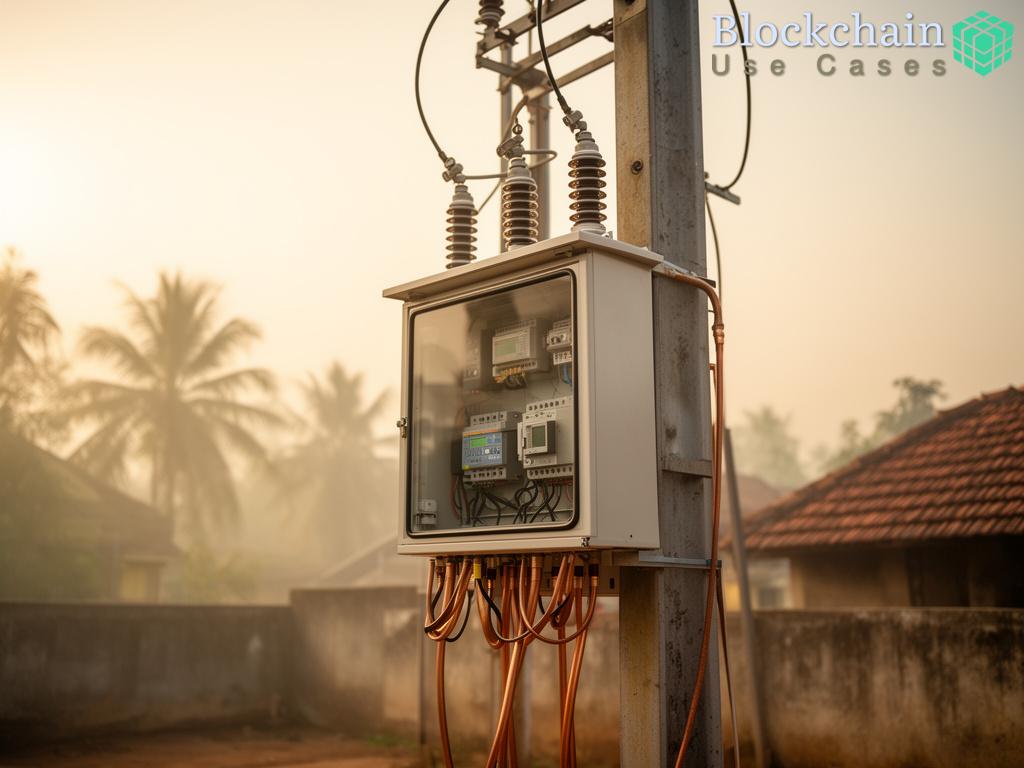
Blockchain Framework for Secure Power Quality Data Management
In a digital era where energy infrastructure must keep pace with rapid technological advancements, blockchain has emerged as a promising enabler for transparent, secure, and automated data handling. The deployment of a blockchain framework for power quality management is transforming how utilities, industries, and regulators cooperate to maintain consistent power performance while ensuring trust and immutability in data transactions.

Modern energy systems produce massive volumes of power quality data, often collected from smart meters, substations, and advanced monitoring sensors. Traditional centralized data storage approaches face vulnerability to tampering, unauthorized access, and single-point failures. A blockchain-based architecture mitigates these limitations by leveraging distributed ledger technology, where each transaction—representing a data point related to voltage, frequency, or harmonic distortion—is recorded across multiple secure nodes.
Smart contracts play a pivotal role in automating the validation of power quality thresholds. Each record can be verified in real-time before being added to the immutable chain. Automatic triggers within these contracts enforce compliance with predefined standards, ensuring seamless communication among stakeholders from energy producers to system regulators.
| Feature | Traditional System | Blockchain-Based System |
|---|---|---|
| Data Security | Centralized validation, higher risk | Distributed validation, tamper-resistant |
| Transparency | Limited to internal monitoring | Fully auditable across participants |
| Automation | Manual reporting and verification | Smart contract-driven process |
| Scalability | Constrained by database architecture | Enhanced via decentralized consensus |
By establishing a secure blockchain protocol, data from power quality sensors can be directly analyzed through decentralized applications (DApps). These DApps allow instantaneous assessment of grid performance and trigger predefined improvement mechanisms such as reactive power compensation or equipment recalibration. The result is an ecosystem where every participant—from energy producers to end consumers—operates within a transparent and tamper-proof environment.
Additionally, the combination of blockchain and data analytics enables predictive insights. Machine learning models integrated into blockchain frameworks can analyze patterns of voltage fluctuations or load imbalances, enabling proactive mitigation strategies before any disruption occurs.
Key Advantages of Blockchain-Enabled Power Quality Management:
- Immutability: Every data transaction is cryptographically secured and unalterable.
- Transparency: Authorized entities can access verified information without compromising privacy.
- Automation: Smart contracts automatically execute control measures based on power quality status.
- Efficiency: Reduces administrative overhead and minimizes human error.
- Scalability: Adaptable architecture suitable for multi-grid and cross-border energy systems.
Ultimately, blockchain technology positions itself as a cornerstone in the transition toward decentralized, intelligent, and sustainable energy networks. With its power to secure and automate complex data flows, it not only enhances operational efficiency but also strengthens public trust in the digital energy economy of the future.
Smart Contract Mechanisms for Automated Power Quality Control
As digital transformation redefines power infrastructure, smart contracts are emerging as the core component of blockchain-enabled energy systems. Their capacity to autonomously execute actions based on real-time data has revolutionized how power quality inconsistencies are detected, managed, and corrected. Unlike traditional control systems that rely on manual inputs and predefined schedules, these decentralized logic frameworks act as the brain of modern energy networks—driving efficiency, transparency, and sustainability.

Smart contracts embedded in decentralized energy management systems function as self-executing rules that respond to live sensor inputs. When parameters such as voltage deviation, harmonic distortion, or frequency variance exceed acceptable ranges, these contracts initiate corrective mechanisms without human intervention. The system instantly analyzes integrated data streams from smart meters and IoT devices, ensuring precision in identifying anomalies while maintaining continuous compliance with power quality standards.
The automation is further strengthened by the interoperability of blockchain networks, which connect producers, transformers, and consumers through secure data channels. Each stakeholder benefits from transparent insights and uninterrupted service continuity, as smart contracts reduce latency in communication and eliminate bureaucratic bottlenecks in response workflows. This level of operational autonomy ensures that power reliability is not solely dependent on manual supervision but on intelligent, data-driven control mechanisms.
One of the most compelling advantages of using smart contracts in power quality management lies in their predictive and adaptive capabilities. Integrated with machine learning and distributed analytics, these contracts can not only enforce existing standards but also learn from historical performance data to forecast potential fluctuations. Such predictive optimization ensures that mitigation actions—like reactive power compensation or transformer load adjustments—are triggered before disruptions impact the grid.
To illustrate how smart contract automation transforms traditional control systems, consider the following key mechanisms that enable active power quality management in decentralized networks:
- Automated Threshold Enforcement: Smart contracts monitor grid parameters continuously and execute adjustments when metrics breach defined benchmarks.
- Event-Driven Response Systems: Data-triggered logic enables instant corrective actions such as isolating faulty segments or redistributing load flows.
- Adaptive Feedback Loops: Machine learning modules within contracts refine operational parameters over time, enhancing predictive accuracy.
- Peer-to-Peer Consensus Validation: Each control action is verified across blockchain nodes to ensure legitimacy and prevent false triggers or data manipulation.
Through these mechanisms, blockchain-integrated smart contracts are paving the way for intelligent automation and decentralized governance in the energy sector. Their role extends beyond control—they are essential instruments for trust, ensuring a resilient power ecosystem that self-regulates while complying with evolving efficiency and sustainability goals. As the energy industry advances toward more adaptive and autonomous grids, smart contracts will remain at the forefront, ensuring balance between technological innovation and operational stability.
Integration of IoT Sensors for Real-Time Electrical Parameter Monitoring
In a rapidly digitalizing energy ecosystem, IoT-driven smart grid monitoring has become instrumental in enhancing the performance, efficiency, and reliability of modern power systems. As blockchain-enabled smart contracts automate control processes, the integration of IoT sensors forms the foundation that ensures continuous, real-time data flow from every point in the grid. This combination transforms static monitoring into a living, intelligent network capable of instant decision-making and predictive optimization. By leveraging interconnected sensors, utilities gain an unprecedented view of their energy infrastructure, enabling them to regulate voltage, frequency, and harmonic distortion with unparalleled precision.

The synergy between IoT sensors and blockchain-backed smart contracts marks a new phase of energy management, bridging the physical grid with its digital counterpart. IoT devices deployed across substations, transformers, and distribution networks collect vast datasets reflecting instantaneous electrical parameters. These continuous data streams are securely transmitted to decentralized ledgers, where smart contracts autonomously assess and validate incoming information. When irregularities such as voltage sags or frequency oscillations are detected, automatic counteractions are executed — ranging from triggering compensation units to isolating affected nodes.
Unlike traditional centralized supervisory systems, decentralized IoT-blockchain architectures ensure end-to-end transparency without compromising data integrity. Each sensor reading becomes a verified event stored across multiple network nodes, eliminating single points of failure and significantly increasing grid resilience. This distributed validation process not only strengthens trust among operators but also ensures compliance with stringent power quality standards across regions and utility boundaries. The result is an operational environment where human intervention is minimized, and decision-making is accelerated through algorithmic intelligence.
Real-time IoT data integrated into blockchain ecosystems powers predictive analytics models that anticipate future grid behaviors. Machine learning algorithms interpret historical and live data patterns, identifying anomalies long before they influence consumer experience. Smart contracts utilize these insights to automate dynamic adjustments — such as load redistribution, reactive power management, or demand forecast corrections — ensuring continuous optimization of the power network. The system shifts from corrective to preventive operation, reducing outages and enhancing equipment lifespan.
Beyond automation, the true advantage lies in the data democratization enabled by the IoT-blockchain interface. Stakeholders including grid operators, regulators, and prosumers can track detailed, tamper-proof performance indicators through secure decentralized applications. This shared visibility fosters accountability and collaboration while unlocking new energy management models such as peer-to-peer energy trading and adaptive tariff structures driven by verified data streams.
| Feature | Traditional Monitoring | IoT-Integrated Blockchain System |
|---|---|---|
| Data Transmission | Periodic, manual reporting | Continuous, real-time sensor updates |
| Data Validation | Central authority verification | Distributed consensus-based verification |
| Automation Level | Limited reactive measures | Proactive, smart contract-triggered responses |
| Operational Transparency | Restricted to utility networks | Shared visibility across all stakeholders |
| System Resilience | Vulnerable to single-point failures | Highly resilient through decentralized architecture |
Integrating IoT sensors into blockchain-based smart contract frameworks signifies a vital leap toward self-regulating energy ecosystems. The fusion of real-time intelligence with automated control not only redefines how power quality is monitored but also ensures that future grids remain adaptive, secure, and economically efficient. As the deployment of sensor-driven decentralized systems expands globally, the energy sector stands on the brink of achieving a truly autonomous and transparent power management paradigm.
Decentralized Decision-Making for Grid Stability Enhancement
As the global energy demand continues to surge alongside the integration of renewable sources, maintaining grid stability has become a multidimensional challenge. The evolution of smart contract-based automated power quality systems combined with decentralized consensus frameworks is reshaping how operational decisions are executed across the power grid. This paradigm shift ensures faster, transparent, and trusted decision-making processes that prevent cascading failures and promote adaptive response mechanisms across distributed networks. By transferring authority from centralized control hubs to intelligent decentralized frameworks, grid systems gain the autonomy to self-correct and optimize performance in real-time.
Rather than relying on a single data authority, decentralized decision-making introduces a distributed intelligence model where every node actively participates in evaluating system conditions. This collective intelligence is made possible by integrating blockchain-based consensus algorithms with smart contracts. Each node—whether representing a substation, renewable source, or prosumer unit—possesses validated insights into local electrical parameters. When instability arises due to frequency fluctuations, voltage variations, or reactive power imbalances, the nodes collaboratively determine the best mitigation action.
Smart contracts serve as automated arbiters that translate sensor data into verifiable decisions. Once performance thresholds are breached, self-executing protocols trigger control measures like demand response activation or inverter adjustments. By reaching consensus through decentralized validation, the system ensures that corrective commands are both authenticated and optimized for the overall health of the grid. This distributed coordination significantly reduces latency, making decision cycles quicker and more reliable than traditional supervisory control frameworks.
Furthermore, decentralized automation enhances operational fairness and system transparency. Every corrective action, adjustment command, or performance validation is immutably recorded on the blockchain, enabling all stakeholders—from producers and regulators to end-users—to audit decisions in real time. This structure nurtures trust, eliminates dispute possibilities, and supports the integration of complex energy sources such as solar and wind without compromising grid stability.
Modern grids are no longer linear systems but layered ecosystems consisting of microgrids, distributed generation units, and storage infrastructures. In such an intricate network, centralized supervision can easily encounter capacity and coordination constraints. Decentralized decision-making powered by smart contracts permits localized control units to handle disturbances promptly while preserving overall grid harmony. Each local node executes actions autonomously, yet decisions are encoded and shared across the distributed ledger to maintain synchronization and data integrity.
This adaptable decision flow supports real-time responses such as rerouting energy flows, rebalancing load across sub-networks, and adjusting power factor through autonomous controllers. The blockchain ensures that these decisions, once validated, propagate securely through consensus so that all regions operate under unified yet flexible governance. Such a system effectively merges machine learning insights with automated blockchain logic, allowing grids to learn from past disruptions and refine decision strategies over time.
By empowering edge nodes with validated, actionable intelligence, decentralized frameworks transform reactive energy management into a proactive, self-regulating process. This synthesis of automation, predictive analytics, and distributed consensus fosters an energy landscape that is not only more resilient but also more responsive to the dynamic behavior of modern electrical demand. The outcome is a balanced ecosystem where stability is maintained not by top-down controls but by a web of interconnected, intelligent entities ensuring power quality consistency at every layer of the network.
Ultimately, decentralized decision-making frameworks redefine energy governance. They enable the creation of a grid system that operates with minimal human intervention, fortified against cyber vulnerabilities and technical inefficiencies. As blockchain-integrated smart contract ecosystems mature, decentralized control will stand as the defining element of a stable, transparent, and self-optimizing energy future.
Challenges and Future Prospects in Smart Contract-Based Energy Systems
The energy world is undergoing a monumental transformation where blockchain and smart contracts are redefining grid management intelligence. While early implementations of decentralized energy frameworks have demonstrated unparalleled efficiency and trustworthiness, scaling them into global, interoperable infrastructures introduces a new set of technological and governance challenges. As stakeholders push towards a transparent, automated, and self-regulating energy ecosystem, addressing these complexities will determine how effectively smart contract-based power quality systems can evolve from pilot projects to the backbone of the future energy economy.
The integration of smart contracts in energy management introduces numerous benefits—real-time automation, data security, and decentralized governance among them. Yet, the path to full deployment remains encumbered by both technical and structural hurdles. One of the primary concerns lies in the interoperability between existing legacy grid systems and newly emerging blockchain frameworks. Power systems across regions are often built on heterogeneous protocols, making seamless communication and data synchronization a complicated endeavor.
Equally pressing is the issue of scalability. As the number of IoT sensors and distributed nodes increases, blockchain networks must process exponentially larger volumes of data and execute smart contracts at unprecedented speeds. Conventional consensus mechanisms, although secure, can become computationally expensive, posing latency risks to time-sensitive grid operations. Furthermore, the cybersecurity dimension of decentralized setups demands continuous vigilance. Even though blockchain provides immutability, vulnerabilities in smart contract code or poorly designed permission layers could lead to systemic disruptions.
Regulatory ambiguity also plays a crucial role. The absence of universal standards for blockchain-based energy trading, data privacy, and digital asset recognition slows down institutional adoption. National grid operators and regional regulators must strike a balance between innovation and compliance to ensure that decentralized automation aligns with infrastructural safety and market fairness.
Despite these challenges, the trajectory for smart contract-based energy systems remains notably promising. Research and development are rapidly advancing toward more sustainable and efficient blockchain formulations specifically designed for high-frequency power data management. Emerging consensus algorithms—such as Proof-of-Authority or hybrid consensus models—offer reduced energy costs and enhanced scalability, directly addressing performance limitations associated with traditional blockchain designs.
Moreover, integrating artificial intelligence within smart contracts is paving the way for predictive adaptability. Machine learning algorithms can analyze years of grid data and continuously refine contract parameters for improved forecasting and execution. This fusion transforms smart contracts from static execution tools into dynamic, self-learning decision frameworks capable of responding to real-time fluctuations with strategic precision. Additionally, quantum-resistant encryption techniques and layered security protocols are under development to future-proof data integrity within decentralized systems.
As decentralized grids mature, collaborative ecosystems between technology developers, utilities, policymakers, and research institutions will be essential. Shared platforms and open standards can foster interoperability, ensuring equitable participation across borders and systems. These advancements will not only enhance operational resilience but also contribute to the broader sustainability goals of global energy transitions.
Key Future Pathways for Smart Contract-Based Energy Systems:
- Standardized Regulatory Frameworks: Establishing global guidelines for blockchain integration ensures compliance and accelerates international cooperation.
- Next-Generation Blockchain Architectures: Optimizing performance through energy-efficient consensus algorithms and modular chain designs.
- AI and Predictive Learning Integration: Embedding adaptive intelligence for proactive and data-driven decision-making.
- Enhanced Interoperability Protocols: Allowing seamless communication among diverse grid technologies and market participants.
- Sustainable Energy Governance Models: Using decentralized transparency to drive equitable, secure, and eco-conscious energy ecosystems.
In the long term, the convergence of blockchain, IoT, and smart contracting frameworks promises to revolutionize how the world perceives power quality and reliability. By addressing scalability, governance, and interoperability head-on, the energy sector stands poised to build an intelligent infrastructure capable of self-optimization. As research continues and policies evolve, smart contract-based automation is set to become not just a technological advantage but a global necessity for ensuring efficiency, sustainability, and trust in the energy systems of tomorrow.