

Architectural Framework of Decentralized IoT Lighting Systems
As urban areas continue to expand, the demand for energy-efficient and intelligent infrastructure has never been more pressing. One of the most promising solutions lies within the fusion of the Internet of Things (IoT) and decentralized control systems, particularly when applied to smart street lighting networks. This innovative architectural approach not only enhances operational efficiency but also paves the way toward more sustainable and autonomous cities worldwide.

Decentralization in IoT-based lighting systems represents a transformative shift from traditional centralized control architectures. Instead of relying on a central hub to manage thousands of lighting nodes, decentralized frameworks distribute intelligence across multiple network layers. Each lighting unit or cluster becomes capable of independent operation while still maintaining communication integrity with the overall system.
This architectural innovation enables rapid fault detection, lower latency in response times, and improved resiliency against single-point failures. Furthermore, decentralized designs align perfectly with modern energy management strategies, ensuring that urban environments adapt dynamically to changing conditions such as pedestrian movement, traffic patterns, or weather variations.
Key Components of Decentralized Lighting Architecture:
- IoT-Enabled Lighting Nodes: Each light post is embedded with sensor arrays and communication modules capable of localized decision-making.
- Edge Gateways: These intermediate nodes manage nearby devices, reducing the burden on the network’s backbone and enhancing data processing speed.
- Blockchain or Distributed Ledger Layers: Secures operational data, ensuring transparency and traceability of control commands.
- AI-Based Control Algorithms: Adaptive algorithms fine-tune lighting intensity based on environmental cues and historical usage patterns.
With the growing adoption of smart infrastructure, comparing centralized and decentralized models becomes crucial. Decentralized IoT lighting frameworks demonstrate significant advantages in energy utility and system stability over their centralized counterparts. The following table provides a detailed comparison between the two architectural approaches:
| Feature | Centralized Architecture | Decentralized Architecture |
|---|---|---|
| Control Mechanism | Managed by a central controller | Distributed across multiple nodes |
| Response Time | Slower due to data relay to central server | Faster due to local decision-making |
| Fault Tolerance | Lower; dependent on central server | Higher; localized recovery and autonomy |
| Energy Efficiency | Moderate; fixed schedules and commands | High; adaptive and demand-based control |
| Scalability | Difficult; performance drops as nodes increase | Effortless; architecture expands naturally |
Clearly, the decentralized model emerges as a robust alternative that aligns with smart city objectives—autonomy, resilience, and sustainability.
Real-world deployment of decentralized IoT lighting systems requires close collaboration among municipalities, technology firms, and energy authorities. Integrating machine learning models with edge computing ensures that systems evolve over time, learning from environmental data and optimizing operational parameters autonomously. Moreover, such frameworks create pathways for renewable integration, such as connecting with solar-powered nodes that further reduce grid dependency.
In the broader perspective, decentralized smart lighting control represents not just an upgrade in infrastructure technology but an architectural reimagining of how cities can self-manage, conserve energy, and support digital resilience. As cities pivot toward fully connected ecosystems, these systems will serve as guiding examples of how decentralization and IoT converge to illuminate the future — literally and figuratively.
Blockchain Integration for Secure Street Light Coordination
As smart cities evolve, ensuring secure and reliable communication among interconnected devices becomes a critical priority. Within decentralized IoT-based lighting networks, the need for verifiable, tamper-proof coordination mechanisms has catalyzed interest in blockchain integration. Through distributed ledger technology, interactions among lighting nodes can now be transparently documented and authenticated without reliance on a central governing entity. This not only reinforces operational trust but also minimizes the vulnerabilities associated with traditional centralized systems.
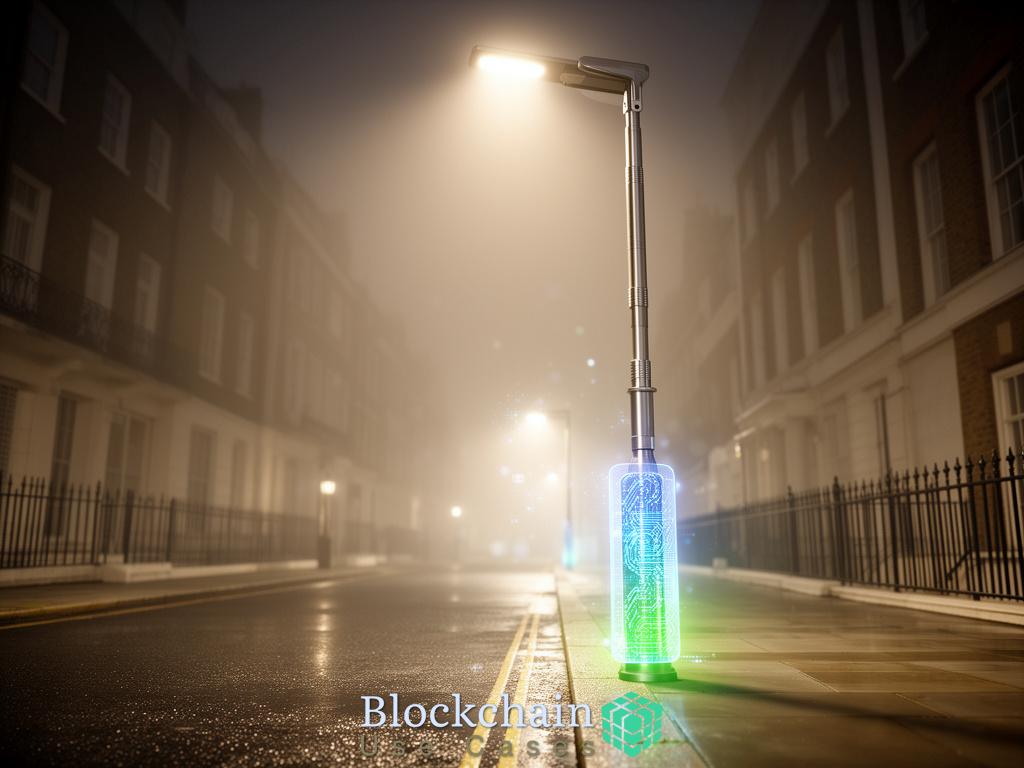
The introduction of blockchain frameworks into decentralized smart street lighting networks redefines how control commands and sensory data are managed. Each lighting unit, embedded with IoT capabilities, communicates with peers through a shared ledger that maintains a permanent record of all actions and transactions. Immutable data blocks ensure that unauthorized alterations or cyber intrusions can be instantly identified, improving the system’s security posture manifold. Furthermore, smart contracts can autonomously execute specific tasks—such as power adjustments based on peak traffic or weather metrics—without human intervention, fostering greater efficiency and self-regulation across the network.
Unlike conventional authorization systems that can be compromised via a single breach point, blockchain-based lighting infrastructure operates on a peer-to-peer verification model. Each decision—whether it pertains to dimming schedules or maintenance alerts—is validated across multiple nodes, eliminating single points of failure. This distributed validation mechanism strengthens both accountability and performance consistency within citywide lighting grids. Ultimately, transparency extends beyond operational benefits; it contributes to civic trust, as municipalities can openly demonstrate data integrity within their public infrastructures.
Integrating blockchain into decentralized lighting systems contributes to more than just data security—it transforms overall system resilience and energy optimization. Through tokenized data exchange, lighting units can autonomously negotiate energy distribution, ensuring resources are allocated where they are needed most. For instance, areas with higher pedestrian activity can dynamically receive increased illumination, while less active zones conserve energy. Each transaction is logged on the blockchain, producing a transparent energy audit trail that supports both efficiency reporting and predictive analytics.
The combination of blockchain and IoT analytics introduces a shift toward self-governing energy infrastructures capable of adapting in real-time to urban dynamics. Decentralized ledgers also facilitate interoperability among different urban services such as traffic control, surveillance, and energy management systems, promoting a unified data ecosystem. As such, blockchain becomes not just a tool for manipulation prevention, but an enabler of cross-sector collaboration, ensuring consistent performance across interconnected city functions. The cumulative impact of this integration forms the foundation of a smarter, safer, and more sustainable urban uptime cycle—where every streetlight contributes proactively to the intelligence and reliability of the city it illuminates.
Energy Efficiency Optimization through Distributed Control
As cities continue to evolve into intelligent ecosystems, energy efficiency stands at the heart of their technological transformation. Within the framework of decentralized IoT-based street lighting control systems, distributed intelligence offers a groundbreaking method for reducing energy waste and enhancing operational performance. Moving beyond centralized dependency, today’s smart lighting infrastructure leverages localized decision-making, data-driven automation, and adaptive algorithms that align lighting intensity with real-time environmental needs. This decentralized paradigm introduces a proactive mechanism where every node actively participates in optimizing urban illumination, rather than following a rigid, one-size-fits-all energy model.
In a decentralized control environment, energy optimization is driven by autonomous decision nodes that process real-time data from sensors measuring motion, illumination levels, and ambient conditions. Each streetlight operates as a semi-intelligent entity capable of self-assessment and peer communication. Rather than waiting for centralized directives, lights collaborate locally, exchanging data to determine areas that require illumination enhancement or reduction. This dynamic coordination allows for immediate adaptation during sudden changes such as weather variations, traffic density, or special events, ensuring that no energy is consumed unnecessarily.
Localized energy management not only reduces power consumption but also mitigates operational latency, as decisions are executed at the edge of the network. Machine learning models embedded within the nodes continuously analyze historical consumption patterns, enabling the system to predict usage trends and fine-tune brightness levels with remarkable precision. The synergy between predictive analytics and distributed control ensures that illumination is neither excessive nor insufficient, but precisely calibrated for each unique context. Compared to traditional systems, this approach demonstrates remarkable improvements in both real-time responsiveness and energy sustainability.
Distributed control systems thrive on collaboration. Through peer-to-peer communication protocols, lighting units share energy data, system health updates, and environmental insights, forming a self-sustaining ecosystem. This interconnectivity is particularly important in urban environments with varying energy requirements across districts. For example, high-traffic intersections may demand consistent brightness, while residential areas can shift to lower intensity during late-night hours. Such adaptability is achieved without centralized instruction, as collaborative algorithms autonomously determine optimal power distribution on a node-to-node basis.
Moreover, the integration of blockchain-based coordination, as introduced in previous models, enhances trust and verifiability among these interactions. Through immutable ledgers, each energy adjustment becomes traceable, ensuring transparency in consumption metrics and preventing manipulation. Combined with AI-driven analytics, this transparency supports data-backed policymaking for urban planners and energy authorities. Cities gain the capacity to design adaptive lighting policies grounded in authenticated efficiency data, ultimately promoting environmental sustainability alongside fiscal responsibility.
Decentralized energy management frameworks extend beyond immediate power reduction—they establish a resilient governance model capable of evolving with city demands. By distributing intelligence and control, the system becomes resistant to localized faults, ensuring uninterrupted operation even when certain nodes fail. Additionally, renewable integration is simplified, as distributed solar or wind-powered units can be seamlessly incorporated into the existing network, contributing surplus energy when available and reducing dependency on centralized grids.
The long-term implications of such architectures are profound. Urban centers adopting decentralized IoT lighting systems will witness significant declines in operational costs, maintenance overhead, and carbon emissions. The convergence of distributed intelligence, blockchain-backed accountability, and predictive analytics defines a new era of energy governance—one that transforms smart lighting systems from static infrastructure into dynamic, learning ecosystems. In the broader context, these advancements illuminate how distributed control mechanisms can reimagine urban sustainability, ensuring that every watt of energy is utilized with maximum efficiency and minimal waste.
Scalability and Interoperability in Smart Lighting Networks
As urban infrastructures evolve into highly interconnected digital ecosystems, scalability and interoperability have emerged as pivotal benchmarks for the success of decentralized IoT-based smart street lighting systems. The ability to expand seamlessly while maintaining cohesive communication among heterogeneous technologies is critical to ensuring the long-term viability of smart city initiatives. Modern lighting networks, powered by distributed intelligence and adaptive algorithms, are no longer confined to singular vendor ecosystems — they thrive on interoperability and standardization, shaping a foundation for truly intelligent urban illumination.
One of the fundamental advantages of decentralized IoT lighting control systems lies in their inherent scalability. Unlike traditional architectures that struggle to accommodate increasing node counts due to centralized bottlenecks, decentralized frameworks distribute decision-making across edge layers. Each lighting unit operates semi-independently, processing environmental data and sharing intelligence with nearby nodes. This distributed configuration ensures that as new lamps, sensors, or gateways are integrated, performance remains stable without overwhelming a central server.
Scalability in decentralized environments also entails adaptability to ever-evolving urban needs. New districts, pedestrian zones, or transit corridors can be added without redesigning the entire network topology. Moreover, integration with additional smart infrastructure — from traffic signals to environmental monitoring systems — occurs organically through standardized protocols. The network effectively grows in a modular manner, where interoperability is the catalyst for sustained expansion and operational coherence across city segments.
Interoperability represents the cornerstone of collaboration among diverse IoT lighting solutions, vendor systems, and urban management platforms. By adhering to open communication standards such as MQTT, CoAP, or OPC-UA, lighting nodes can seamlessly exchange data, irrespective of hardware manufacturer or software origin. This flexibility mitigates vendor lock-in issues and accelerates cross-platform system integration, enabling cities to adopt multi-vendor ecosystems that dynamically cooperate to achieve shared energy and efficiency goals.
The emergence of shared APIs and decentralized service frameworks ensures that smart lighting can interact intelligently with complementary services such as security surveillance, weather forecasting, and emergency response networks. Blockchain-enabled interoperability further enhances data credibility, as information exchange between independent entities is cryptographically verified, building a robust chain of trust. In this ecosystem, each system operates autonomously yet contributes to a collective intelligence that amplifies resource efficiency and reliability.
Key Enablers of Interoperable Scalability in Smart Lighting Systems:
- Standardized Protocols: Adoption of open IoT standards promotes communication consistency across hardware and software platforms.
- API-Based Integration: Modular APIs enable rapid interlinking with external services such as traffic management and renewable energy grids.
- Microservices Architecture: Distributed service units ensure flexible deployment and system-level redundancy.
- Edge-Oriented Processing: Autonomous local decision-making improves latency and reduces central computational strain.
- Blockchain Coordination: Provides secure data validation and multi-system synchronization without dependency on centralized authorities.
The convergence of scalability and interoperability transforms decentralized street lighting into a resilient and future-proof urban infrastructure. As cities progress toward digital maturity, the integration of interoperable frameworks ensures not only operational efficiency but also policy-driven governance based on transparent data exchange. By leveraging distributed control logic and standardized communication interfaces, municipalities can evolve their lighting systems at scale — adapting effortlessly to population growth, energy transitions, and technological innovation.
Ultimately, scalable and interoperable smart lighting networks represent more than technological evolution; they serve as architectural blueprints for inclusive and sustainable city development. Each luminaire becomes an intelligent node in a larger ecosystem, driving urban progress through collaboration, adaptability, and resilience. The success of decentralized management lies not only in illumination but in the illumination of data, strategy, and trust shared among the systems that light our cities.
Data Privacy and Fault Tolerance in Decentralized Infrastructure
In the evolution of decentralized IoT lighting systems, the transition toward autonomous and highly connected city infrastructures has introduced a new frontier in data management and resilience. As lighting networks become increasingly intelligent, the volumes of information they generate about environmental conditions, energy use, and pedestrian behavior require not only smart processing but also robust mechanisms for privacy protection and operational continuity. Modern decentralized infrastructures are redefining how cities secure their data and ensure uninterrupted function, even in the face of system faults or cyber risks.
The decentralization of IoT systems distributes intelligence across network layers, significantly altering the way privacy is preserved. Unlike centralized configurations, where vast amounts of sensitive data converge in a single repository, decentralized infrastructures promote data sovereignty at the edge. Each node — a smart lamp post equipped with sensors and processing units — handles data autonomously, anonymizing and encrypting it before transmission. This ensures that only relevant insights, rather than raw identifiers, are shared across the network.
Encryption, blockchain validation, and zero-knowledge proofs play a crucial role in reinforcing privacy. As lighting nodes exchange operational data, distributed ledger mechanisms verify integrity without disclosing confidential details, enhancing transparency while preventing unauthorized interception. Furthermore, compliance with global data protection standards is streamlined by localized data governance, ensuring that cities uphold citizens’ digital rights within the smart infrastructure domain. By decentralizing both data storage and control logic, city administrators gain a dual benefit — minimizing exposure to cyber intrusions while maintaining the agility required for real-time illumination management.
Decentralized lighting systems are inherently designed to withstand disruptions, offering fault-tolerant architecture that guarantees continuous operation even when specific nodes fail or get disconnected. Each network unit operates semi-independently and communicates with its neighboring nodes, enabling dynamic rerouting of control commands when disruptions occur. This layered redundancy transforms street lighting from a linear network into a self-healing ecosystem — a vital capability for cities aiming to minimize downtime.
When faults appear, predictive maintenance algorithms embedded at the edge rapidly identify anomalies, isolate affected segments, and redirect power distribution to maintain illumination. The inclusion of distributed consensus protocols ensures that system decisions remain consistent, even when partial failures are detected. Unlike centralized systems where a single server malfunction can lead to widespread outages, decentralized frameworks embrace resilient consensus, allowing the network to continue functioning with minimal external intervention. The synergy between fault isolation, adaptive decisioning, and automated recovery defines the backbone of urban reliability in the era of smart street lighting.
Equally important is the integration of AI-driven diagnostic analytics, which continuously learn from sensor feedback and usage data, predicting weak points before major faults occur. Over time, this self-learning capability not only enhances systemic resilience but also informs infrastructure planning — allowing municipalities to allocate resources proactively. Through this intelligent interplay between decentralization and automation, cities achieve both robustness and efficiency, ensuring that no corner of urban darkness goes unmanaged.
The convergence of data privacy and fault-tolerant design marks a critical milestone in the advancement of decentralized IoT-based lighting systems. These principles collectively establish a trustworthy digital environment where privacy-aware operations coexist with uninterrupted service delivery. By safeguarding user data while guaranteeing continuous functionality, decentralized systems embody the essence of an intelligent, sustainable, and secure urban ecosystem.
The future of smart lighting depends on this dual commitment to confidentiality and dependability. As decentralized architectures continue to mature, they will not only redefine energy efficiency but also elevate the ethical and operational standards governing smart city technologies. In doing so, municipalities can foster greater citizen confidence, technological inclusivity, and urban resilience — all illuminated by the enduring light of secure and adaptive innovation.