

Blockchain Frameworks for Decentralized Data Exchange
In an era dominated by volatility and global complexity, supply chain ecosystems are turning towards decentralized technologies to ensure transparency, accuracy, and agility. Among these, blockchain frameworks are reshaping how organizations share and utilize data for demand sensing and forecasting. This approach not only eliminates intermediaries but also empowers businesses with secure, immutable, and real-time insights.

Traditional supply chain systems rely heavily on centralized databases, where data silos often hinder real-time collaboration. By contrast, blockchain networks create a shared truth—a synchronized ledger accessible to all authorized participants. This decentralized design enhances data integrity and reduces disputes by ensuring all records are verified and timestamped.
Several popular frameworks have gained traction in this space, enabling efficient and interoperable data exchange. Their design structures differ by speed, governance, scalability, and consensus mechanisms, yet they share one fundamental principle: transparency without compromise.
| Framework | Key Features | Use Case in Supply Chain |
|---|---|---|
| Hyperledger Fabric | Permissioned network, modular architecture, scalable consensus | Secure sharing of supplier performance data |
| Ethereum | Public or private network options, smart contract flexibility | Automated contract execution between suppliers and buyers |
| Corda | Privacy-oriented, transaction-level visibility | Financial transaction verification in complex supply ecosystems |
Each framework addresses specific operational challenges. For instance, Hyperledger Fabric emphasizes enterprise-grade scalability, while Ethereum appeals to organizations exploring open innovation through decentralized applications. The choice depends on governance requirements, compliance considerations, and integration capabilities with existing ERP systems.
Predictive accuracy in demand forecasting depends heavily on the velocity and veracity of data. Blockchain-powered data exchange models allow manufacturers, distributors, and retailers to contribute information in real time while maintaining control over their proprietary datasets. This decentralized shared visibility transforms demand sensing by merging on-chain transactions with IoT and AI-driven analytics.
Blockchain doesn’t just redefine how data moves; it revolutionizes how insights are generated. Smart contracts can autonomously trigger procurement processes when forecast anomalies are detected, reducing human error and accelerating responsiveness. The result is a more resilient and anticipatory supply network that thrives on verified datasets rather than delayed estimations.
The following list highlights crucial steps for implementing blockchain-based data exchange frameworks effectively:
- Evaluate Data Sources: Identify structured and unstructured data streams that influence demand fluctuations.
- Select the Appropriate Blockchain Framework: Match consensus mechanisms and governance models with operational objectives.
- Design Smart Contracts: Automate agreements for faster execution and transparency.
- Integrate with AI and IoT: Combine decentralized data with intelligent analytics for adaptive forecasting.
- Ensure Regulatory Compliance: Align data access and privacy standards with regional and international policies.
By leveraging blockchain’s decentralized nature, supply chain ecosystems gain a level of trust and speed that were previously unattainable in centralized systems. As enterprises continue to move toward digital transformation, blockchain frameworks for decentralized data exchange stand at the forefront of predictive accuracy and operational resilience.
Integrating IoT and Edge Computing for Real-Time Insights
As companies transition toward data-driven ecosystems, real-time intelligence has become the bedrock of effective supply chain orchestration. While blockchain ensures data integrity and transparency, the next phase of transformation relies on IoT (Internet of Things) and edge computing technologies. Together, they accelerate the collection, processing, and distribution of data closer to its source—enabling faster and more accurate demand sensing. These technologies close the gap between data generation and actionable insight, helping enterprises stay adaptive to unforeseen disruptions and market shifts.
The integration of IoT devices into decentralized supply chain systems extends the visibility of operations far beyond traditional boundaries. Through a network of connected sensors, RFID tags, and intelligent monitoring tools, stakeholders can access granular, real-time metrics on production rates, logistics conditions, and consumer demand patterns. This level of transparency reduces dependency on forecast assumptions and increases the accuracy of predictive models.
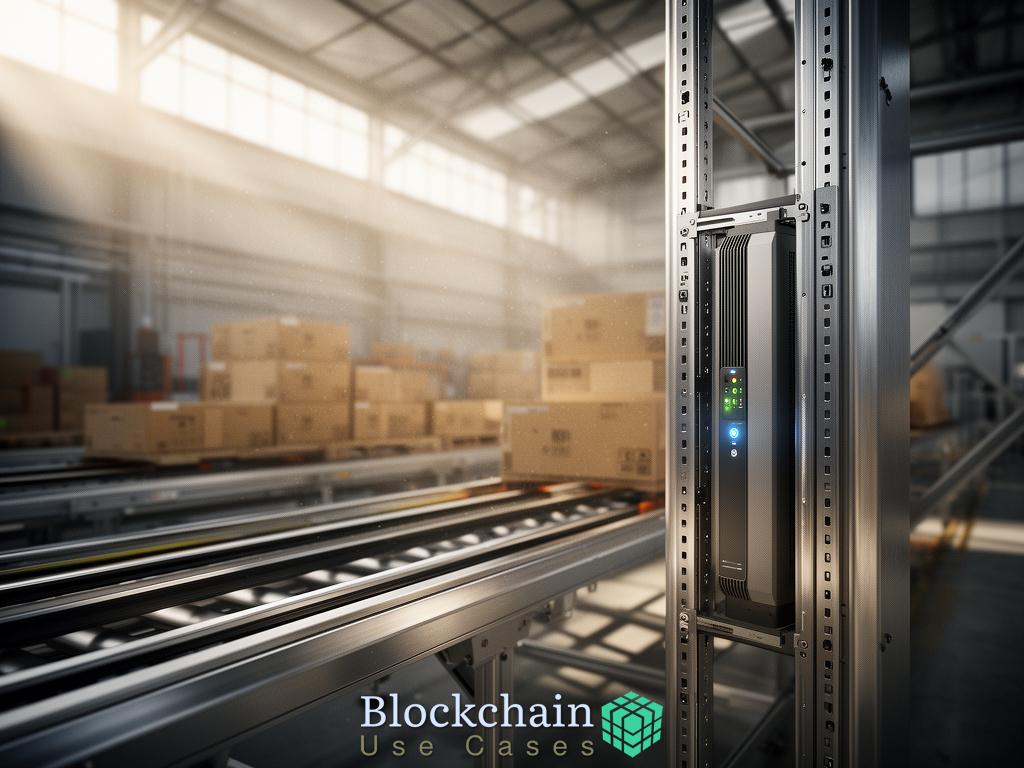
For instance, IoT-enabled tracking ensures that temperature-sensitive goods in transit maintain compliance with quality standards. As each device relays verified data to the blockchain ledger, a dynamic, authenticated data trail emerges. This stream of trusted insights enhances situational awareness and allows decision-makers to act instantaneously on deviations. Rather than waiting for monthly or quarterly updates, IoT connectivity turns supply chains into living, breathing systems capable of continuous optimization.
While cloud computing has long supported analytic models, the exponential growth of IoT devices brings new challenges in latency and bandwidth. Edge computing mitigates this by processing data locally, closer to sensors, thus ensuring insights are generated faster and with minimal dependency on centralized systems. By pushing computation to the edge, organizations can identify inventory shortages or logistics delays as they happen, not hours later.
This architecture is particularly valuable in decentralized networks where timeliness determines competitive advantage. Edge nodes act as both data analyzers and integrity verifiers—filtering false inputs before they reach the blockchain. The result is a more efficient network with reduced data congestion and enhanced privacy. Moreover, the synergy of blockchain-led trust and edge-level intelligence fosters an autonomous analytics layer that continuously refines forecasting algorithms based on verified contextual data.
The convergence of blockchain, IoT, and edge technologies marks a pivotal milestone in the future of supply chain forecasting. Each component serves a critical function: blockchain maintains immutability and trust, IoT supplies data granularity and visibility, and edge computing ensures speed and scalability. Their combined implementation enhances end-to-end traceability and transforms demand prediction into a proactive process built on validated, real-time insights.
Adoption strategies usually start with identifying high-impact data points—such as shipment tracking, equipment performance, or retail sales frequency—that benefit the most from edge-enabled sensors. Once collected, these insights flow securely into decentralized ledgers for consolidation and machine-learning analysis. The following table illustrates the complementary capabilities of each technology layer within a decentralized demand sensing ecosystem:
| Technology | Primary Function | Contribution to Forecasting Accuracy |
|---|---|---|
| Blockchain | Immutable data governance | Ensures transparency and trust in data exchange |
| IoT | Continuous real-time monitoring | Captures real-world events influencing demand volatility |
| Edge Computing | Local, high-speed data analysis | Improves decision-making speed and operational responsiveness |
Enterprises that effectively align these three pillars not only strengthen their forecasting accuracy but also redefine the standards of resilience and agility across global supply networks. As supply chains evolve toward autonomous ecosystems, real-time intelligence powered by decentralized and distributed technologies will set the new benchmark for operational excellence.
AI-Driven Forecasting Models in Distributed Supply Networks
As supply chains grow increasingly decentralized, the complexity of forecasting has expanded beyond traditional analytical boundaries. The fusion of Artificial Intelligence (AI) with distributed data ecosystems offers a paradigm shift—enabling predictive accuracy that evolves dynamically with real-world changes. When combined with blockchain, IoT, and edge computing, AI transforms supply chains from reactive entities into self-optimizing systems that anticipate demand fluctuations through verified, real-time data feeds. The result is a forecasting infrastructure that mirrors the agility and transparency of modern commerce.
AI-driven forecasting in distributed supply networks is characterized by its ability to learn continuously from decentralized data sources. Each node within the network—whether a supplier, logistics hub, or retail outlet—contributes unique datasets that enrich model accuracy. Unlike centralized systems where data flows in one direction, decentralized forecasting fosters bi-directional intelligence exchange, allowing prediction models to adapt dynamically to localized changes. Machine learning algorithms analyze patterns, detect anomalies, and recalibrate projections without human intervention, ensuring forecasts remain current and contextually aware.
One of the defining advantages of AI in decentralized forecasting lies in its contextual responsiveness. AI models no longer rely solely on historical data; they integrate real-time information derived from edge and IoT devices validated via blockchain. This constant feedback loop allows systems to sense demand shifts caused by environmental factors, market trends, or supply disruptions. Consequently, organizations move from traditional batch forecasting to a living predictive network that learns and evolves with every transactional input.
In distributed supply chains, data privacy and proprietary boundaries often limit collaboration. AI overcomes this challenge through federated learning—a technique that enables multiple stakeholders to train shared models without exchanging raw data. Each participant contributes insights derived from local datasets, while model parameters are aggregated to form a global framework for prediction. This ensures both data sovereignty and collective intelligence, balancing security with performance.
By decentralizing the model training process, federated AI diminishes bias introduced by singular data sources and enhances the relevancy of global forecasting models. It allows supply chain partners to participate in a transparent ecosystem where trust and intelligence coevolve. Decisions regarding procurement, logistics scheduling, and resource allocation become more proactive, leveraging the collective computational power of an entire network rather than isolated entities. This democratization of intelligence stands as a key differentiator in achieving forecasting excellence in complex, volatile markets.
As predictive systems mature, the synergy between AI and decentralized infrastructure redefines how businesses interpret supply-demand dynamics. AI algorithms embedded within blockchain smart contracts can autonomously initiate actions—such as automated restocking or repricing—based on predictive triggers verified in real time. This convergence of automation and intelligence reduces latency, minimizes human error, and amplifies operational responsiveness.
Moreover, the integration of reinforcement learning models enables continuous improvement of forecasting accuracy through real-world feedback. Each transaction, shipment delay, or supplier update refines the predictive model, creating a self-sustaining intelligence ecosystem. By embracing decentralized AI frameworks, organizations cultivate supply chains that not only predict the future but actively shape it—becoming more resilient, transparent, and informed than ever before.
Ultimately, the path forward for forecasting excellence in distributed supply networks lies at the intersection of AI innovation, decentralized data integrity, and edge intelligence. Together, they form the backbone of an era defined by predictive clarity, operational agility, and trust-driven collaboration across the global supply chain ecosystem.
Ensuring Data Integrity and Security in Decentralized Systems
In decentralized supply chain networks, data integrity and security form the foundation of reliable forecasting. As blockchain, IoT, and AI systems converge, organizations must safeguard the authenticity and confidentiality of every transactional and operational dataset circulating within distributed environments. The shift toward decentralized architectures redefines how enterprises protect critical information—focusing not solely on perimeter defense but on integrating trust at the system’s very core. This evolution is essential for maintaining the precision and credibility of demand sensing models that rely heavily on real-time flows of validated data.
Unlike centralized structures where a single authority verifies transactions, decentralized ecosystems depend on consensus-driven validation to guarantee authenticity. Each participant node plays a role in confirming the accuracy of shared information before it integrates into the ledger. This distributed verification process not only prevents tampering but also enhances transparency across the supply chain network. When every stakeholder—from raw material suppliers to retail partners—operates within a system of collective authentication, the potential for falsified records or misreported data diminishes significantly. Such mechanisms are vital to ensure that predictive analytics receive trusted inputs, strengthening the overall credibility of demand forecasts.
Furthermore, cryptographic hashing mechanisms underpin the immutability of decentralized records. Once data is entered into the blockchain, it becomes a permanent and verifiable component of the collective ledger. This permanence creates a traceable audit trail that simplifies compliance reporting and dispute resolution. The integration of multi-signature protocols and identity authentication frameworks adds another layer of security, ensuring that only authorized entities can alter or append records. In this environment, transparency becomes not an optional feature but a structural guarantee, reinforcing confidence in every piece of data that shapes predictive decisions.
As IoT and AI expand data exchange across supply networks, protecting data sovereignty becomes essential. The decentralized model distributes control, allowing individual partners to retain ownership and governance over their proprietary datasets. Advanced encryption techniques, together with zero-knowledge proofs, enable validation and analysis without exposing sensitive information. This balance between accessibility and confidentiality is particularly crucial for enterprises operating across multiple regulatory jurisdictions.
In federated learning environments, where AI models train collaboratively without central data pooling, security and privacy frameworks must evolve in tandem. Homomorphic encryption allows computations to be performed on encrypted data, preventing potential leaks even during active analytics. At the same time, permissioned network designs restrict data access based on predefined roles, maintaining visibility while safeguarding intellectual property. This orchestration of data privacy not only ensures compliance but also nurtures trust between partners—a critical factor for transparent collaboration in competitive markets.
Decentralized supply systems must treat data security as an evolving discipline rather than a static layer of defense. Integrating AI-enhanced monitoring can help detect anomalies, identify intrusion attempts, and adapt defenses in real-time. These self-learning mechanisms use behavioral analytics to recognize irregularities across distributed nodes, minimizing the risk of data manipulation or network interference. Over time, this intelligence-driven approach transforms security from a reactive posture into a proactive framework designed for continuous reinforcement.
Equally important is the concept of security interoperability. As organizations deploy hybrid architectures combining blockchain, edge, and cloud infrastructures, seamless communication between these layers becomes vital. Automated policy orchestration ensures consistent access rules and encryption standards across all environments. This integrated approach strengthens the resilience of decentralized demand forecasting ecosystems, allowing them to scale securely while preserving the agility that modern supply chains demand. Ultimately, the synergy between transparency, trust, and adaptive security defines the integrity backbone of next-generation forecasting networks—ensuring that as data moves faster, it also remains verifiable, confidential, and resilient against compromise.
Operational Benefits and Implementation Challenges
As decentralized technologies mature across global supply chains, their practical implications extend far beyond digital transformation. The fusion of blockchain, IoT, AI, and edge computing is not merely an innovation trend—it is becoming a strategic necessity for organizations striving to achieve accuracy, efficiency, and responsiveness in forecasting. The ability to leverage verified, real-time data flows allows enterprises to move from static planning to dynamic adaptability. Yet, while the operational advantages are manifold, successful execution demands overcoming structural and technical hurdles that accompany such advanced integrations. Understanding both the benefits and challenges is essential for developing an ecosystem that truly captures the value of decentralized demand sensing.
The most profound advantage of decentralized demand sensing lies in its power to enhance operational agility. Traditional forecast processes often suffer from latency, relying heavily on outdated or linear models that fail to capture the volatility of modern trade environments. In contrast, decentralized forecasting systems transform each network node into a real-time intelligence source, capable of feeding continuously updated information directly into shared predictive models. This approach minimizes delay and maximizes situational awareness, allowing decision-makers to respond instantly to supply fluctuations or market anomalies.
Furthermore, enterprises adopting decentralized frameworks experience a remarkable improvement in data visibility and accountability. Since all transactions and sensor-based updates are immutably recorded on distributed ledgers, organizations no longer need to depend on manual reconciliations or third-party audits. The reduction in administrative overhead streamlines compliance processes and significantly cuts operational costs. Equally important, predictive accuracy improves as multiple data contributors—from logistics firms to retail distributors—share verified insights without the bottleneck of centralized data silos. This convergence of trust and transparency empowers businesses to optimize procurement schedules, inventory levels, and production planning with higher precision than ever before.
Beyond efficiencies, decentralization supports risk diversification. When data streams and decision points are distributed, the network becomes more resilient against single points of failure, cyber disruptions, or system overloads. This decentralized resilience, reinforced by AI-driven pattern recognition, ensures continuity in forecasting operations even during market crises or infrastructure downtime. In essence, the operational agility derived from decentralized intelligence enables enterprises to transform forecasting from a passive reporting function into a proactive driver of competitiveness.
Despite its transformative potential, building a decentralized demand sensing infrastructure presents significant implementation challenges that organizations must address strategically. One of the most prominent barriers is the interoperability of systems. Integrating disparate digital frameworks—legacy ERP software, sensor networks, blockchain nodes, and AI engines—requires meticulous coordination. Without a unified data governance model, inconsistencies can emerge, leading to synchronization delays or fragmented insights. To mitigate this risk, enterprises must invest in standardized data schemas and consensus protocols that align with both technical and regulatory requirements.
Equally complex is the issue of scalability and resource allocation. While decentralized networks offer exceptional data accuracy, managing vast volumes of information across numerous nodes can strain computational resources. Edge computing alleviates part of this burden by processing locally, yet organizations must still balance edge autonomy with cloud-based oversight to ensure analytical coherence. Additionally, training personnel to manage decentralized forecasting systems represents a nontrivial challenge. The transition necessitates not only technological upgrades but also a cultural shift toward data literacy, interdepartmental collaboration, and trust in algorithmic decision-making.
Data privacy and regulatory compliance further compound these complexities. Operating across multiple jurisdictions means adhering to varied data protection laws, making privacy-preserving analytics a critical requirement. Deploying techniques such as homomorphic encryption and zero-knowledge proofs helps secure information exchange but adds computational overhead. Moreover, governance frameworks need to clarify how shared intelligence is used and who retains ownership rights over processed insights. Addressing these concerns early in implementation ensures that trust—arguably the cornerstone of decentralized ecosystems—remains intact throughout the network’s evolution.
Ultimately, the success of decentralized demand sensing depends on a phased and well-governed rollout that balances innovation with compliance and scalability. Companies that achieve this balance will not only optimize forecasting precision but also cultivate an ecosystem of interconnected value creation—where every data point contributes to a smarter, faster, and more trustworthy supply chain. The road is complex, but for organizations ready to navigate it, the rewards redefine what operational excellence truly means in the digital economy.