Enhancing Traceability and Transparency in Pharmaceutical Supply Chains
The pharmaceutical industry is facing unprecedented challenges in ensuring the authenticity, traceability, and transparency of medications as they move through complex global supply chains. Counterfeit drugs, product recalls, and compliance demands have made traditional systems increasingly inadequate. To address these challenges, blockchain technology is emerging as a transformative solution for managing product serialization and ensuring end-to-end visibility.
The integration of blockchain technology into pharmaceutical supply chains creates a decentralized ledger capable of recording every transaction—from production to patient delivery—immutably. By digitizing and cryptographically securing serialization data, blockchain ensures that every unit of medicine can be verified at each stage, mitigating the risks of tampering, theft, or counterfeiting. Unlike conventional centralized systems, blockchain enhances data integrity and accessibility across authorized stakeholders.
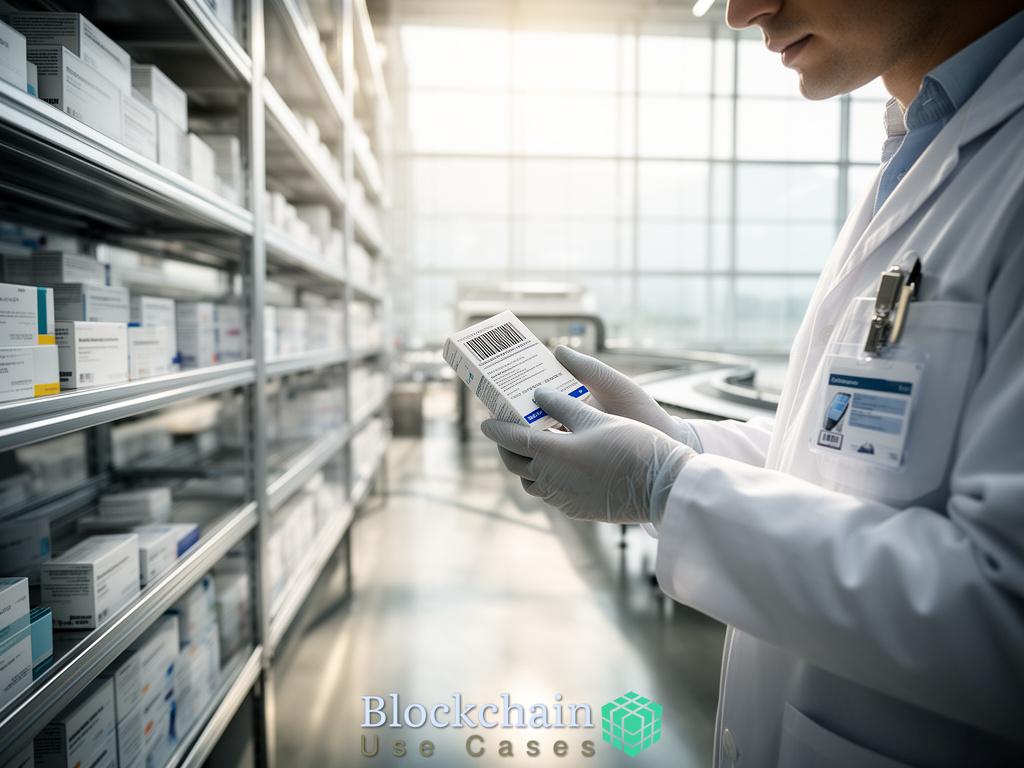
Blockchain-driven serialization also improves interoperability among supply chain participants, enabling seamless data exchange between manufacturers, distributors, and regulators. The result is not only improved compliance with regulations such as the Drug Supply Chain Security Act (DSCSA) but also greater transparency for patients and consumers.
| Aspect | Traditional Systems | Blockchain-Enabled Systems |
|---|---|---|
| Data Record | Stored in siloed databases | Shared immutable ledger |
| Security | Vulnerable to manipulation | Cryptographically secured |
| Regulatory Compliance | Manual reporting and audits | Automated and real-time tracking |
| Transparency | Limited cross-stakeholder visibility | Full traceability from source to patient |
Beyond serialization, blockchain fosters a culture of transparency and accountability within the pharmaceutical ecosystem. Every activity—from manufacturing batch approval to shipment tracking—can be verified instantly. This traceability helps national agencies and regulators respond more efficiently to quality issues, recalls, or cases of smuggling.
Furthermore, smart contracts in blockchain environments introduce automated compliance mechanisms. By integrating rules-based triggers, companies can ensure that products are not distributed unless all tracking requirements are met. This reduces administrative burdens and guarantees real-time verification of compliance credentials.
Below is a summarized list illustrating how blockchain elevates traceability and transparency:
- Immutable Tracking: Each serialized product receives an unalterable digital identity, ensuring authenticity verification at every checkpoint.
- Enhanced Collaboration: Shared access across stakeholders ensures faster decision-making and improved risk response.
- Consumer Empowerment: Patients can scan or verify drugs via blockchain-supported applications, confirming authenticity in real time.
- Regulatory Efficiency: Automated audit trails simplify compliance with global regulatory frameworks.
With blockchain’s integration into pharmaceutical serialization systems, the industry is stepping into a new era of secured supply chains. It empowers all participants—from producers and wholesalers to retailers and patients—to operate in an environment of mutual trust, transparency, and verifiable safety.
Strengthening Regulatory Compliance Through Immutable Data Records
The global pharmaceutical supply chain operates under strict regulatory oversight, where maintaining accuracy, accountability, and verifiability of data is paramount. As governments tighten compliance frameworks such as the Drug Supply Chain Security Act (DSCSA) and EU Falsified Medicines Directive (FMD), companies face increased pressure to adopt systems capable of ensuring data integrity from manufacture to delivery. Blockchain’s immutable data recording capabilities offer a groundbreaking solution, enabling regulators and manufacturers to achieve unprecedented levels of compliance assurance. By guaranteeing that each data entry is verifiable, tamper-proof, and permanently recorded, blockchain transforms compliance management from a reactive task into a proactive safeguard.
One of the foremost challenges in regulatory adherence lies in the difficulty of verifying every event across the production and distribution network. Traditional databases can be altered or misreported, leading to discrepancies during audits. Blockchain eliminates these vulnerabilities by establishing a unified and tamper-resistant record-keeping structure where all authorized nodes operate on consensus validation. Each block records not only serialization identifiers but also manufacturing timestamps, shipping credentials, and inspection outcomes—ensuring that every regulatory checkpoint is historically preserved. This creates a continuous and transparent audit trail accessible to both regulators and supply chain participants in real time. As a result, compliance reviews that once required manual document tracing now happen with digital certainty, reducing delays, errors, and administrative expenditure.
Another critical advantage of blockchain-enabled serialization lies in its capacity to automate compliance reporting through embedded smart contract functionality. These programmable contracts execute predefined actions when regulatory parameters are met or breached—such as flagging discrepancies in batch information or halting distribution if serialization data is incomplete. This automation ensures real-time regulatory alignment while reinforcing the accountability of manufacturers and distributors. Moreover, data immutability inherent to blockchain technology assures agencies that reports received are unaltered and fully traceable to their origins. The result is a dynamic compliance ecosystem where transparency aligns directly with operational efficiency, and oversight transitions from post-incident verification to continuous monitoring.
As supply chains become increasingly cross-border, regulatory harmonization depends on trusted data exchange. Blockchain’s immutable records serve as a universal standard for compliance validation, fostering collaboration between international agencies and industry stakeholders. By adopting blockchain-based serialization frameworks, organizations not only meet local regulatory demands but also align with global transparency initiatives. Each immutable ledger entry reinforces confidence among regulators, partners, and patients, allowing for comprehensive validation of product authenticity, origin, and handling history. In essence, the implementation of blockchain-driven data governance represents more than a technological upgrade—it signifies a paradigm shift toward an ecosystem of trust, integrity, and resilient compliance.
Reducing Counterfeit Risks via Secure Product Serialization
Blockchain technology is revolutionizing how the pharmaceutical industry combats the growing threat of counterfeit drugs—a persistent issue that undermines patient safety and erodes public trust. By enabling secure, transparent, and immutable serialization of pharmaceutical products, blockchain empowers stakeholders with a unified mechanism to track and authenticate drugs through every stage of distribution. This evolution marks a significant step toward safeguarding supply chain integrity, turning serialization from a regulatory requirement into a strategic defense against counterfeiting.
At the heart of counterfeit prevention lies the creation of a unique digital identity for every medical product. Blockchain enhances this process by embedding serialization data directly into a decentralized and cryptographically secured ledger, ensuring that once recorded, information cannot be modified or erased. This immutable structure guarantees the authenticity of each product by verifying its entire provenance—from manufacturing facilities to pharmacies and ultimately to patients. Every transaction, transfer, or verification event is timestamped and synchronized across all authorized participants, providing a single source of truth resistant to manipulation. As a result, fraudulent versions of medications can be instantly flagged, while legitimate products remain verifiable through seamless interoperability among supply chain networks.
In conventional systems, data often resides in isolated databases that can be compromised or manipulated. Blockchain replaces this vulnerability with shared validation and cryptographic accountability. Manufacturers, distributors, and regulators can monitor the journey of each serialized batch in real time, ensuring discrepancies are detected at their source. This approach not only mitigates financial losses stemming from counterfeit infiltration but also strengthens post-market surveillance, empowering pharmaceutical companies to maintain absolute oversight across complex global networks.
The application of smart contracts introduces a new layer of control in preventing counterfeit distribution. These programmable protocols automatically validate serialization data and trigger predefined actions when certain conditions are met—such as halting distribution if a product’s digital signature does not align with the blockchain record. This automation minimizes human error and ensures continuous compliance enforcement at every point of the supply chain. When a product changes hands, the blockchain instantly updates its ownership and verification credentials, eliminating administrative lag and strengthening transactional transparency.
Moreover, smart contracts deliver proactive counterfeit mitigation by ensuring only authenticated items are permitted into regulated trade channels. Combined with advanced scanning and blockchain-integrated consumer applications, patients and healthcare providers can instantly confirm the authenticity of medications using a simple digital verification process. This consumer-level accessibility amplifies trust and cultivates a responsible supply chain culture where transparency becomes an inherent component of product safety and brand credibility.
Blockchain’s decentralized design dismantles the traditional silos that have historically limited visibility across pharmaceutical logistics. By establishing a tamper-proof data ecosystem, all stakeholders—from manufacturers to monitoring agencies—can securely contribute and retrieve information without jeopardizing confidentiality or data accuracy. The immutable nature of blockchain records serves as a deterrent to counterfeiters, whose operations depend on exploiting information gaps and unregulated exchange points.
Through the seamless integration of blockchain-enabled serialization, the pharmaceutical industry not only addresses counterfeit risks but also enhances overall operational integrity. The shift toward digitized, trust-based networks is reshaping the perception of supply chain security, reinforcing global regulatory cooperation, and strengthening confidence in the legitimacy of medical products. In this transformed environment, blockchain becomes more than a technology—it stands as a trusted guardian of authenticity, ensuring that patients receive safe, verified, and reliable medicines every time.
Integrating Blockchain with Existing Serialization Systems for Operational Efficiency
The pharmaceutical industry is increasingly realizing that blockchain does not need to replace existing serialization infrastructure—it can strengthen and extend it. As supply chains grow more complex and globalized, organizations seek hybrid solutions that merge blockchain’s immutable data structures with their current systems for serialization and product tracking. This integration heralds an era of amplified operational efficiency, reducing redundancies while enhancing coordination between manufacturers, distributors, and regulators. The resulting synergy ensures that serialized data not only fulfills regulatory mandates but also drives business intelligence, safety, and performance optimization throughout the supply chain lifecycle.
One of the foremost advantages of integrating blockchain with pre-existing serialization systems lies in creating a unified digital ecosystem where traceability and efficiency converge. Traditional serialization platforms often operate in isolated silos, storing track-and-trace data locally or within enterprise servers. This architecture, although compliant, lacks the dynamic transparency demanded by modern regulatory and commercial landscapes. By overlaying blockchain, existing infrastructures gain an immutable and distributed validation layer—ensuring that each serialized product record is verified, timestamped, and transparently synchronized across the network. The process allows for real-time authentication and eliminates duplicated entries, manual reconciliations, and data inconsistencies that typically disrupt supply continuity.
Moreover, blockchain integration safeguards previous technology investments. Rather than undergoing costly system replacements, pharmaceutical companies can connect existing ERP and serialization solutions to blockchain APIs, establishing secure data pipelines that deliver unparalleled visibility. In this blended environment, data harmonization and inter-system interoperability become foundational pillars, enabling efficient communication between stakeholders and ensuring coherent reporting to regional and global authorities. The result is a cost-effective transformation that reinforces compliance, reliability, and data consistency across the value chain.
The operational efficiency driven by blockchain integration extends beyond the realm of record integrity—it revolutionizes workflow automation. Smart contracts embedded in blockchain systems execute pre-set conditions automatically, allowing instantaneous validation of serialized products and production events without manual intervention. For instance, when serialization data from a batch crosses to the next supply chain checkpoint, integrated blockchain mechanisms cross-verify shipment details against immutable records, flagging deviations in real time. This automated governance not only minimizes human error but also accelerates compliance processes that traditionally required days or weeks to audit manually.
Interoperability also gains unprecedented agility through this architecture. Manufacturers, wholesalers, and regulatory bodies can now interact via standardized blockchain protocols that respect each party’s data ownership and confidentiality while ensuring that all participants share a single, verifiable source of truth. The dynamic exchange of batch history, inspection results, and serialization status across systems drastically reduces delays in approval processes, while smart data formatting guarantees seamless data interpretation across borders and software ecosystems. These efficiencies redefine how information flows, effectively transforming the pharmaceutical supply chain into a synchronized digital network that operates on trust, precision, and accountability.
Enterprises introducing blockchain integration into their serialization frameworks note tangible operational returns. The technology not only mitigates counterfeit infiltration but also reduces administrative costs associated with data reconciliation and regulatory audits. Blockchain’s automated integrity checks replace time-consuming manual verifications, ensuring that every transaction—once recorded—remains permanently auditable. A robust interaction between existing serialization systems and blockchain layers enables a higher level of data transparency, supply resilience, and cost-effectiveness. The operational model below contrasts the impact of conventional system configurations with blockchain-integrated serialization methods.
| Operational Aspect | Traditional Serialization Systems | Blockchain-Integrated Systems |
|---|---|---|
| Data Validation | Manual, error-prone checks | Automated cryptographic verification |
| System Interoperability | Limited cross-platform connectivity | Seamless distributed data access |
| Compliance Verification | Periodic audits with paper trails | Continuous real-time monitoring |
| Operational Cost | High due to redundancy and manual updates | Reduced through automation and shared validation |
Ultimately, integrating blockchain with existing serialization infrastructures reshapes the industry’s digital backbone. It not only meets stringent global compliance standards but enhances the efficiency with which the entire supply network functions. By merging immutable blockchain protocols with proven serialization systems, pharmaceutical enterprises establish a new operational frontier—where transparency and efficiency are no longer competing goals but mutually reinforcing realities.