

Enhancing Data Integrity Through Decentralized Ledgers
The intersection of healthcare and blockchain technology is redefining how patient data is stored, accessed, and safeguarded. As cyber threats grow in sophistication, the healthcare industry faces immense pressure to protect sensitive patient records while ensuring efficient access. Blockchain’s decentralized structure offers an innovative solution, promising enhanced data integrity and transparency in managing patient portals.

Patient portals act as critical gateways for both patients and healthcare providers. However, traditional database systems, typically centralized, can be vulnerable to breaches and unauthorized alterations. By implementing blockchain-based solutions, healthcare organizations can establish immutable and auditable records where every transaction or change is chronologically recorded and verified by the network.
Beyond security, blockchain fosters accountability. Each access or update leaves an encrypted trace, ensuring that unauthorized parties cannot alter the data without detection. This builds patient trust and regulatory compliance, aligning medical institutions with frameworks such as HIPAA and GDPR.
Healthcare networks worldwide are beginning to recognize the potential of blockchain in achieving a secure and transparent environment for medical information exchange. Its decentralized design removes single points of failure, making hacking attempts significantly harder. Moreover, patients gain more control over their data, deciding who and when to share their information with.
Outlined below are the major advantages that make blockchain essential in enhancing patient portal security:
- Data Immutability: Every record added to the ledger is permanent and tamper-proof.
- Enhanced Patient Consent Management: Blockchain enables smart contracts that automate and verify consent tracking.
- Decentralized Verification: Multiple nodes validate transactions, reducing dependency on a single authority.
- Lower Risk of Breaches: The distributed network structure minimizes exposure to centralized attack points.
To fully understand the transformative potential of blockchain, it is essential to compare its attributes against conventional database systems. The following table provides a detailed comparison of core aspects:
| Feature | Traditional Systems | Blockchain-Based Systems |
|---|---|---|
| Data Control | Centralized under a single authority | Decentralized and shared among network participants |
| Data Integrity | Prone to alteration or unauthorized edits | Immutable; all changes are securely recorded |
| Accessibility | Managed within institutional boundaries | Accessible under verified and auditable conditions |
| Security Risk | Vulnerable to centralized data breaches | Resilient against cyberattacks due to distributed structure |
As healthcare facilities continue to digitize patient interactions, the demand for superior data integrity and scalable security grows exponentially. Blockchain provides a future-ready solution, not only protecting sensitive information but also transforming patient trust into a tangible asset. Adopting decentralized ledgers is more than a technological upgrade—it is a strategic step toward a transparent, secure, and patient-centric digital healthcare ecosystem.
Securing Patient Authentication and Access Control
As healthcare systems increasingly rely on patient portals to deliver personalized digital services, the fundamental challenge lies in ensuring that only verified users gain legitimate access. The integrity of these authentication systems determines the overall safety of patient data, yet traditional access control models often struggle to meet modern standards of security and transparency. By integrating blockchain technology into authentication frameworks, healthcare institutions can revolutionize how patient identities are verified and how access permissions are granted, monitored, and maintained.
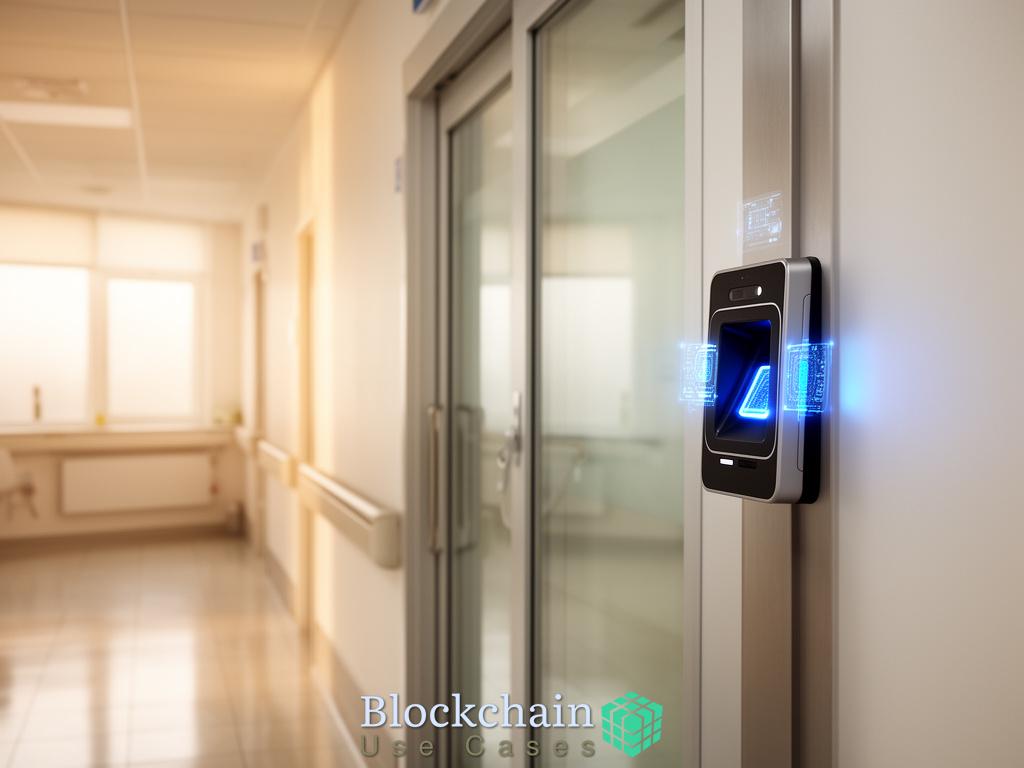
Conventional login systems based on centralized databases present a significant vulnerability, as a single breach could expose thousands of patient records. Blockchain introduces a decentralized identity (DID) mechanism, where identity credentials are stored and validated across a distributed network rather than a vulnerable central repository. Each authentication attempt is cryptographically verified by network nodes, ensuring zero-trust authentication that is transparent and resistant to manipulation. Patients can maintain ownership of their digital identity keys, eliminating dependency on third-party intermediaries and minimizing the risk of data leakage. This self-sovereign identity approach allows patients to authorize healthcare providers without revealing unnecessary personal details, reinforcing privacy by design.
Beyond authentication, blockchain can redefine how access permissions are managed within patient portals. Utilizing smart contracts—self-executing digital agreements recorded on the chain—healthcare systems can automate permission-based controls that dynamically grant or revoke access based on explicit patient consent. For instance, a patient can authorize a specialist to view diagnostic results for a limited time, with all actions immutably logged in the ledger for future auditing. This model not only enhances regulatory compliance with standards such as HIPAA and GDPR but also strengthens trust between patients and providers by ensuring every access event is both traceable and verifiable. Blockchain’s immutable audit trail becomes a real-time security layer, reducing administrative overhead while maintaining accountability across complex healthcare networks.
Implementing blockchain-based authentication represents more than a technical upgrade—it signals a cultural transformation within digital healthcare. By uniting identity validation, consent management, and transparent data access within a single decentralized infrastructure, blockchain promotes a patient-centric security paradigm. This shift empowers individuals to become active gatekeepers of their own medical information, while institutions benefit from the resilience of distributed verification. As cyber threats continue to evolve, decentralized authentication and automated access control mechanisms stand as critical elements in safeguarding the next generation of digital health ecosystems. Blockchain thereby strengthens not only technological frameworks but also the trust that forms the foundation of effective patient engagement.
Smart Contracts for Consent and Data Sharing
As healthcare ecosystems continue to merge with advanced digital infrastructures, the exchange of sensitive data between providers, patients, and third-party organizations demands a new level of control and transparency. Beyond securing identity verification, blockchain introduces a dynamic mechanism for managing how consent and data sharing are executed — through smart contracts. These programmable agreements offer a foundation for automated, rule-based cooperation while upholding every patient’s right to privacy and informed consent. The convergence of smart contracts and decentralized healthcare networks is redefining how patient data circulates, ensuring that information exchanges are secure, compliant, and patient-centered.

Traditional consent management models often rely on paper-based or centralized digital systems, which can be slow, opaque, and vulnerable to human error. In contrast, blockchain-facilitated smart contracts create a transparent digital consent record that updates and enforces itself according to predefined conditions. When a patient authorizes a healthcare provider to access certain data — for example, lab results or treatment history — a smart contract automatically validates and logs this permission onto the distributed ledger. This eliminates ambiguity around who can access what information and for how long.
Each modification to consent permissions is also tracked immutably, offering an auditable trail accessible to both patients and compliance officers. This traceability ensures healthcare organizations meet stringent data protection obligations, aligning operations with legal frameworks like HIPAA and GDPR without cumbersome administrative workloads. The automation embedded within these contracts not only streamlines workflows but also reinforces patient confidence in digital care systems.
Secure interoperability is one of the central challenges in digital health data exchange. Patients often interact with multiple healthcare entities — from local clinics and laboratories to insurers and telemedicine providers — making manual data sharing inefficient and prone to breaches. Smart contracts embedded in blockchain systems can orchestrate data exchanges with unparalleled precision. By defining customized access parameters, patients determine exactly what data can be shared, with whom, and under what circumstances. Information becomes accessible only under verified and auditable triggers, ensuring that privacy remains intact even as information flows freely.
This paradigm transforms the data-sharing process from one of passive trust into one of verified accountability. Healthcare institutions gain assured authenticity of data provenance, while patients benefit from full visibility into the lifecycle of their health information. Smart contracts thus bridge the gap between confidentiality and accessibility — a balance critical to digital healthcare’s evolution.
The integration of smart contracts into patient portals introduces a series of operational and ethical advantages that strengthen the foundations of connected care. As automation replaces manual consent handling, and decentralized networks reduce data silos, the healthcare landscape moves closer to a trust-driven ecosystem. Below is a summary of the most significant advantages that accompany smart contract adoption in patient data systems:
- Automated Compliance: Real-time verification ensures data exchanges comply with both institutional and regulatory requirements.
- Enhanced Patient Autonomy: Individuals retain full ownership and decision-making power over their digital medical identities and data usage.
- Auditability and Transparency: Each transaction or consent event is securely and permanently recorded on the ledger, providing instant auditability.
- Operational Efficiency: Smart contracts reduce administrative bottlenecks, allowing healthcare providers to focus resources on patient care.
- Data Sharing Precision: Fine-grained access controls ensure information is only shared in alignment with patient-defined conditions.
By embedding logic-based trust directly into consent and sharing workflows, blockchain-powered smart contracts are setting a new benchmark for digital transparency in healthcare. As the industry evolves toward patient-controlled ecosystems, this fusion of technology and trust promises a new era of secure, ethical, and efficient data exchange across the global medical community.
Ensuring Regulatory Compliance in Blockchain-Based Portals
As blockchain continues to redefine healthcare data ecosystems, one of its most critical implications lies in achieving and sustaining regulatory compliance. The growing complexity of healthcare data governance, combined with stringent legal requirements such as HIPAA, GDPR, and HITECH, demands a thorough alignment between technology innovation and law. Blockchain offers not only innovative pathways for securing patient records but also introduces mechanisms for recording, validating, and reporting compliance with unprecedented precision. By embedding regulatory principles into the network’s very architecture, healthcare sectors can transition from reactive compliance strategies to proactive, continuous adherence models that evolve alongside policy changes.
For decades, compliance in healthcare technology relied on centralized governance—human audits, server-side logs, and perimeter security checks. Yet these legacy frameworks struggle to offer the audit transparency and real-time accountability required in digital-first ecosystems. Blockchain introduces an immutable infrastructure where each transaction is time-stamped, encrypted, and upload-verified across distributed nodes. This ensures that no single authority can modify or erase patient data without network consensus. Consequently, compliance audits can be executed seamlessly through timestamp verification and smart contract records, rather than manual documentation.
Furthermore, blockchain supports embedded rules that mirror regulatory frameworks. Smart contracts can, for instance, automatically flag instances where access requests violate privacy guidelines or exceed authorized limits. This embedded compliance logic serves as a self-enforcing layer, ensuring that operational decisions align with institutional policy and external legislation. In practice, this results in a continuous verification cycle—turning compliance from a checkbox exercise into a living, automated process within daily workflows.
As patient data traverses global healthcare systems, regulatory interoperability becomes essential. Blockchain’s decentralized model facilitates secure data exchange across borders while maintaining local jurisdictional control—essential for global networks operating under both HIPAA and GDPR frameworks. The transparent design of distributed ledgers enables healthcare providers to trace each transaction back to its origin, confirming *who accessed data, why, and under what authority*. This verifiable data lineage is indispensable in cross-border compliance audits and mitigates risks associated with jurisdictional inconsistencies.
Modern healthcare organizations are increasingly adopting compliance-driven blockchain models, where governance mechanisms are tied directly into cryptographic verification layers. The following comparison demonstrates how blockchain infrastructure enhances adherence over traditional systems:
| Aspect | Traditional Systems | Blockchain-Based Portals |
|---|---|---|
| Compliance Verification | Manual audits and documentation | Automated, on-chain verification through smart contracts |
| Audit Trail Integrity | Prone to alteration or deletion | Immutable and time-stamped records accessible to regulators |
| Cross-Border Data Governance | Fragmented by local regulation boundaries | Unified verification framework adaptable to regional laws |
| Patient Consent Traceability | Dependent on centralized storage systems | Fully decentralized, traceable, and reversible with patient authority |
In the digital healthcare economy, compliance extends beyond legal necessity—it has become synonymous with trust certification. Blockchain provides healthcare institutions with tangible proof of integrity through mathematically verifiable records, strengthening both patient confidence and institutional credibility. This evolution from “compliance as a cost” to “compliance as value” marks a paradigm shift in healthcare governance. By utilizing auditable smart contracts and decentralized verification systems, organizations can showcase transparency not only to regulators but also to patients and partner networks.
Ultimately, blockchain’s regulatory potential lies in its ability to fuse security, traceability, and accountability into a single operational model. As international standards evolve and interoperability frameworks expand, blockchain will continue to serve as the backbone of compliant, secure, and patient-empowered digital healthcare. Its promise is not limited to defending data—it transforms compliance into a resilient, verifiable trust network for the era of intelligent patient portals.