
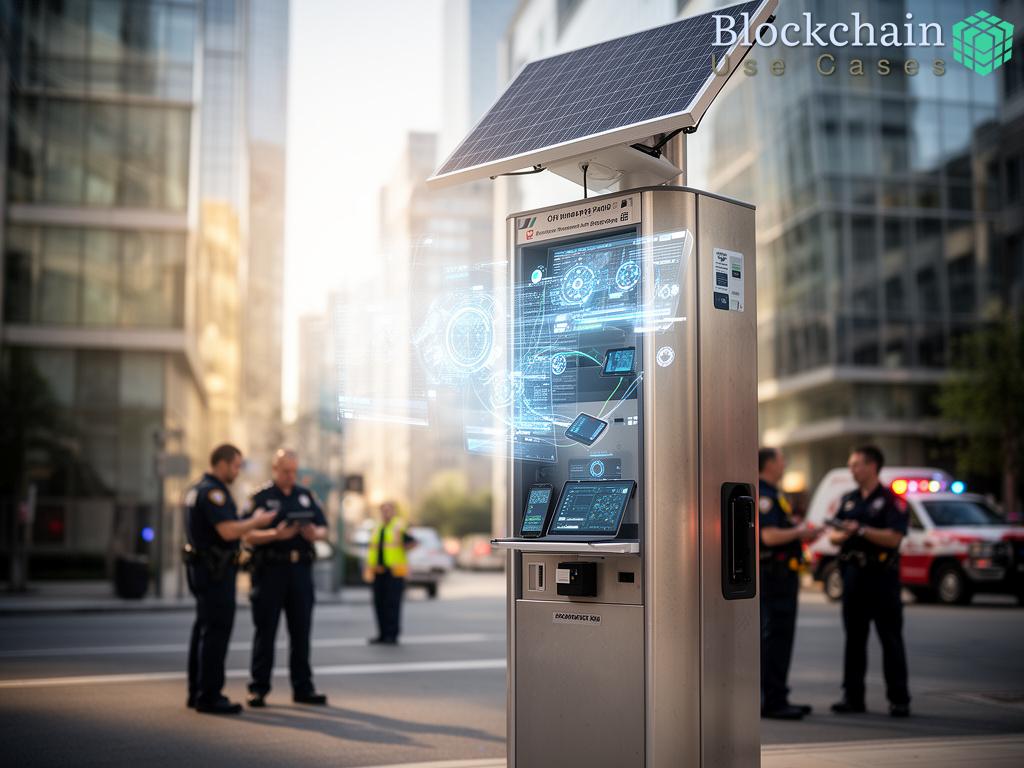
Architecture and Core Principles of Decentralized Emergency Platforms
As natural disasters, public health crises, and infrastructure failures grow in frequency and complexity, the need for real-time, transparent, and collaborative emergency response systems becomes more pressing. Traditional centralized systems, while tested, often succumb to bottlenecks in data dissemination and command structures. This has paved the way for a new paradigm: decentralized emergency platforms that leverage distributed networks to enable faster, more reliable public coordination.
The architecture of decentralized emergency platforms is structured around a series of interoperable layers. Each component functions autonomously while maintaining synergy with others, ensuring operational resilience even under critical network stress. These layers are not mere technical components—they represent a new design philosophy guided by trust minimization and fault tolerance.

Essentially, the system integrates blockchain-backed data registries, peer-to-peer communication grids, and smart contract automation that disseminate verified alerts without the need for centralized approval. Edge devices and local nodes collect and propagate information, ensuring every participant has direct access to vital emergency data streams.
| Layer | Core Function | Resilience Factor |
|---|---|---|
| Data Integrity Layer | Ensures authenticity through distributed ledgers | High – Maintains verifiable data trails |
| Communication Grid | Manages real-time peer-to-peer information flow | Medium – Scales with network topology |
| Automation Layer | Deploys smart contracts for rapid decision activation | Very High – Reduces manual intervention delays |
Beyond their technological architecture, decentralized emergency systems operate under a shared philosophy—an ethos of openness, inclusivity, and security. Each principle amplifies the system’s capacity for community empowerment and cross-sector collaboration. Unlike conventional top-down approaches, these networks thrive on distributed trust models and collective intelligence.
The guiding principles are critical to achieving optimal performance in both urban and remote emergency contexts, ensuring response mechanisms remain adaptive and transparent.
List of Foundational Principles:
- Transparency: All actions, alerts, and data flows remain auditable in real-time, ensuring public trust and accountability.
- Resilience: Even if sections of the network fail, localized nodes continue to transmit and operate independently.
- Interoperability: Seamless integration with existing municipal, state, and international emergency databases supports unified action.
- Decentralized Governance: Decision-making processes are participatory, empowering stakeholders from both public and private sectors.
- Security and Privacy: Advanced cryptographic protocols safeguard sensitive information without compromising transparency.
When juxtaposed with traditional emergency response systems, decentralized approaches demonstrate superiority in three key dimensions: responsiveness, reliability, and resilience. Furthermore, these architectures reinforce the principle of collective governance—enabling civic authorities, NGOs, and community responders to act in synchronized harmony without bureaucratic friction.
The integration of decentralized decision frameworks introduces adaptive response algorithms capable of learning from situational data. Consequently, the governance model evolves into a dynamic feedback loop where human judgment and machine intelligence collaborate efficiently. This transformation is not just technical—it redefines the relationship between technology, governance, and civic responsibility in moments of crisis.
Blockchain and Smart Contract Applications in Crisis Coordination
In an era where every second counts during emergencies, the integration of blockchain and smart contract technologies into decentralized response networks is revolutionizing how communities coordinate under crisis. These innovations transform fragmented data and decision silos into an interconnected ecosystem of automated verification, accountability, and trust. The resulting infrastructure delivers not just speed, but credible and immutable collaboration during times of uncertainty.
The inclusion of blockchain in emergency coordination systems has redefined transparency and data assurance. Unlike centralized databases that can be vulnerable to manipulation or data loss, blockchain ensures that once information is recorded—be it an evacuation notice, medical supply request, or field verification—it becomes a permanent entry on a distributed ledger accessible to all authorized actors. This immutable recordkeeping enables emergency agencies and citizens alike to verify the authenticity of the data they act upon.
Through blockchain’s distributed consensus mechanisms, every data block maintains synchronization across a peer-to-peer framework. This ensures that even if one node is compromised or disconnected, other nodes sustain the integrity and availability of the information. In practice, this leads to a verifiable history of response actions, useful for post-crisis audits, coordination evaluations, and policy development.
| Feature | Function in Emergency Coordination | Impact on Reliability |
|---|---|---|
| Immutable Records | Prevents any alteration of emergency data | Ensures long-term trust among agencies and citizens |
| Consensus Validation | Confirms authenticity through distributed verification | Eliminates single points of failure |
| Decentralized Access | Allows multiple agencies to collaborate transparently | Reduces communication latency and misinformation |
Smart contracts form the operational engine of decentralized emergency networks. Acting as automated protocols that execute predefined actions once conditions are met, they remove delay-inducing intermediaries from the coordination process. For instance, when a regional weather node confirms hazardous conditions, a smart contract can instantly trigger local resource allocation, alert rescue teams, and initiate secure fund transfers to affected municipalities—all without human approval bottlenecks.
The integration of such contracts optimizes preparedness by embedding rules, alerts, and multi-agency agreements directly into code. This results in frictionless interdepartmental workflows and drastically shortened decision cycles. Moreover, real-time interoperability between municipal infrastructures and blockchain registries ensures that critical information flows seamlessly across heterogeneous networks.
- Advantages of Smart Contract Implementation in Emergency Response:
- Automated activation of procedures based on verified triggers
- Reduction in administrative overhead during high-pressure scenarios
- Instantaneous coordination of public and private sector resources
- Enhanced accountability through traceable and time-stamped actions
Decentralized coordination is not purely a technological innovation—it’s a governance evolution. Blockchain’s trustless infrastructure promotes shared oversight where no single entity dominates crisis management. Instead, civic responders, health authorities, and humanitarian organizations share a unified digital environment built on protocol-driven trust. This democratic system of verification encourages faster decision-making and mitigates bureaucratic stagnation.
In essence, blockchain and smart contracts create a transparent foundation for a new generation of civic resilience tools. By institutionalizing digital trust, they empower emergency ecosystems to act collectively and decisively under conditions where delay can cost lives. The future of crisis coordination will not hinge solely on connectivity—it will depend on the reliability and consensus strength of decentralized, intelligent systems.
Interoperability and Data Security in Decentralized Response Systems
As decentralized infrastructures redefine how societies respond to emergencies, their success increasingly depends on two pivotal dimensions: interoperability and data security. The evolution from isolated, agency-specific systems toward unified digital networks represents a monumental shift in how information flows, decisions are validated, and public trust is sustained during crises. These components act as the connective tissue ensuring that even amid systemic shocks, decentralized response mechanisms function without fragmentation or delay.
The modern emergency response ecosystem thrives on collaboration among diverse stakeholders—public authorities, private entities, local communities, and international organizations. For decentralized platforms, interoperability is not merely a technical attribute; it is the lifeline that allows disparate systems to speak a common language in real time. This capability is anchored in the use of open data standards, API-driven interfaces, and blockchain-based registries that ensure uniform data interpretation across devices, networks, and jurisdictions.
When a crisis strikes, interoperability eliminates the fragmentation typical of centralized databases. Instead of waiting for clearance or data conversion, responders can access a unified repository of verified alerts, logistics paths, and sensor data streams. Through this, analytical models can aggregate real-time signals from weather stations, satellite imagery, and civilian nodes to coordinate cross-border rescue operations with precision. The outcome is a resilient digital ecosystem capable of managing complex emergencies while keeping each participant in informational sync. Interoperability thus transforms coordination from reactive to anticipatory, from hierarchical to networked.
In parallel with interoperability, maintaining data security remains paramount within decentralized response systems. As critical information traverses multiple nodes, protecting its integrity and privacy becomes a multidimensional challenge. Advanced cryptographic methods—such as zero-knowledge proofs, end-to-end encryption, and decentralized identity management—fortify the digital backbone of crisis coordination. These mechanisms ensure that even as information flows openly, it cannot be tampered with or leaked into unauthorized channels.
Moreover, decentralized systems introduce the concept of data sovereignty, allowing each participant—be it a government agency, NGO, or citizen sensor—to retain control over the information they generate. Unlike centralized systems vulnerable to single-point breaches, decentralized nodes distribute trust across the network, making malicious intrusion substantially more difficult. Every transaction and data entry is securely time-stamped and recorded on distributed ledgers, ensuring full traceability and post-event auditability. This structure not only strengthens operational security but also enhances public confidence in the legitimacy and neutrality of response actions.
The true power of decentralized emergency platforms emerges from the delicate balance between transparency and protection. Interoperability fuels collaborative efficiency, while robust data security preserves trust and confidentiality. Integrating these principles enables a future where autonomous systems and human responders work in concert under a shared data fabric—instantaneously and securely. As nations continue to face increasingly unpredictable disasters, these interconnected, cryptographically reinforced networks will become essential for sustaining resilience and accelerating recovery.
Ultimately, the fusion of flexibility and security within decentralized architectures marks a new era in emergency management—one defined by trustless cooperation, resilient data exchange, and universal accessibility. In this landscape, technology not only reacts to crises but evolves with them, ensuring that the critical lifelines of society remain both interoperable and inviolable.
Challenges and Policy Considerations for Decentralized Emergency Networks
As decentralized emergency response systems mature from theoretical frameworks into real-world applications, they encounter a complex landscape of technological, regulatory, and ethical challenges. While the promise of distributed coordination is undeniable, achieving stability, accountability, and inclusivity at scale requires more than technological sophistication—it demands deliberate policy design and cross-sector alignment. Understanding these barriers is essential to ensure that decentralized emergency networks evolve as both resilient and equitable ecosystems rather than fragmented digital experiments.
The implementation of decentralized emergency infrastructures often collides with existing regulatory mechanisms that were built for centralized governance. Traditional laws governing data sharing, liability, and jurisdiction are not easily adaptable to networks where authority and responsibility are distributed across numerous actors. Governments face the dilemma of balancing innovation with oversight, as overly rigid regulations may stifle technological progress, while unregulated systems risk creating accountability voids.
Policy synchronization across regional and international jurisdictions becomes a pressing need. For instance, a decentralized emergency node operating across borders must comply with diverse data protection acts and crisis management protocols. This interplay between global interoperability and national sovereignty presents a policy puzzle requiring coordinated frameworks. Public and private sectors must co-develop adaptive regulatory models capable of embedding transparency, privacy, and operational efficiency into every layer of decentralized emergency coordination.
From a technical perspective, decentralized emergency networks face scalability and inclusivity concerns that can directly impact their efficacy during high-stress events. Maintaining real-time synchronization across thousands of distributed nodes requires continuous bandwidth optimization and infrastructure resilience. Moreover, communities in low-connectivity zones risk being left behind if decentralized frameworks depend excessively on high-end digital infrastructure.
The integration of diverse data sources also introduces potential inconsistencies in data validity, especially when information flows from unverified nodes or public sensors. Automated consensus mechanisms, while powerful, may still propagate inaccuracies if the underlying data inputs are unreliable. Addressing such risks demands a hybrid approach that combines algorithmic validation with human oversight, ensuring that automated decision engines remain both adaptable and ethically grounded.
Key Operational and Governance Challenges Identified in Decentralized Emergency Systems:
- Scalability Bottlenecks: Expanding peer-to-peer networks without compromising performance or security.
- Data Validation Risks: Preventing misinformation and malicious data injection within open infrastructures.
- Equitable Access: Ensuring rural and underserved communities can participate and benefit from decentralized tools.
- Accountability Distribution: Defining clear roles among nodes, organizations, and citizens in multi-authority environments.
Creating purposeful governance structures for decentralized emergency networks requires redefining traditional policy frameworks. Policymakers and technologists must collaboratively draft digital emergency standards that prioritize transparency, ethical automation, and civic empowerment. Ethical AI guidelines, standardized interoperability protocols, and decentralized identity systems could serve as foundational pillars for such frameworks.
Decentralized policy innovation also calls for a multi-tiered oversight mechanism—where community nodes, local governments, and international institutions share in the custodianship of trust. Adaptive legislation focused on technological neutrality can help ensure long-term sustainability, allowing decentralized systems to integrate emerging technologies like quantum encryption and edge AI without regulatory stagnation.
| Policy Area | Focus of Governance | Potential Outcome |
|---|---|---|
| Data Sovereignty | Empowering local ownership of emergency data | Enhances transparency and regional autonomy |
| Cross-Border Coordination | Harmonizing response protocols among nations | Improves interoperability and crisis mobility |
| Ethical Automation | Regulating AI-driven smart contracts | Prevents bias and ensures ethical decision execution |
In the coming years, the collective task for policymakers will be to institutionalize trustless architectures without eroding accountability. Achieving this delicate equilibrium will determine whether decentralized emergency networks become the backbone of global resilience or another technological ideal confined to experimental frameworks. The convergence of adaptive legislation, transparent design, and distributed governance stands as the ultimate frontier in building truly democratic and dependable emergency coordination systems.