

Blockchain Architecture for Defense Data Security
The rapid pace of digital transformation within defense ecosystems highlights the critical need for secure, tamper-resistant management of military personnel records. With cyber threats escalating against sensitive defense databases, blockchain technology stands out as a transformative architecture for safeguarding data integrity, privacy, and accessibility. This article explores how distributed ledger structures can revolutionize the way military data is stored, accessed, and authenticated across inter-agency operations.

Modern defense institutions are increasingly dependent on digital systems, yet traditional centralized databases remain vulnerable to breaches and unauthorized data manipulation. Blockchain’s decentralized nature offers an innovative countermeasure by ensuring that each data entry is verified, time-stamped, and encrypted across multiple nodes within a secure network. This structure virtually eliminates single points of failure and introduces transparency in record handling.
The implementation of blockchain architecture enhances accountability in personnel record management by allowing authorized modifications to be logged immutably. This ensures that every update made to a soldier’s profile, deployment status, or service record is traceable and verifiable in real-time without compromising confidentiality.
Blockchain’s decentralized mechanism contrasts starkly with traditional centralized record systems. While conventional methods rely on a singular administrative body to validate data, blockchain empowers multiple verification points, eliminating potential data corruption or insider threats. The following table compares key differences:
| Feature | Traditional Databases | Blockchain-Based Systems |
|---|---|---|
| Data Storage | Centralized on one or few servers | Distributed across multiple nodes |
| Security Level | High vulnerability to single-point attacks | Enhanced resistance through decentralization |
| Data Integrity | Prone to tampering and unauthorized edits | Immutable once validated on the ledger |
| Transparency & Auditability | Limited traceability and auditing options | Fully traceable with detailed audit trails |
Integrating blockchain architecture into military data security systems requires a structured approach that ensures compliance with defense regulations and interoperability across diverse operational environments. The goal is to build an agile, secure, and scalable framework that can handle complex personnel data without compromising efficiency.
Below is an outline of essential steps for successful implementation:
- Assessment & Feasibility Study: Evaluate existing defense data infrastructures and identify critical pain points blockchain can address.
- Architecture Design: Create scalable and permissioned blockchain frameworks tailored to government-grade encryption and access control policies.
- Integration Strategy: Ensure compatibility with legacy databases and secure APIs for seamless data transition.
- Testing & Simulation: Conduct extensive pilot programs to assess data latency, transaction efficiency, and cybersecurity resilience.
- Deployment & Training: Implement in controlled phases while training personnel on new data governance protocols.
In conclusion, adopting blockchain architecture for defense data management represents more than a technological upgrade—it’s a strategic move toward fortified information sovereignty. By merging transparency, integrity, and security within a single framework, blockchain lays the foundation for the next era of secure, accountable defense data ecosystems.
Enhancing Personnel Record Integrity Through Decentralization
As defense organizations advance into an era defined by data-driven operations and digital infrastructures, the protection and authenticity of military personnel records become vital components of national security. Traditional database mechanisms, though extensively used, are increasingly inadequate against sophisticated cyberattacks and insider manipulation threats. The decentralization offered by blockchain technology emerges as a strategic solution to reinforce data integrity, mitigate operational vulnerabilities, and strengthen trust across the military command structure.

The decentralized validation approach of blockchain technology ensures that military personnel records are not controlled by a single administrative entity. Instead, every transaction or modification undergoes consensus verification across multiple authorized nodes in a secure network. This decentralized verification model prevents unauthorized alterations by making each data entry cryptographically immutable once recorded. Consequently, no individual or department can alter records without leaving a verifiable digital trace.
Moreover, decentralized validation not only improves record protection but also enhances cooperation across defense branches. By allowing departments to share verified personnel data on a permissioned ledger, transparency is preserved without exposing sensitive operational details. This distributed architecture builds cross-agency trust and supports quicker authentication processes in tasks such as deployment tracking, promotion approval, and service record verification.
In environments where data accuracy is directly linked to personnel welfare and mission success, the resilience of record-keeping systems is paramount. Blockchain’s peer-to-peer architecture mitigates risks of data corruption resulting from outages, cyber incursion, or administrative errors. Each record block is duplicated across nodes, creating secure data redundancy that cannot be destroyed or manipulated centrally. This approach ensures continuous access to verified information under both peacetime and crisis conditions.
Beyond real-time operational reliability, blockchain uniquely supports lifecycle management of service records. From recruitment to retirement, every update — whether biometric verification, assignment transfers, or commendations — can be timestamped and preserved with cryptographic assurance. This meticulous chain of custody provides defense leadership with auditable insights into personnel history while meeting stringent data compliance requirements.
Key Advantages of Decentralized Record Integrity Management:
- Elimination of Single Points of Failure: Records are distributed and thus safeguarded from centralized breaches or data loss.
- Immutable Transaction Logs: Every update is permanently recorded, ensuring complete traceability and reducing administrative discrepancies.
- Enhanced Interoperability: Defense branches gain unified yet controlled record access, expediting joint operations.
- Real-Time Authentication: Immediate validation of personnel credentials limits the risk of identity spoofing or fraudulent access.
- Regulatory Compliance: Built-in encryption and permissioned access simplify adherence to data protection regulations and national security policies.
The integration of blockchain-based decentralization inevitably transforms how defense institutions manage personnel governance. With distributed control, the command hierarchy gains an integrated digital infrastructure that supports both vertical accountability and horizontal interoperability. Smart contract mechanisms embedded into the blockchain can automate repetitive administrative tasks such as performance evaluation and verification of security clearances, reducing bureaucratic overhead.
Ultimately, by decentralizing personnel record management, blockchain technology introduces a paradigm of sustained integrity and operational agility to military data administration. It aligns with the modern defense sector’s strategic objectives—ensuring secure, transparent, and tamper-proof personnel data environments that can withstand the evolving landscape of cyber warfare and information control.
Access Control and Authentication Mechanisms in Military Systems
In modern defense networks, where classified information circulates between multiple command layers and international partners, the assurance of identity and access control becomes a cornerstone of cybersecurity. Blockchain technology is rapidly reshaping how military institutions govern access to personnel data by leveraging immutable record structures and cryptographically secure identity management. Through distributed verification, it not only reduces dependency on singular authentication authorities but also establishes a tamper-proof mechanism for validating access privileges in real-time.
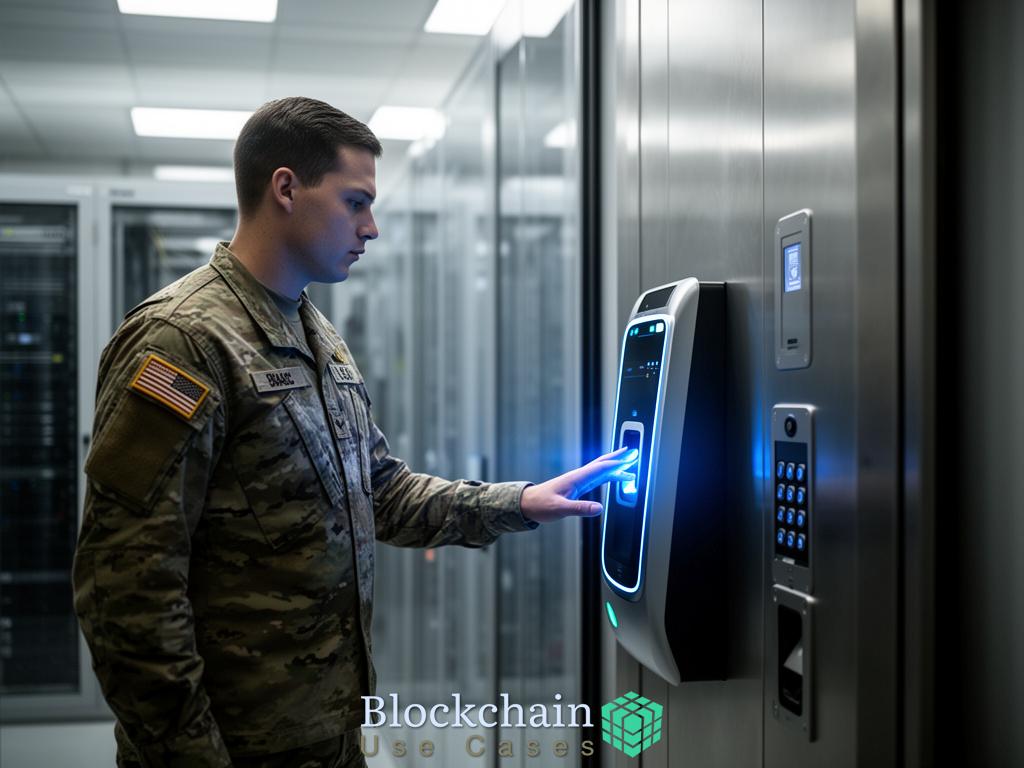
Traditional access management systems rely heavily on centralized authentication servers, which are susceptible to both external infiltration and insider misuse. Blockchain introduces an adaptive model wherein user credentials and role-based permissions are encoded within a secure and distributed ledger. Each authorized user—be it an officer, administrator, or auditor—possesses a unique cryptographic identity that is validated across multiple nodes before access is granted. This method reinforces the principle of least privilege and diminishes the potential attack surface within classified data environments.
Moreover, cryptographic techniques such as zero-knowledge proofs and multi-factor smart contracts enhance this framework by validating access without exposing sensitive identity attributes. This approach ensures that authentication occurs transparently, efficiently, and with utmost confidentiality, making unauthorized impersonation nearly impossible within the defense digital infrastructure.
The integration of smart contracts within defense blockchain networks automates much of the authentication and access control logic. These programmable layers enforce pre-defined policies that govern how personnel can retrieve or modify data, depending on mission requirements, clearance level, and operational context. Smart contracts not only manage identity validation autonomously but also log every access request immutably for post-event auditing and analysis. The result is a self-regulating environment where transparency coexists seamlessly with confidentiality.
In high-risk settings, where rapid response and coordination are critical, blockchain-based authentication dramatically reduces latency in access validation. Military branches participating in joint operations can exchange verified credentials instantly through interoperable ledgers, thereby accelerating decision-making without compromising security.
Core Components of Blockchain-Enabled Access Control:
- Decentralized Identity Management: Replaces centralized directories with distributed, verifiable credential systems.
- Role-Based Permissioning: Dynamically restricts data access according to predefined mission roles.
- Immutable Access Logs: Ensures every authentication event is recorded for investigation and compliance.
- Smart Contract Enforcement: Automates security protocols and reduces human error in credential oversight.
- Cross-Agency Interoperability: Facilitates secure exchange of personnel data between allied defense networks.
Beyond authentication, blockchain’s audit capabilities serve as a compliance backbone for defense cybersecurity frameworks. Every authentication attempt, whether successful or denied, is verifiably recorded, providing authorities with a transparent trail for forensic investigation and accountability. This not only addresses the stringent requirements of national security standards but also enhances the readiness and resilience of military IT ecosystems. In scenarios involving system compromise or insider misconduct, blockchain-based access logs ensure precise traceability, preventing data manipulation or record deletion.
By embedding blockchain into the access control architecture of defense data systems, militaries secure a dual advantage—strengthened cyber deterrence and adaptive identity governance. As digital warfare becomes increasingly sophisticated, blockchain’s ability to unify authentication transparency and operational agility sets a new benchmark for safeguarding the human core of defense intelligence: its personnel.
Implementation Challenges and Strategic Considerations
The implementation of blockchain technology within military personnel data systems represents a definitive step towards safeguarding national defense information. However, despite the remarkable potential for transparency and immutability, several operational and strategic challenges must be deftly navigated to ensure successful deployment. These challenges extend beyond technical complexity, encompassing governance, regulatory compliance, and the human factor—which often emerges as a subtle yet decisive element in large-scale defense digitization efforts.
Deploying blockchain architecture across defense networks requires precision in balancing three core elements: data security, system scalability, and confidentiality. While blockchain’s decentralized model drastically reduces vulnerability to intrusions, scaling it to accommodate millions of military records presents logistical challenges. High transaction volume can lead to latency during data verification processes, especially in permissioned networks where consensus mechanisms are tightly controlled. Moreover, maintaining privacy across nodes that span multiple defense agencies must adhere to distinct classification protocols and national security mandates.
Advanced encryption algorithms and selective data disclosure techniques are essential for mitigating these concerns. Integrating hybrid architectures—combining private and consortium blockchains—may enhance adaptability without compromising operational secrecy. However, such designs demand intricate coordination between cybersecurity specialists, IT engineers, and defense policy-makers to achieve equilibrium between performance and protection.
Beyond technical infrastructure, institutional readiness plays a crucial role in blockchain’s adoption across defense data management systems. Implementing this technology impacts hierarchical decision-making, data governance structures, and even procurement policies. Military institutions must evaluate how existing protocols align with decentralized verification models and autonomous data governance. Ensuring that the adoption process complies with national and international defense data protection laws remains equally vital.
For many defense organizations, regulatory complexities arise when blockchain technology intersects with classified information handling. Governments must define frameworks that distinguish between publicly verifiable and restricted-access chains. This delineation safeguards secrecy while allowing validated interoperability among allied defense networks. Furthermore, training initiatives targeting both technical and administrative staff are necessary to prevent operational friction and ensure seamless onboarding of new blockchain-based procedures.
Establishing a robust roadmap is essential to guide the transition from conceptual exploration to full-scale blockchain integration in military personnel record systems. Strategic planning must anticipate both technological barriers and human adaptation issues. A coordinated roadmap minimizes risks associated with interoperability, data migration, and long-term maintenance. The following list outlines key strategic steps necessary for a sustainable and compliant implementation process.
- Policy Definition and Governance Framework: Form inter-agency committees to design protocols governing data ownership, validation rights, and cross-agency data sharing boundaries.
- System Interoperability: Ensure compatibility between blockchain platforms and existing defense IT systems to facilitate seamless synchronization and legacy data integration.
- Data Privacy Assurance: Employ permissioned access layers and encryption methods aligned with national security standards to protect sensitive personnel information.
- Continuous Monitoring and Auditability: Implement real-time monitoring tools and automated auditing systems to maintain operational transparency and compliance verification.
- Capacity Building and Training: Conduct comprehensive workshops to develop the blockchain literacy of defense administrators, ensuring a smooth operational transition.
Ultimately, the path to blockchain-enabled security for military personnel record management demands a symbiotic approach that bridges innovation with governance. Defense organizations must navigate the intricate intersection of technology and policy to build infrastructures capable of enduring future cyber challenges. By recognizing and addressing the multifaceted implementation challenges early on, militaries can transform blockchain from an emerging innovation into a trusted strategic asset within the global defense paradigm.