
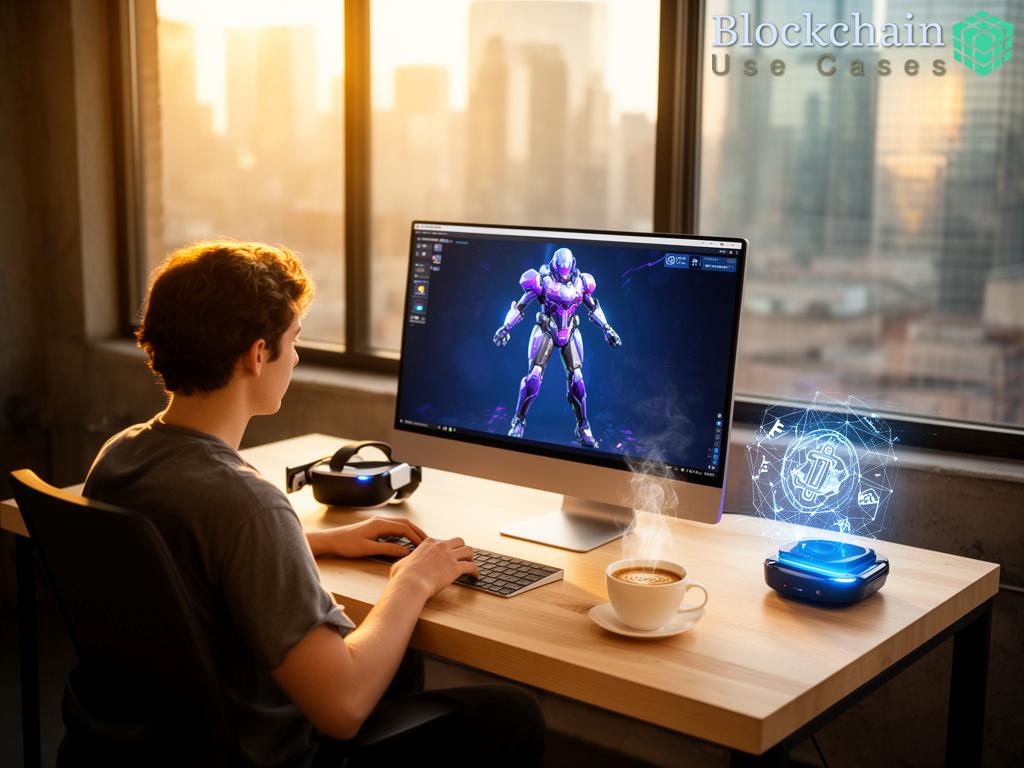
Blockchain Integration for Transparent Gaming Employment
The gaming industry, once dominated by centralized marketplaces and opaque payment structures, is now undergoing a seismic shift. With the integration of blockchain, the future of gaming employment and freelance services is being reshaped by transparency, security, and decentralization. This innovation promises to empower both game developers and professionals with verified credentials, secure transactions, and immutable records of work history.

In traditional gaming employment systems, freelance game designers, streamers, and developers often struggle with trust issues, payment delays, and limited visibility. Blockchain technology introduces a trustless environment, enabling professionals to verify their experience and contributions through publicly accessible smart contracts. These digital contracts automate payments and ensure both parties meet agreed terms—eliminating disputes and middlemen.
The rise of decentralized identity systems provides verifiable proof of skills and project participation, greatly reducing fraudulent profiles and inflated credentials. In this new framework, a gamer’s record of employment is no longer stored in a company database but rather distributed across an immutable ledger accessible to authorized stakeholders.
Smart contracts are the cornerstone of blockchain-based employment systems, automating every step of the hiring and payment process. Freelancers can now execute agreements without an intermediary platform, receiving funds instantly upon task completion confirmation. This not only accelerates transactions but also guarantees transparency.
Below is a brief comparison of traditional freelance systems and blockchain-powered gaming job markets:
| Feature | Traditional Freelance Platform | Blockchain-Based System |
|---|---|---|
| Payment Verification | Dependent on third parties | Automated via smart contracts |
| Trust Mechanism | Reputation-based | Immutable on-chain records |
| Fee Structures | High service fees and commission | Minimal transaction costs |
| Dispute Resolution | Moderated by platforms | Resolved through decentralized consensus |
This level of transparency extends even further—companies can publicly display talent acquisition data, making hiring practices more equitable while building trust with future collaborators.
Blockchain adoption is expanding rapidly across competitive gaming, NFT-based game development, and metaverse projects. From tokenized reward systems to decentralized guilds, these models reshape how players, developers, and employers interact. Decentralized autonomous organizations (DAOs) now serve as community-managed employers, paying creators through governance tokens and allowing workers to vote on key initiatives.
To understand where blockchain adds the most measurable impact in gaming employment, consider the following list:
Key Advantages of Blockchain Integration in Gaming Employment:
- Enhanced Trust: Verified on-chain resumes and smart reputation systems reduce fraud.
- Instant Payments: Automated crypto transactions eliminate traditional payment delays.
- Ownership Protection: Immutable work logs protect independent creators’ rights.
- Global Reach: Borderless payments enable access to international contracts without intermediaries.
- Efficient Collaboration: Streamlined communication through decentralized apps enhances coordination.
The pathway forward lies in hybrid models that merge the best of decentralized innovation with the regulatory security of traditional frameworks. As blockchain continues to evolve, gaming employment may serve as one of the most transformative use cases of Web3 technology—creating a transparent, merit-based economy for digital professionals across the globe.
Smart Contracts and Automated Payment Systems
The convergence of blockchain technology and the gaming industry continues to redefine digital employment structures. Following the surge in decentralized validation models, the next transformative element shaping the market is the integration of smart contracts and automated payment systems. These tools are not just technical features; they are the backbone of a trustless digital economy that ensures fairness, accuracy, and transparency in every transaction. Gaming professionals now have the ability to enter into agreements that are executed without human oversight—ensuring that every contribution is recorded, verified, and rewarded in real time.
One of the greatest challenges in traditional gaming employment has always been delayed or disputed payments. Smart contracts eliminate such issues by creating self-executing agreements that automatically distribute funds the moment a task is completed and validated on the blockchain. This automation removes the dependency on financial intermediaries and significantly reduces transaction costs. Every milestone, from content creation to coding a game module, can be assigned a predefined contract clause that instantly triggers payment upon approval. This instantaneous trust mechanism promotes more equitable relationships between employers and freelancers, establishing a new standard for accountability and payment accuracy.
Moreover, automated payment systems powered by cryptocurrencies and stablecoins further enhance global collaboration. Freelance developers in one region can receive verified payments from clients in another without traditional banking friction. This cross-border interoperability fosters a more inclusive digital marketplace where time zones and currency barriers no longer dictate opportunity. Every finalized project becomes a public, tamper-proof entry on the blockchain ledger—transforming the payment process into a verifiable record of achievement and reliability.
Beyond simple payment transactions, the new wave of decentralized systems enables fully dynamic contractual ecosystems in gaming employment. These ecosystems allow multiple participants—artists, streamers, testers, and developers—to contribute under a unified yet modular smart contract structure. Each participant’s scope and compensation are embedded into smart logic, ensuring proportional rewards based on measurable outcomes, such as completion metrics or engagement performance.
In this emerging landscape, disputes are virtually minimized because every term is encoded into transparent programming. Even in cases of disagreement, decentralized arbitration protocols can resolve issues impartially through blockchain-based consensus, making manual moderation obsolete. The combination of automation, data transparency, and immutable project ownership creates an enduring incentive for integrity and performance. It is no longer about whether trust can be established—but rather how quickly it can be verified and executed. Smart contracts thus become the cornerstone of a future in which gaming professionals control their careers and financial outcomes in ways previously unthinkable.
As the industry continues to adopt this technology, it’s expected that decentralized hiring platforms, guild systems, and metaverse-based collaborations will form an integrated web of autonomous workflows. The promise of instant, transparent, and equitable compensation is not a distant vision—it’s the framework being actively deployed by the next generation of digital gaming entrepreneurs. The evolution of smart contracts is setting the benchmark for a borderless, trustworthy, and inclusive labor economy where the only central authority is the blockchain itself.
Decentralized Talent Marketplaces for Game Developers
As blockchain technology continues to disrupt traditional employment ecosystems, the gaming industry finds itself at the frontier of decentralized talent marketplaces. These platforms are emerging as dynamic hubs that connect game developers, designers, streamers, and digital artists through trustless architectures that eliminate intermediaries. Unlike conventional freelance platforms that rely on centralized management, decentralized talent systems operate fully on-blockchain, creating a secure and transparent environment where every contribution can be verified and rewarded instantly. This paradigm shift not only accelerates hiring but also redefines professional autonomy in the digital gaming economy.
In a decentralized marketplace, reputation becomes a verifiable asset. Every developer’s contribution to a project, from coding scripts to level design and optimization, is permanently recorded on the blockchain. This creates a transparent career ledger that employers can access without intermediaries, ensuring that skills, achievements, and reliability are verified through immutable data rather than personal claims. Game studios no longer have to sift through inflated resumes; instead, they can match developers using algorithmic searches powered by on-chain metrics and performance history.
These marketplaces often employ smart ranking algorithms that analyze blockchain-verified experience, peer reviews, and project ratings to connect the right talent with the right opportunities. Developers can therefore establish global reputations independent of any single platform or employer. This self-sovereign validation model allows for seamless mobility across various projects, metaverses, and decentralized studios, ensuring fair recognition regardless of geographic location or prior industry affiliations.
| Feature | Traditional Talent Market | Decentralized Talent Market |
|---|---|---|
| Profile Verification | Based on user-submitted credentials | On-chain verified work history |
| Fee Management | High platform commissions | Minimal blockchain transaction fees |
| Reputation Handling | Subjective ratings | Immutable on-chain scoring |
| Payment Process | Manual, often delayed | Automated via smart contracts |
Beyond providing a platform for hiring, decentralized marketplaces are nurturing collaborative ecosystems where creativity thrives under shared ownership models. Tokenized reward systems are being adopted to ensure every participant—be it a game mechanic designer or an environment artist—receives a proportional stake in the project’s success. Rather than a fixed payment structure, contributors can earn governance tokens or NFTs that represent both value and creative authorship. This economic model not only enhances motivation but also aligns the incentives of all participants with the game’s long-term growth.
Community governance is another hallmark of these platforms. Developers and creators can vote on project directions, funding allocations, and even contractual changes through decentralized protocols. This participatory mechanism ensures that marketplace evolution is dictated by its users rather than external corporate interests. Moreover, cross-platform compatibility allows assets, avatars, or tools created by freelancers to be recognized across multiple gaming ecosystems, unlocking new layers of visibility and recurring revenue streams.
The union of blockchain transparency and decentralized collaboration is rapidly forming the backbone of the next-generation gaming workforce. As more developers shift towards trustless ecosystems, decentralized talent marketplaces are set to redefine how digital labor, intellectual ownership, and creative equity function within the metaverse and beyond. It is a transformation where global accessibility meets verified integrity—building a future where opportunities are earned, validated, and distributed through pure technological fairness.
Reputation and Trust Mechanisms in Web3 Gaming Jobs
As decentralized ecosystems evolve, the gaming job market is witnessing a new era of identity validation and credibility scoring built upon Web3 principles. Trust, once managed through ratings on centralized platforms, is now embedded directly into blockchain architecture. This transformation is not merely a technical enhancement—it signifies a fundamental rethinking of how reputation is earned, maintained, and demonstrated in a borderless digital economy. For freelance developers, artists, and esports professionals, a verifiable reputation has become the cornerstone of employability within decentralized marketplaces.
Traditional freelance platforms rely heavily on self-reported data and subjective feedback systems that often fail to reflect real performance. In contrast, Web3 gaming job markets eliminate these vulnerabilities by decentralizing the reputation process. Every completed project, review, or payment transaction becomes a tamper-proof entry on the blockchain ledger, transforming professional trust into a digital asset. This evolution ensures that reliability is no longer based on personal claims but supported by immutable proof of past performance.
Employers can instantly evaluate a developer’s authenticity through smart contract-based work history, while freelancers establish enduring credibility across multiple platforms. The integration of decentralized digital identity (DID) solutions further strengthens authenticity verification, enabling players and creators to maintain verified profiles across metaverses and gaming ecosystems. This borderless validation mechanism democratizes opportunity—allowing talented individuals to compete globally without depending on centralized verification authorities.
The decentralized web has introduced innovative, data-driven systems where reputation evolves dynamically through measurable metrics. Smart contracts aggregate performance indicators such as project completion rates, stakeholder ratings, and peer endorsements, assigning a trust score that remains transparent and accessible to all. These trust frameworks encourage continuous accountability, as each on-chain activity contributes to a creator’s permanent professional history.
Moreover, the rise of tokenized reputation models adds a new layer to professional validation. Contributors can receive fungible or non-fungible tokens as verifiable acknowledgments of their achievements, effectively turning trust into a transferable, tradable digital credential. This system not only rewrites the concept of a résumé but also aligns incentives across collaborative projects. Every milestone earned, asset produced, or vote contributed to decentralized gaming initiatives strengthens both reputation and network equity.
Web3 reputation systems extend beyond mere ratings—they establish an ecosystem of earned verification that balances transparency, privacy, and performance accountability. The following key components illustrate how trust is being operationalized within decentralized gaming job markets:
- On-Chain Identity Verification: Each participant maintains a decentralized identity linked to provable credentials and verifiable employment history.
- Immutable Work Records: Completed contracts and tasks are permanently recorded on blockchain ledgers, providing continuous proof of authenticity.
- Performance-Driven Scoring: Dynamic trust metrics are calculated in real time based on measurable outcomes and stakeholder satisfaction.
- Token-Based Recognition: Reputation tokens reward contributions, enabling transparent value transfer and peer acknowledgment.
- Decentralized Arbitration Mechanisms: Disputes are resolved through blockchain consensus rather than centralized moderation.
By combining autonomous identity validation, algorithmic scoring, and transparent recognition models, Web3-based gaming job markets are cultivating a trust environment rooted in blockchain integrity. As these systems continue to mature, the reputation economy will not only redefine professional credibility but also reshape global employment networks through fairness, inclusivity, and technological transparency.
Cross-Platform Collaboration in Decentralized Gaming Ecosystems
The decentralized gaming industry has rapidly evolved beyond isolated ventures to become a vast, interconnected ecosystem where talent, assets, and data flow seamlessly across platforms. In this advancing digital framework, cross-platform collaboration is no longer a futuristic vision—it is an operational reality. As blockchain infrastructure matures, decentralized gaming ecosystems are witnessing unparalleled interoperability, enabling developers, artists, and players to collaborate without being confined to a single corporate environment. This fluid exchange of resources is reshaping how creative teams coordinate, innovate, and monetize their work globally.
Decentralization is empowering cross-platform innovation by integrating multi-chain communication protocols that connect different gaming networks. These systems allow diverse blockchains to exchange information securely, maintaining asset integrity while facilitating seamless movement of credentials, tokens, and in-game assets. For professionals navigating the Web3 job market, this capability opens the door to multidimensional employment opportunities—where a single verified blockchain identity can be used to build credibility across multiple games, metaverse worlds, and DAOs.
One of the most transformative outcomes of decentralized collaboration lies in the unification of professional ecosystems. Developers and creators are no longer restricted by proprietary engines or closed employer networks. Through interoperability standards such as ERC-721 and ERC-1155, they can port digital assets, portfolios, and reputation credentials across decentralized games without losing verification or ownership. This portability translates into uninterrupted workflows and maximized visibility for freelancers working across multiple decentralized game projects simultaneously.
Cross-platform compatibility is also redefining the economics of collaboration. Game studios can integrate shared infrastructures where creators from various chains contribute assets, stories, or scripts through verified credentials anchored on blockchain. This reduces redundancy and fosters a transparent feedback loop between contributors. Moreover, the ability to authenticate on-chain records across linked ecosystems significantly cuts onboarding time and mitigates the risk of intellectual property disputes. To illustrate the contrast, the following table outlines the difference between traditional cross-platform collaboration and decentralized collaborative networks:
| Aspect | Traditional Collaboration | Decentralized Collaboration |
|---|---|---|
| Data Exchange | Dependent on centralized servers | Peer-to-peer and blockchain-verified |
| Identity Management | Platform-specific user accounts | Unified decentralized identity (DID) |
| Asset Portability | Limited to platform boundaries | Cross-chain asset operability |
| Revenue Distribution | Handled by intermediaries | Automated via smart contracts |
This technical and structural evolution is inspiring a more fluid digital labor market—one where creative assets, job credentials, and payment verification coexist under a single, transparent infrastructure.
In the decentralized era, metaverse-based collaboration has emerged as a defining force. Multiple gaming ecosystems, each operating on their native blockchain, are interconnecting to form vast networks of opportunity. Freelancers can now participate in collaborative projects that span multiple virtual worlds, governed by shared protocols and transparent ledger-based coordination. For instance, a 3D artist designing assets in one blockchain-powered metaverse can instantly deploy the same creation in another environment, all while maintaining verified ownership and royalties through smart contracts.
This cross-metaverse collaboration fuels innovation by blending assets and talent pools from different frameworks. Developers gain access to collective toolkits, interoperable libraries, and tokenized resource exchanges—accelerating production timelines while maintaining decentralized control. The inherent transparency of blockchain ensures that each contribution is permanently recorded, fostering collective trust and equitable revenue sharing across project participants.
As gaming companies and communities increasingly adopt decentralized architectures, we can expect to see the emergence of multi-platform guild alliances, unified employment protocols, and tokenized incentive systems that reward contribution across multiple ecosystems simultaneously. The ability to freely migrate skills, assets, and reputation will be the cornerstone of the next digital economy—one that thrives on collaboration, authenticity, and technological harmony.
Ultimately, cross-platform collaboration in decentralized gaming ecosystems represents more than just technical interoperability—it symbolizes the convergence of human creativity and blockchain autonomy. The boundaries between workplaces, platforms, and economies are fading, replaced by a new, interconnected infrastructure that values transparency, fairness, and shared innovation across the entire Web3 gaming spectrum.