Integrating Blockchain into Utility Vegetation Management Systems
As the energy sector continues to modernize, the integration of digital technologies is proving essential for smarter, safer, and more sustainable operations. One area gaining momentum is the use of blockchain technology in utility vegetation management (UVM) — a discipline crucial for maintaining transmission line reliability and minimizing wildfire risks. The transparency and traceability features of blockchain make it an exceptional candidate to revolutionize how utilities record, analyze, and optimize vegetation management activities.

Traditional vegetation management systems often rely on fragmented databases, paper-based reporting, and manual verification, which can lead to inefficiencies and data discrepancies. With blockchain implementation, every pruning event, inspection, or maintenance operation can be logged immutably on a shared ledger accessible to all stakeholders including regulators, contractors, and utility teams. This not only improves accountability but also ensures that compliance documentation is always up-to-date and verifiable in real-time.
Blockchain technology enhances collaboration across departments and external partners by introducing a unified data structure. With smart contracts, tasks such as contractor payment releases or maintenance scheduling can be triggered automatically once certain conditions are verified, reducing administrative delays and ensuring regulatory compliance.
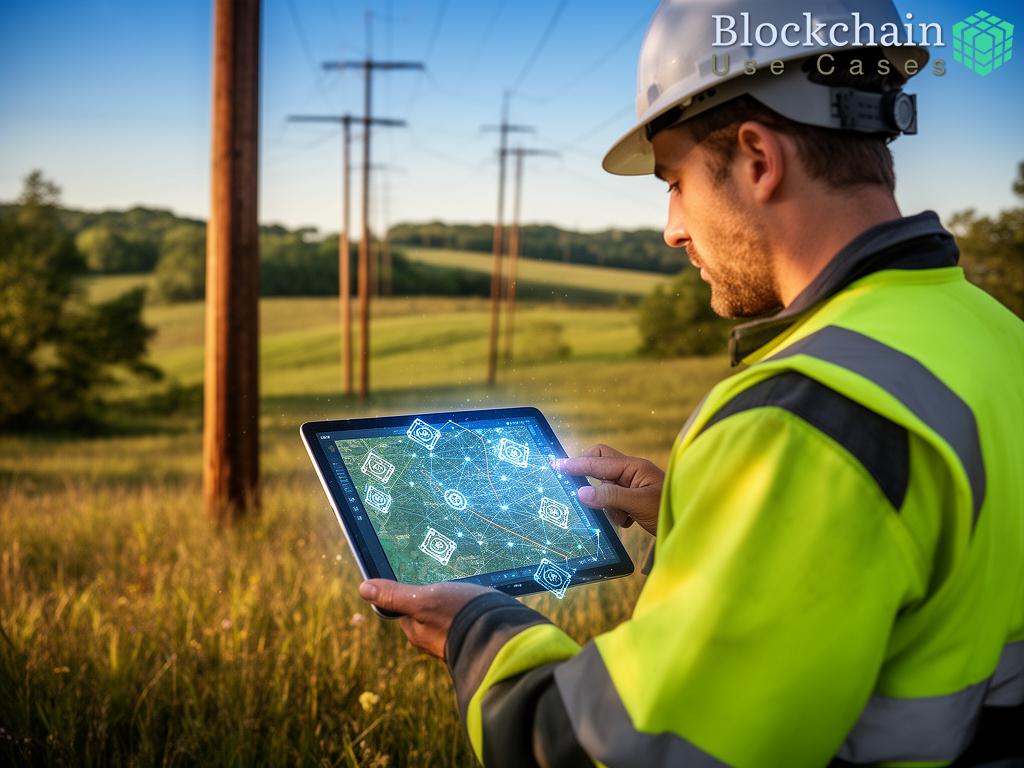
Integrating blockchain with existing UVM tools such as Geographic Information Systems (GIS), LiDAR mapping, and remote sensing can greatly expand operational insights. Data collected from field sensors and inspection drones can be automatically uploaded and encrypted on the blockchain, allowing system operators to track vegetation growth patterns, predict risk areas, and prioritize resource allocation.
Furthermore, blockchain can introduce transparency into environmental sustainability efforts. Utilities can store information regarding herbicide usage, replanting initiatives, and ecosystem restoration on the blockchain network, giving stakeholders and the public confidence in sustainable practices. This integration aligns with global sustainability reporting trends and enhances corporate social responsibility metrics.
Comparison of Traditional vs. Blockchain-Enabled Vegetation Management
| Aspect | Traditional System | Blockchain-Enabled System |
|---|---|---|
| Data Accessibility | Limited, often siloed | Shared ledger accessible to all stakeholders |
| Traceability | Manual verification procedures | Automated immutable records |
| Operational Efficiency | High administrative burden | Smart contracts streamline workflows |
| Compliance & Reporting | Periodic manual audits | Real-time, transparent documentation |
Adopting blockchain within utility vegetation management requires strategic planning, technological alignment, and cross-industry collaboration. Utilities should evaluate their readiness for digital transformation, assess data governance standards, and choose appropriate blockchain architectures (public, private, or consortium models) based on their regulatory environment and scale of operation. Moreover, cybersecurity, interoperability, and training initiatives should accompany implementation to ensure the integrity and efficiency of new workflows.
Below are critical steps utilities can consider when transitioning toward blockchain-enabled vegetation management systems:
Essential Steps for Blockchain Integration
- Conduct a feasibility and impact assessment across vegetation management processes.
- Select a blockchain platform supporting interoperability with existing GIS and IoT tools.
- Develop and test smart contracts for task scheduling, payment processing, and compliance tracking.
- Train operational and IT teams to maintain, analyze, and interpret blockchain-based data streams.
- Monitor post-implementation results and continuously refine blockchain workflows for scalability and cost-effectiveness.
By integrating blockchain into vegetation management systems, utilities can move toward a more transparent, verifiable, and efficient operational future. This not only enhances grid reliability but also builds public trust through demonstrable sustainability practices and technological innovation.
Enhancing Data Transparency and Accountability through Distributed Ledgers
As digital infrastructure becomes the backbone of modern energy systems, data transparency and accountability have emerged as non-negotiable elements for operational integrity. In utility vegetation management (UVM), where accuracy and compliance define grid safety, distributed ledger technology (DLT) – more commonly known as blockchain – offers a transformational approach to how every vegetation-related action is recorded, verified, and shared. By providing a decentralized, timestamped, and immutable digital record, blockchain ensures that every inspection, maintenance activity, and environmental report can be accessed and validated in real-time, paving the way for resilient and transparent management ecosystems.
One of the most compelling advantages of distributed ledger systems is their inherent ability to eliminate information asymmetry. In traditional vegetation management workflows, documentation is typically scattered across different departments, managed by multiple contractors, and subjected to manual reconciliation. Such fragmentation introduces room for errors, delayed reporting, and even data manipulation. By contrast, a blockchain-powered framework unifies all stakeholders—utility companies, regulators, service providers, and environmental auditors—under a single, verifiable source of truth. Each transaction on the ledger represents a verified event, whether it’s a pruning operation, a remote drone inspection, or a vegetation risk assessment.
Through decentralized consensus mechanisms, data integrity is continuously maintained without reliance on a central authority. This not only minimizes the risk of fraud but also accelerates internal audits. The transparency afforded by blockchain results in an automatic compliance trail, where auditors can instantly review vegetation trimming schedules, environmental commitments, and contractor performance without exhaustive paperwork. The result is a more agile and accountable management environment capable of responding swiftly to both regulatory updates and environmental changes.
Integrating blockchain into utility workflows introduces a paradigm shift in how data is captured and shared. Each operation carried out in the field—whether it involves vegetation scanning using LiDAR or real-time imaging through unmanned aerial systems—can be recorded directly onto a distributed ledger. This ensures data immutability from the instant it is generated, reducing discrepancies and providing traceability for every ecological decision.
Smart contracts can further extend this reliability by automating accountability steps. For instance, when a trimming operation successfully meets compliance requirements, a smart contract may immediately trigger updates across the system or release digital tokens representing verified progress. Additionally, environmental sustainability data such as carbon offset calculations, biodiversity restoration reports, and herbicide reduction metrics can be permanently stored on-chain. Such transparent recording gives decision-makers and the public empirical evidence of utilities’ stewardship of natural resources.
The table below compares the level of environmental accountability and data validation integrity between traditional and blockchain-enabled systems within vegetation management programs:
| Feature | Traditional Systems | Blockchain-Integrated Systems |
|---|---|---|
| Data Validation | Manual verification; prone to inconsistencies | Automated peer-verified validations via distributed consensus |
| Reporting Timeliness | Dependent on periodic manual submissions | Instant updates with real-time visibility |
| Environmental Metrics | Recorded in separate databases; hard to reconcile | Captured and timestamped on immutable ledgers |
| Accountability Mechanisms | Requires extensive audit trails and third-party checks | Built-in transparency supported by smart contracts |
In the broader context, blockchain transforms utility vegetation management from a reactive maintenance model into a proactive, data-driven governance framework. By pairing distributed ledger transparency with emerging technologies like IoT and GIS, operators can confidently demonstrate regulatory compliance and sustainable performance. The integration not only mitigates wildfire risks but also reinforces public confidence that every operational decision aligns with safety, accountability, and environmental responsibility.
Smart Contracts for Compliance and Maintenance Verification
As utility companies embrace digital transformation, the demand for precision, transparency, and automation in vegetation management has reached new heights. Traditional reporting and compliance structures often rely on manual verification and delayed documentation, creating potential gaps in safety assurance and regulatory fulfillment. Blockchain-enabled smart contracts offer a transformative solution, introducing automated verification and accountability mechanisms that ensure every vegetation management task is executed, validated, and recorded without human intervention. This approach elevates operational efficiency while embedding regulatory compliance directly into system workflows.
In the context of utility vegetation management (UVM), regulatory compliance is not negotiable. Overgrown vegetation near transmission lines can trigger safety hazards, outages, and substantial financial penalties. By utilizing smart contracts, utilities can now embed compliance conditions directly into the blockchain, allowing regulations and maintenance thresholds to act as automated triggers. When an inspection report or sensor data entry confirms that vegetation clearance standards are met, the contract autonomously validates compliance—removing the need for manual sign-offs or lengthy audit preparations.
The inherent strength of smart contracts lies in their capacity for self-execution and trustless verification. Every pruning operation, inspection, or risk assessment can be coded into the blockchain’s logic, ensuring that once predefined parameters are satisfied, the system automatically updates the compliance status. This continuous and verifiable process significantly decreases administrative lag, prevents data tampering, and enables real-time transparency for utility stakeholders and environmental agencies. As a result, auditors and regulators can seamlessly review digital proof of compliance without having to rely on disparate systems or incomplete documentation.
Beyond compliance, smart contracts also play a pivotal role in verifying and optimizing maintenance operations. Through integration with IoT sensors, LiDAR imagery, and remote sensing platforms, these contracts can monitor vegetation growth rates and environmental variables in real-time. When vegetation in a monitored area approaches threshold limits, predetermined triggers initiate work orders or contractor deployment notifications automatically. Once the task is executed and validated through drone inspection or sensor confirmation, the blockchain ledger records the event permanently, closing the maintenance loop without manual oversight.
This intelligent synchronization minimizes unnecessary field visits, optimizes resource allocation, and enhances predictive maintenance strategies. The linkage of sensor data to blockchain protocols ensures that vegetation monitoring evolves from a reactive to a proactive discipline. Moreover, every workflow—from job assignment to completion—is anchored by verifiable digital evidence, which can later support sustainability reporting and environmental compliance audits. For a sector where safety and environmental stewardship are paramount, these automated verifications bring unprecedented integrity and responsiveness.
The integration of smart contracts into utility vegetation management brings forth more than operational efficiency—it fundamentally reshapes stakeholder collaboration. Each event on the blockchain becomes an immutable and timestamped record accessible to all authorized parties. By eliminating the ambiguity of manual reporting, stakeholders—from municipal regulators to contractors—gain shared visibility into the progress, accuracy, and legitimacy of ongoing vegetation programs. This creates a self-regulating ecosystem where compliance assurance is not just a procedural requirement but an integral outcome of the system’s design.
Ultimately, blockchain-based smart contracts redefine accountability by linking compliance verification directly to actionable intelligence. Through automation, transparency, and immutability, these digital agreements strengthen public trust and regulatory confidence in how vegetation management is conducted. As utilities continue to pursue resilient and sustainable frameworks, the marriage of blockchain technology and smart contracts stands as a cornerstone in building a safer, smarter, and more accountable power infrastructure.
Challenges and Strategic Considerations for Blockchain Adoption
As blockchain technology continues to redefine transparency and accountability in critical infrastructure sectors, its role in utility vegetation management (UVM) has moved from theoretical discussion to tangible pilot implementations. Yet, while the potential for immutable record-keeping, automated compliance verification, and real-time environmental accountability is immense, utilities face a set of complex challenges when transitioning from traditional systems to blockchain-enabled operations. Understanding and addressing these strategic considerations are essential for successful adoption and sustainable transformation.
The integration of blockchain into UVM systems introduces not only technical adjustments but also organizational and cultural transformations. One of the most significant challenges lies in data interoperability. Many utilities operate legacy systems that rely on isolated databases or bespoke GIS platforms not inherently designed for decentralized architectures. Ensuring seamless communication between blockchain ledgers, IoT sensors, and existing vegetation monitoring tools demands robust middleware solutions and standardized data protocols. Without such interoperability, blockchain adoption risks becoming an additional data silo rather than a unifying infrastructure layer.
From an operational standpoint, scalability and transaction speed remain key concerns. Vegetation inspection data, especially from LiDAR, drones, or advanced sensors, generates vast datasets that require efficient storage and timely validation on-chain. A balance must be struck between on-chain transparency and off-chain data management to maintain system responsiveness without compromising integrity. Meanwhile, the allocation of computational resources, especially in public or consortium blockchain models, demands careful consideration to prevent performance bottlenecks.
Equally important are the human factors—organizational resistance and skill gaps. Transitioning to blockchain-based workflows demands new competencies in smart contract design, cryptographic security, and decentralized governance. Utilities must invest in continuous education, change management strategies, and cross-departmental collaboration to foster a culture of digital trust and innovation. Leadership commitment will be decisive in bridging the knowledge divide and ensuring operational teams understand blockchain’s value proposition, not merely its complexity.
Beyond the initial technology hurdles, blockchain adoption in UVM must navigate a landscape of evolving regulatory expectations and data governance challenges. The immutable nature of blockchain—one of its defining strengths—can also be a double-edged sword. Once data is entered, errors or misreported information cannot be simply deleted or altered. Therefore, implementing robust validation mechanisms and authorization workflows before data submission is critical. Utilities must define clear data ownership parameters and encryption standards that comply with privacy laws such as the General Data Protection Regulation (GDPR) and region-specific environmental reporting protocols.
Another strategic consideration lies in choosing the appropriate blockchain model. Public blockchains offer superior transparency but may raise confidentiality concerns for regulated infrastructure operators. Private or consortium blockchains, by contrast, allow tighter access control and performance optimization but may require extensive coordination among stakeholders to maintain decentralized principles. Each model introduces trade-offs between security, accessibility, and governance flexibility, making a comprehensive risk-benefit assessment indispensable before deployment.
Cybersecurity remains an ever-present concern. Blockchain itself is inherently secure through cryptographic consensus, yet integration points—such as API connections, smart contract vulnerabilities, and IoT gateways—can present exploitable weaknesses. Utilities must prioritize multi-layered defenses, continuous monitoring, and independent audits to safeguard against potential breaches. Furthermore, contingency planning and disaster recovery strategies should evolve alongside blockchain deployment to ensure operational resilience in case of network disruptions or cyber incidents.
To illustrate the contrasts utilities must evaluate, the following table outlines the primary strategic trade-offs between blockchain adoption factors and their operational implications:
| Adoption Factor | Key Challenge | Strategic Response |
|---|---|---|
| System Integration | Data silos and platform incompatibility | Adopt standardized APIs and modular blockchain designs |
| Scalability | High transaction volume from remote sensing tools | Hybrid on-chain/off-chain data storage models |
| Compliance Management | Immutable error correction and audit traceability | Implement authorization layers and hierarchical validations |
| Cyber Risk Exposure | API and IoT device vulnerabilities | Continuous monitoring and smart contract audits |
| Organizational Readiness | Limited stakeholder literacy and resistance | Comprehensive training and leadership-driven adoption strategies |
Ultimately, the path toward blockchain-enabled vegetation management is not solely a technological one but a strategic evolution toward decentralized trust, adaptive governance, and operational collaboration. Utilities that navigate these complexities effectively will gain not only greater traceability and compliance assurance but also a long-term advantage in aligning energy infrastructure operations with sustainability mandates and future regulatory frameworks.
Future Prospects and Innovations in Utility Vegetation Tracking
As the global energy landscape accelerates toward digital convergence, the next chapter in utility vegetation management (UVM) is being shaped by the fusion of blockchain technology with advanced analytics and autonomous monitoring systems. The future of vegetation tracking will not only depend on visibility and verification, but also on intelligent prediction and participatory governance. Blockchain, once seen as a ledger for financial systems, is now emerging as the backbone for ecological accountability and operational trust in power infrastructure. This evolution marks a significant milestone where technology, sustainability, and transparency converge to redefine how utility corridors are monitored and maintained.
The next decade of UVM will see blockchain networks expanding beyond static data logging toward dynamic, self-learning ecosystems. By merging blockchain with artificial intelligence and advanced geospatial analytics, utilities can achieve real-time predictive tracking of vegetation encroachment, optimizing both safety and resource management. Decentralized AI agents operating within blockchain networks could analyze vegetation density, detect anomalous growth patterns from drone feeds, and automatically suggest trimming schedules that align with local climate forecasts. This intelligent synthesis enhances risk anticipation, allowing utilities to prevent outages and wildfires with a level of precision previously unattainable.
Another major innovation lies in the integration of digital twins powered by blockchain. Each segment of a transmission corridor could have its digital twin, continuously updated with authenticated field data, weather modeling, and historical vegetation records. Such blockchain-anchored replicas would enable engineers to simulate future scenarios, measure ecosystem impact, and validate environmental compliance before initiating fieldwork. This capability builds predictive intelligence into the maintenance chain, transforming vegetation management from reactive supervision to proactive resilience-building.
In the evolving vision of vegetation management, blockchain will empower a multi-stakeholder ecosystem where data credibility replaces bureaucratic complexity. Through decentralized frameworks, energy companies, regulators, and conservation groups will operate on shared ledgers that offer end-to-end visibility across inspection, maintenance, and reforestation activities. This collaborative approach ensures not only operational efficiency but reinforces public trust in utility governance, as every environmental decision becomes verifiable in real time. Smart contract-based governance models will emerge as critical enablers of transparent decision-making, allowing sustainability targets, project funding, and risk assessments to be linked directly to verifiable on-chain data.
The intersection of blockchain and environmental tokenization will further revolutionize vegetation tracking. Utilities might issue digital tokens representing verified carbon offset results or biodiversity contributions, each immutably registered on the blockchain. By integrating renewable energy credits or ecosystem restoration certifications into blockchain records, utilities can demonstrate tangible sustainability impact while unlocking new economic incentives for eco-friendly management practices.
The long-term trajectory of blockchain-enabled UVM points to an era of autonomous compliance and transparent stewardship. As regulatory frameworks evolve toward digital-first accountability, distributed ledgers will underpin the infrastructure of environmental governance, enabling utilities to transition from traditional documentation workflows to verifiable, real-time transparency. The convergence of blockchain with predictive intelligence will thus not only redefine vegetation management but also fortify the ethical and environmental foundations of modern energy networks—turning the grid itself into a living, learning ecosystem of trust.