Integrating Blockchain Architecture with IoT Ecosystems
As smart home assistant devices become more integrated into our daily routines, concerns about data privacy and system vulnerabilities have taken center stage. The emergence of blockchain technology offers a promising framework to reinforce trust, decentralize control, and enhance security within IoT ecosystems. Integrating blockchain architecture into IoT-based smart devices can redefine how data is managed, verified, and shared, paving the way for a more transparent and privacy-centric connected environment.

Modern IoT smart home devices continuously gather data from multiple sources—voice commands, user preferences, and even motion patterns. Traditional centralized systems store this sensitive information on cloud servers, making them susceptible to breaches and unauthorized access. Blockchain provides a decentralized approach, ensuring that each data transaction is verified across distributed ledgers. This innovative mechanism not only fortifies security but also empowers users with greater control over their personal information.
By leveraging cryptographic hashing and programmable smart contracts, blockchain can authenticate communication between devices, eliminating the need for third-party intermediaries. As a result, users benefit from a significant increase in network resilience and overall trustworthiness.
To understand the potential transformation brought by blockchain integration, it’s crucial to compare both conventional IoT systems and blockchain-based architectures in terms of privacy and data management capabilities. The following table outlines key differences:
| Aspect | Conventional IoT Systems | Blockchain-Integrated IoT Systems |
|---|---|---|
| Data Control | Centralized server authority | Distributed ledger transparency |
| Security | Vulnerable to single-point attacks | Immutable, cryptographically secured records |
| User Privacy | Limited user control over data sharing | User-managed permissions and smart contracts |
| Operational Efficiency | Relies heavily on cloud infrastructure | Peer-to-peer verification and reduced latency |
| Scalability | Constrained by server capacity | Flexible and modular network design |
Organizations aiming to merge blockchain with IoT must adopt a strategic approach that aligns technology design with user privacy goals. Careful planning ensures seamless integration without compromising performance or accessibility.
Guidelines to Build a Secure IoT-Blockchain Framework:
- Data Mapping and Encryption: Identify critical data streams and ensure they are encrypted before being added to the blockchain.
- Smart Contract Design: Develop automated agreements that define device authentication, communication permissions, and update protocols.
- Scalable Infrastructure Setup: Choose blockchain platforms that can handle high transaction volumes inherent in IoT environments.
- Interoperability Standards: Implement cross-platform communication protocols that allow diverse devices to interact securely.
- Continuous Monitoring and Auditing: Utilize real-time monitoring to detect anomalies and maintain transparent audit trails.
Adopting these strategies not only enhances the reliability of smart home infrastructures but also strengthens consumer confidence. As innovation in both blockchain and IoT progresses, the fusion of these technologies will define the next era of digital privacy and automation—setting new benchmarks for secure connectivity in intelligent living spaces.
Decentralized Data Management for Improved Privacy
As connected home environments continue to evolve, the challenge of safeguarding private data has become a defining concern. Smart home assistant devices, which are constantly listening, learning, and adapting to user behavior, generate vast amounts of personal information. In traditional frameworks, this data often passes through centralized servers controlled by third-party providers, leaving consumers vulnerable to potential surveillance, manipulation, or cyber breaches. Blockchain technology, through its decentralized design, introduces a paradigm shift—empowering homeowners with direct authority over their digital footprint while establishing a tamper-resistant infrastructure for IoT communications.
Unlike conventional data systems where all information flows through a single control point, decentralized blockchain networks distribute the storage and verification process across multiple nodes. This eliminates dependency on central data hosts and significantly reduces the risk of unauthorized access or data corruption. Each transaction within a smart home environment—whether a temperature adjustment, lighting preference, or security alert—is processed through a transparent ledger, making it traceable, verifiable, and nearly impossible to alter without detection.
Through this architecture, blockchain not only decentralizes data management but also introduces user-centric governance models. These models ensure that homeowners can define access rules using cryptographic keys and programmable smart contracts, giving them the ability to grant, revoke, or modify permissions in real-time. The result is a digital ecosystem that inherently prioritizes privacy while enhancing the trustworthiness of machine-to-machine interactions.
In decentralized environments, trust is no longer concentrated in a single entity. Instead, it’s algorithmically distributed among participants within the blockchain network. This model not only mitigates security risks but also strengthens resilience against malicious actors attempting to manipulate the system. With enhanced transparency and automatic consensus validation, every data exchange becomes a verifiable event authenticated by multiple peers rather than one central body. This marks an essential evolution for IoT-based smart homes, where autonomous decision-making and constant data generation demand uncompromising privacy standards.
Furthermore, blockchain-based mechanisms can verify device identities, preventing unauthorized entities from infiltrating the network. Combined with end-to-end encryption, this approach assures users that their voice commands, behavioral data, and device interactions remain confidential, fostering a safer and more personalized smart living experience.
While the technological complexity behind decentralized data management may seem intricate, its advantages for privacy, transparency, and usability stand out clearly. The following points highlight how a decentralized blockchain architecture fundamentally improves privacy in IoT-based smart home assistant devices:
- Enhanced Data Autonomy: Users maintain full ownership and granular control over how their data is stored, shared, and erased.
- Reduced Breach Vulnerability: The absence of a central server eliminates single-point-of-failure risks, making large-scale data hacks exceedingly difficult.
- Immutable Audit Trails: Every device interaction is permanently recorded and verifiable, preventing tampering and unauthorized revisions.
- Smart Contract Enforcement: Automated agreements regulate data access, ensuring privacy protocols are consistently applied without manual oversight.
- Interoperability and Scalability: Decentralized frameworks facilitate secure data exchange across varying IoT devices and platforms, enabling scalable adoption without compromising security.
Embracing decentralized data management not only represents a technical advancement but also a fundamental redefinition of digital ethics and security in smart home ecosystems. By integrating blockchain’s immutable and self-regulating systems into IoT architectures, the future of household privacy stands to become more transparent, equitable, and resilient than ever before.
Smart Contract Applications in Smart Home Security
The integration of smart contracts into IoT-based smart home systems marks a pivotal advancement in enhancing privacy, automating security protocols, and minimizing external dependencies. As digital households evolve into complex ecosystems of interconnected sensors and voice-controlled assistants, managing permissions and trust relationships manually becomes nearly impossible. Blockchain-driven smart contracts address this challenge by offering an autonomous and verifiable framework that governs how devices communicate and share information. This innovation not only reinforces digital integrity but also paves the way for predictive, rule-based security where transactions are both transparent and immutable.
Traditional access control in smart home assistants often relies on centralized authentication mechanisms, which can become vulnerable to unauthorized breaches or unauthorized cloud interventions. With blockchain-based smart contracts, access rights are programmatically defined and executed without human intervention. Each interaction—whether granting a temporary passcode to a delivery agent or allowing a connected appliance to share data—is verified through a self-executing contract stored on the blockchain ledger. This ensures that devices only operate under predefined, tamper-proof conditions, eliminating the risks associated with credential theft or unauthorized modifications.
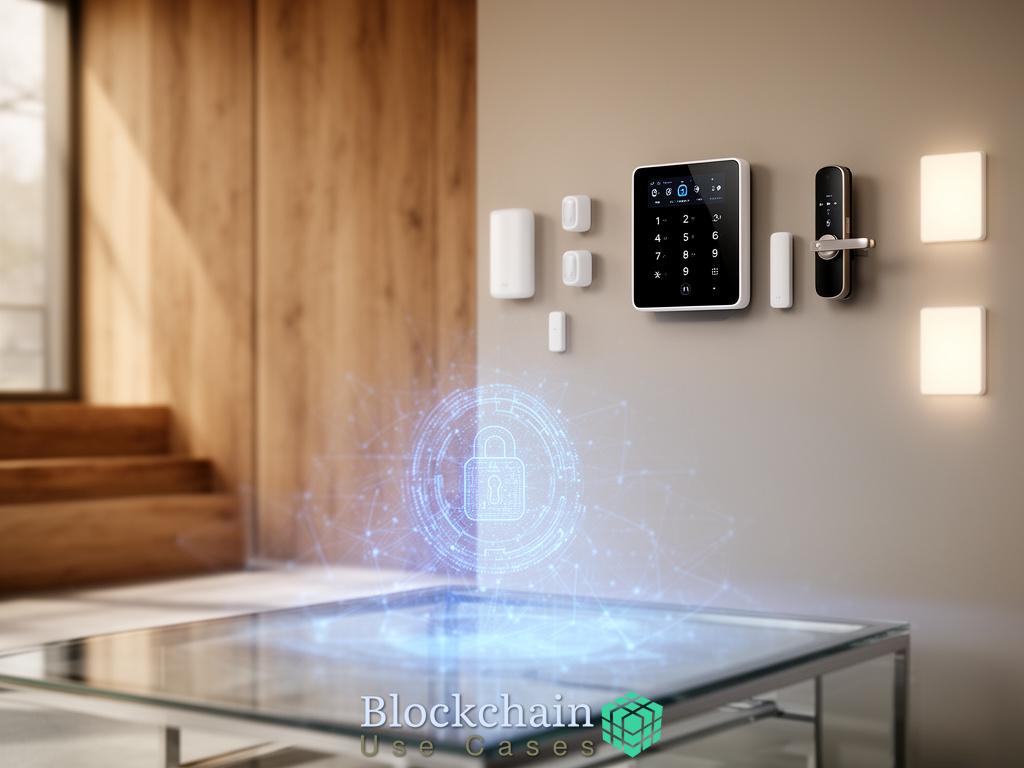
For example, when a homeowner requests a system update via a voice command, a smart contract could automatically verify the integrity of the incoming software package using its cryptographic signature before authorization. This approach makes the process inherently more secure, as every action passes through layers of autonomous verification.
Beyond access management, smart contracts also redefine how smart homes can respond to potential security threats. Instead of relying on centralized alert systems vulnerable to latency or failure, blockchain-based automation allows the system to detect suspicious patterns and execute immediate countermeasures. For instance, when a surveillance sensor detects unusual motion, a smart contract may initiate protocols to activate backup systems, notify the homeowner, and lock entry points—all in real time and independently of external servers.
This shift from reactive to proactive security enhances resilience while ensuring complete transparency in decision-making. Since all logs are securely recorded on the blockchain ledger, users can trace back every triggered response, verifying authenticity without the need for third-party audits.
The seamless fusion of smart contracts and IoT expands the boundaries of what autonomous homes can achieve in safeguarding user privacy. With programmable conditions that automatically enforce security logic, smart homes become both intelligent and self-defending entities. Below is a summarized list highlighting key application areas where smart contracts significantly elevate smart home security:
- Dynamic Access Authorization: Smart contracts regulate permissions dynamically, allowing or denying entry to users or devices based on preset identity criteria and time-bound conditions.
- Data Transmission Control: Security policies embedded in smart contracts govern which devices may share data, ensuring compliance with privacy preferences.
- Incident-Driven Automation: When anomalies are detected, contracts autonomously execute protection measures—locking doors, disabling cameras, or isolating networks as required.
- Maintenance and Firmware Updates: Automated validation ensures only verified updates are deployed, reducing vulnerability exposure.
- Personalized Privacy Rules: Users can define granular control policies for specific scenarios, creating personalized digital boundaries enforced by code.
Adopting these smart contract frameworks transforms smart homes into self-regulating privacy ecosystems. Instead of relying on external oversight, blockchain’s decentralized infrastructure and automation enable each device interaction to be independently verified and securely executed. This not only enhances resilience but also fosters a new level of digital trust, setting a benchmark for future innovations in intelligent home environments.
Challenges and Future Prospects of Blockchain-Enabled Privacy Solutions
As blockchain technology continues to infuse new layers of protection into IoT-based smart home architectures, its long-term success depends on how effectively it addresses emerging operational hurdles. While the decentralized structure offers unparalleled transparency and privacy, implementing blockchain into complex home ecosystems presents both technical and practical challenges. From limited scalability to governance complexities, the evolution of blockchain-enabled privacy demands a strategic balance between innovation, regulation, and real-world usability.
Integrating blockchain into IoT environments requires reconciling the contrast between resource-heavy distributed ledgers and the lightweight nature of smart home devices. These assistants, though intelligent, often operate under strict constraints of processing power, energy consumption, and network bandwidth. Deploying blockchain protocols in such settings may lead to latency issues, storage inefficiencies, or limited interoperability when connecting multiple device types.
Another significant challenge revolves around transaction throughput and scalability. Traditional blockchains, such as those using Proof-of-Work, encounter network congestion as the number of devices and data transactions increases. This not only affects real-time responsiveness but may also slow down automation processes critical for home security or voice-enabled commands. Transitioning to more energy-efficient consensus models—like Proof-of-Stake or Directed Acyclic Graph (DAG) systems—could mitigate these performance bottlenecks.
Moreover, maintaining immutable and transparent data records can sometimes conflict with privacy regulations such as GDPR, which emphasize data erasability. Finding a balance between transparency and data minimization represents a continuous endeavor for developers and policymakers alike.
Despite these operational limitations, a series of emerging strategies and innovations provide a roadmap for overcoming blockchain integration obstacles. Hybrid blockchain models, for instance, combine the security of public networks with the scalability of private systems, ensuring flexible privacy configurations that cater to user needs. Similarly, applying off-chain processing can help reduce data loads on the main blockchain while maintaining integrity through cryptographic proofs.
Organizations exploring blockchain-enabled smart home solutions must also account for interoperability standards to ensure seamless communication between devices from different manufacturers. Adopting universally accepted frameworks like IEEE P2418.1 for blockchain in IoT can facilitate compatibility, reduce redundancy, and streamline development efforts.
The table below illustrates key areas where blockchain’s limitations intersect with current innovation efforts aimed at resolving them:
| Challenge | Impact on IoT Systems | Potential Solution |
|---|---|---|
| High Energy Consumption | Reduces efficiency in battery-powered smart devices | Adopt low-energy consensus algorithms like Proof-of-Stake |
| Limited Scalability | Delays real-time responses in interconnected devices | Implement sharding or side-chain processing techniques |
| Data Privacy Conflicts | Challenges compliance with data protection laws | Use selective disclosure and zero-knowledge proofs for anonymization |
| Hardware Constraints | Restricts blockchain node participation by IoT devices | Delegate transaction validation to edge or fog computing nodes |
As the landscape of blockchain innovation matures, IoT-based smart homes are positioned to benefit from a range of promising developments. The convergence of blockchain with emerging technologies such as artificial intelligence and 5G connectivity paves the way for more adaptive, autonomous, and secure digital ecosystems. AI-driven consensus mechanisms, for example, could dynamically adjust transaction validation protocols based on network conditions, optimizing both performance and energy efficiency.
Additionally, decentralized identity (DID) frameworks are poised to revolutionize how devices and users interact privately. These digital identities anchored on blockchain networks can establish verifiable yet anonymized credentials, eliminating the need for third-party validation in authentication processes. This shift fundamentally transforms how information flows through smart homes—transforming them into self-regulatory, trustless systems that uphold transparency without sacrificing discretion.
Key Innovation Trends Driving the Next Wave of Blockchain-Enabled IoT Privacy:
- AI-Integrated Blockchain Governance: AI tools that predict vulnerabilities and automatically adjust blockchain protocols in response to dynamic threats.
- Privacy-Centric Layered Architectures: Multi-tier networks that isolate sensitive operations from public chains through encrypted side-chains.
- Edge Computing Synergy: Utilizing local processing nodes to execute blockchain validations closer to devices, improving efficiency and latency.
- Cross-Chain Collaboration: Platforms that allow inter-blockchain communication and data exchange across diverse network protocols.
Looking ahead, the synergy between blockchain and IoT technologies is expected to redefine the boundaries of digital autonomy and personal data protection. Despite the technical and regulatory hurdles, continuous innovation promises to streamline implementation, making blockchain-enabled privacy solutions a mainstream feature of next-generation smart homes. Through sustained development and global collaboration, a future where privacy, efficiency, and automation coexist seamlessly is no longer a distant vision, but an emerging reality.