
Enhancing Data Security and Privacy in School Health Records
In an era where data breaches have become alarmingly frequent, the sensitivity of school health records demands stronger protection measures. Educational institutions are increasingly responsible for maintaining the health and wellbeing data of students, staff, and faculty — information that often includes immunization histories, allergies, chronic health conditions, and emergency contact details. The pressing question is: how can schools safeguard this data efficiently while also ensuring accessibility when needed? The answer may lie in blockchain technology.

The Promise of Blockchain in School Health Data Management
Blockchain technology offers a decentralized and tamper-resistant data architecture capable of addressing many of the vulnerabilities associated with traditional systems. By structuring school health records within a secure digital ledger, sensitive information can be stored, shared, and verified without centralized risk exposure. Each transaction — from updates to authorized access — is recorded permanently, creating traceability and transparency at every stage.
In comparison to conventional digital storage, blockchain eliminates the single point of failure. It empowers schools and health administrators with transparent verification processes that secure student health data against unauthorized changes. Furthermore, advanced encryption and permissioned access ensure that only accredited personnel can retrieve or modify important health information.
Ensuring Privacy and Compliance Through Technological Integration
While blockchain introduces security, its privacy potential increases when integrated with modern encryption, smart contracts, and identity verification systems. Schools can configure their privacy levels according to legal frameworks like HIPAA and GDPR. These frameworks demand that institutions not only protect data but also respect the right to privacy and informed consent.
Blockchain-based identity management allows students and parents to control who accesses their personal health data. Schools can use smart contracts to automatically execute permission checks before any information is shared. This automation minimizes administrative workload while maintaining strict compliance with data protection regulations.
Key Advantages of Blockchain Integration in School Health Management:
- Enhanced Security: Immutable ledgers prevent data tampering or unauthorized alterations.
- Data Transparency: Auditable transactions ensure clear access trails.
- User Empowerment: Students and parents have direct oversight of permissions.
- Regulatory Compliance: Smart contracts align automatically with privacy standards.
Balancing Accessibility and Protection Through Innovation
For schools, the challenge lies not just in storing data securely but in making it readily accessible during emergencies or health assessments. Blockchain systems tackle this balance by using distributed storage combined with role-based permissions. This ensures that authorized health professionals can quickly access vital records without compromising long-term data security. The technology also facilitates collaborations between schools, local healthcare agencies, and guardians, making the coordination of care seamless and protected.
To illustrate the operational difference between traditional and blockchain-based systems, see the table below:
| Feature | Traditional Systems | Blockchain Systems |
|---|---|---|
| Data Storage | Centralized databases prone to breaches | Distributed ledgers with cryptographic protection |
| Access Control | Dependent on system admins | Decentralized permission validation |
| Transparency | Limited visibility into access logs | Immutable, auditable record trails |
| Compliance Support | Manual tracking and verification | Automated via smart contracts |
As educational institutions embrace technology-driven transformation, blockchain stands out as a viable foundation for secure, transparent, and student-centric data management. With thoughtful implementation, it not only redefines how schools manage health records but also reinstates trust in data integrity, privacy, and reliability — essential values in today’s digital education landscape.
Streamlining Health Record Accessibility and Management
As educational ecosystems evolve toward fully digital operations, the efficient management and accessibility of school health records have become a top priority. Beyond safeguarding sensitive data, schools must ensure that health information is available when and where it’s needed most — during emergencies, assessments, or collaborative interventions. Blockchain technology is proving to be a cornerstone in achieving this delicate balance of accessibility and protection, offering a transparent yet controlled environment for managing student health services.
Decentralized Accessibility for Swift and Secure Decision-Making
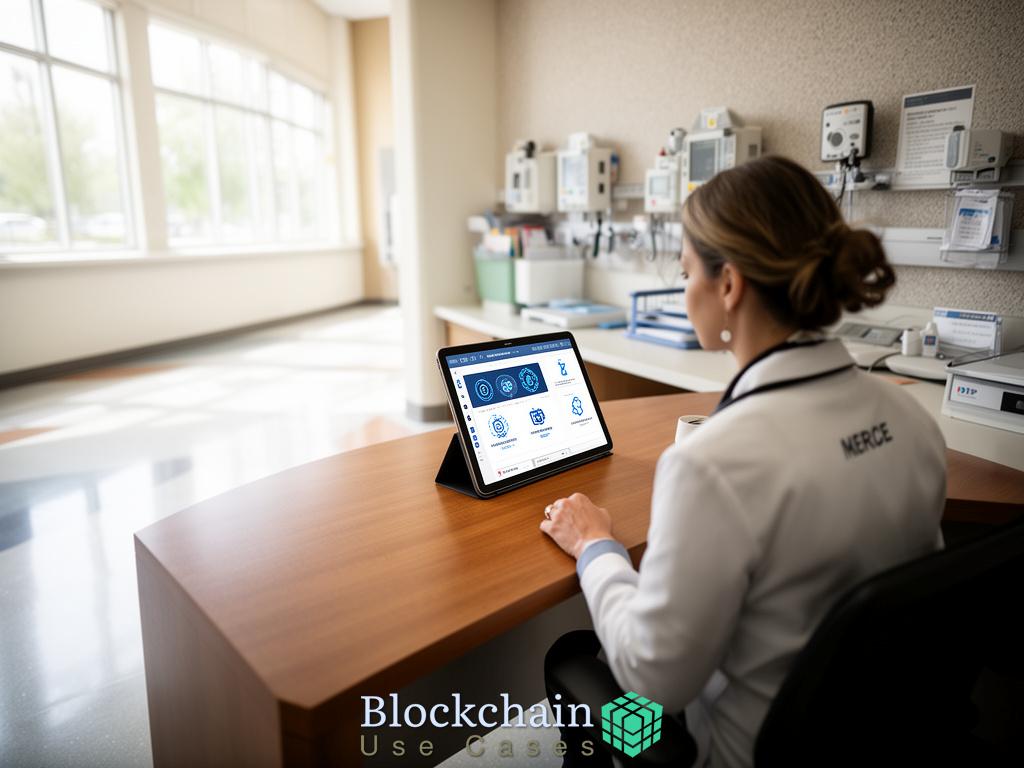
In the traditional data management model, health records are often locked in centralized systems managed by limited administrative personnel. This setup can delay critical decisions in real-time scenarios. A blockchain-based approach rectifies this issue by enabling authorized personnel to access verified data directly from a distributed ledger. Each access request is authenticated via digital identities, reducing bureaucratic hurdles while maintaining absolute traceability.
For instance, school nurses, counselors, and healthcare partners can have tiered access rights, allowing them to retrieve only the necessary information relevant to their responsibilities. In this model, data accessibility is not just faster — it is contextual and compliant, giving staff the confidence to make data-driven health decisions without compromising privacy.
Integrating Smart Workflows for Efficient Record Management
The integration of smart contracts within blockchain architecture introduces automation to once-manual health data workflows. These digital agreements streamline multiple administrative tasks, from verifying immunization compliance to updating chronic condition records. The result is an ecosystem where time-consuming procedures are replaced with real-time validation and secure updates.
A school can, for example, automate health record updates after a certified practitioner logs new data into the system. The blockchain automatically records the event, timestamps it, and notifies relevant stakeholders — all without human intervention. This automation not only improves accuracy but also minimizes the potential for delays and errors that often result from manual data processing.
Comparison of Record Management Efficiency in Blockchain vs. Traditional Systems
| Aspect | Traditional Health Record Systems | Blockchain-Based Management |
|---|---|---|
| Data Updates | Manual entry with possible duplication | Automated and verified through smart contracts |
| Access Permissions | Controlled by administrators | Dynamic, rule-based access validation |
| Audit Trails | Limited visibility into historical changes | Immutable records with traceable history |
| Response Time | Dependent on staff availability | Instantaneous through decentralized verification |
Building a Connected Health Data Ecosystem
Perhaps one of blockchain’s most promising contributions lies in fostering interconnected health data ecosystems. Schools are no longer isolated information silos but vital nodes within larger community health networks. When blockchain bridges school systems with local healthcare providers and parental consent management tools, communication becomes seamless while accountability remains intact.
This interconnected model ensures that whenever a student transfers between districts or receives specialized care, their verified health history follows automatically — reducing paperwork and ensuring uninterrupted care. Beyond technological innovation, it signifies a transformative shift in how educational institutions engage in proactive health management, powered by transparency, trust, and collaboration.
Key Takeaways of Blockchain-Driven Accessibility
- Empowers authorized users with instant yet secure record access.
- Automates compliance checks and health data updates.
- Eliminates redundant paperwork during inter-institutional collaboration.
- Strengthens data integrity through immutable audit trails.
- Facilitates responsive action in student health emergencies.
Integration of Blockchain with Existing School Health Systems
As educational institutions advance toward digital maturity, the integration of blockchain technology with existing school health systems emerges as a transformative step in achieving secure, efficient, and compliant data management. The challenge for many schools is balancing technological innovation with compatibility — ensuring that legacy systems can interoperate with blockchain frameworks without disrupting daily operations. This evolution is not simply about adopting new tools, but about constructing a unified, transparent, and student-centered health management ecosystem that ensures integrity and agility in every data transaction.
Bridging Blockchain with Legacy Health Data Infrastructure
One of the most critical considerations when integrating blockchain into school health services is the harmonization between existing electronic health record (EHR) databases and decentralized ledgers. Schools that have invested heavily in administrative and health tracking platforms cannot afford to start from scratch. Instead, blockchain can function as a validation and verification layer that secures existing datasets without requiring complete system replacement. Through the use of APIs and interoperability protocols, blockchain connects seamlessly to current record systems, adding cryptographic proof and access control while preserving their operational continuity.
This layered approach not only ensures that previously stored health data remains functional but also enhances its reliability. Any record update, such as vaccination status or new medical conditions, is time-stamped and stored immutably on the blockchain, creating a verifiable health event history. The integration establishes a trust-based bridge between health providers, educators, and parents, where each stakeholder interacts with accurate data in real time. It ultimately minimizes redundancy, prevents data manipulation, and empowers institutions to adopt modern compliance mechanisms without discarding existing information assets.
Smart Interoperability and Future-Ready Health Data Architecture
The success of blockchain integration depends heavily on how efficiently it interacts with multiple digital health applications. The introduction of smart interoperability frameworks allows blockchain-enabled systems to communicate across varied platforms while maintaining confidentiality and performance. This is particularly advantageous for schools that coordinate health initiatives with external clinics, insurance systems, or regional health authorities. Blockchain technology can automate the secure exchange of validated information across these networks by leveraging digital identity tokens and smart contracts that uphold governance rules automatically.
Importantly, this integration transforms school health management from a static data repository into an adaptive intelligence network. It gives administrators the tools to manage student wellness data proactively, enabling predictive insights for public health monitoring while preserving anonymized privacy structures. By standardizing verification and security practices across connected systems, blockchain contributes to long-term sustainability — offering schools not just enhanced security but also operational foresight for evolving digital requirements.
Empowering Schools for a Transparent and Scalable Digital Health Future
Integrating blockchain with existing school health systems extends beyond technical capabilities; it is about shaping a transparent, scalable, and ethically grounded digital health ecosystem. Schools gain not only better control over who accesses student medical information, but also the assurance that the information remains authentic and unaltered at any point. This fosters institutional trust and regulatory compliance, while simplifying audits and reducing dependency on paper-based trails.
Moreover, as education boards and health authorities explore cross-platform data exchange standards, blockchain integration positions schools at the forefront of digital health transformation. The convergence of these technologies strengthens emergency response efficiency, supports inter-school health collaboration, and drives inclusivity through equitable access to accurate data. It is this harmony between innovation and continuity that will define the next generation of school health management — a future where blockchain does not replace systems, but intelligently amplifies their functionality to meet the growing expectations of privacy, efficiency, and accountability.
Ensuring Compliance with Health and Education Regulations
As schools embrace digital transformation in managing student health data, ensuring regulatory compliance with education and healthcare standards becomes a top priority. The integration of blockchain technology provides not only superior data protection but also a reliable framework to demonstrate adherence to complex legal requirements. From privacy laws like GDPR and HIPAA to local educational regulations governing student wellness documentation, blockchain creates an immutable layer of accountability that simplifies compliance verification and auditability.
Strengthening Legal and Ethical Accountability
Educational institutions operating within multi-layered governance structures often face challenges in maintaining consistent adherence to both health and education mandates. Traditional systems rely on manual record audits and discretionary access permissions that are not only prone to error but also lack transparency. Blockchain’s immutable ledger resolves these weaknesses by generating verifiable proof of every interaction with a student’s health record. Each data update, external query, or permission grant is automatically logged as an irreversible transaction, aligning system functionality with legal accountability requirements. This transparent traceability ensures that institutions can confidently respond to regulatory audits, demonstrating concrete compliance evidence rather than relying on administrative reports alone.
Moreover, the technology supports structured consent management that respects individual data rights. Students, parents, and guardians maintain control over how and when information is shared within defined legal boundaries. Such flexibility is critical when meeting obligations under varying national and international data protection frameworks. By embedding consent validation directly within smart contracts, blockchain guarantees that every access event aligns with established privacy policies — providing assurance that ethical standards and compliance protocols are enforced automatically rather than administratively.
Automating Compliance Workflows for Sustained Governance
Beyond ensuring secure recordkeeping, blockchain enables institutions to adopt a proactive approach to regulatory compliance. Through integrated smart contracts, routine compliance checks can be automated — eliminating redundant manual oversight. For example, when a student health record is updated, the system can instantly verify whether the new information complies with the most recent policy requirements and, if necessary, trigger alerts for review. This automation not only streamlines internal workflows but also prevents human errors that typically lead to compliance violations. It effectively transforms the compliance paradigm from reactive to predictive governance, where irregularities are addressed before they evolve into systemic risks.
Furthermore, blockchain’s inherent interoperability allows schools to coordinate compliance efforts across multiple health and education systems. When data flows between a school’s health records, state education boards, and healthcare providers, blockchain validation mechanisms ensure uniform data integrity and regulation alignment across platforms. This capability is crucial in environments where data must comply simultaneously with both academic policies and public health standards. By standardizing verification processes, the network not only enhances transparency but also accelerates compliance reporting cycles, freeing administrators to focus on student care and institutional improvement rather than extensive paperwork.
Building a Trust-Centered Compliance Ecosystem
The long-term advantage of blockchain lies in cultivating an ecosystem of trust supported by verifiable compliance architecture. As education authorities and healthcare bodies increasingly demand cross-platform reporting, blockchain provides the foundational infrastructure for shared oversight without compromising security. Schools leveraging blockchain gain the ability to prove compliance in real-time — not merely as a regulatory obligation but as a reflection of operational excellence and ethical stewardship.
Through this dynamic integration of transparency, automation, and governance, blockchain redefines how compliance is understood in school health data management. It positions educational institutions at the forefront of digital accountability, ensuring that student wellbeing is protected with both technological precision and moral responsibility. By merging privacy assurance with operational efficiency, blockchain paves the way for a future where regulatory compliance is not a constraint but a catalyst for innovation and trust in education-driven healthcare.
Future Prospects of Blockchain in Student Health Data Governance
The integration of blockchain into school health systems has already initiated a paradigm shift in how educational institutions manage, protect, and exchange sensitive medical information. However, while current implementations focus on improving interoperability and compliance, the next evolution of blockchain in student health data governance will redefine the entire governance landscape. This emerging phase goes beyond data storage — it envisions predictive health analytics, decentralized oversight, and augmented trust frameworks that empower both institutions and individuals.
Transforming Decentralized Governance into Predictive Intelligence
The evolution of blockchain in educational health management is steering toward a model that anticipates health requirements through predictive governance structures. Instead of merely recording health events, these decentralized systems will apply data-driven insights to forecast potential wellness trends within student populations. By merging blockchain-secured anonymized data with artificial intelligence and machine learning algorithms, schools could detect early indicators of widespread conditions such as seasonal flu outbreaks or nutrition deficiencies.
In this futuristic ecosystem, blockchain’s transparency ensures that the data feeding predictive systems remains authentic and tamper-proof. This credibility enables policymakers and administrators to make real-time, informed decisions without infringing upon individual privacy. Through distributed consensus mechanisms, policy changes and health initiatives can be validated collaboratively, creating an inclusive decision-making model that upholds both medical accuracy and ethical responsibility. This aligns closely with the growing demand for technology that not only protects data but also delivers meaningful, proactive health insights.
To understand the shift toward predictive and participatory governance, the following comparison provides insight into evolving operational dynamics:
| Governance Aspect | Current Blockchain Adoption | Future Predictive Governance Model |
|---|---|---|
| Data Utilization | Secure storage and compliance tracking | AI-enhanced prediction and preventive analysis |
| Decision Authority | Centralized administrative validation | Distributed consensus-driven approval networks |
| Transparency | Static audit trails | Dynamic, real-time verification layers |
| Policy Adaptation | Manual updates via institutional review | Automated policy execution through smart governance contracts |
Building an Ethical and Sustainable Governance Framework
As blockchain becomes the cornerstone of digital health infrastructure in education, the ethical dimension of future governance models will gain paramount importance. Beyond compliance, schools will need frameworks that define how ownership, consent, and anonymization interact within decentralized networks. The focus will move toward enabling students and parents to hold verifiable control over their digital health identity — a principle grounded in data sovereignty. Future blockchain ecosystems will support modular permissions, allowing individuals to selectively disclose medical details depending on the scenario, such as vaccination proof during enrollment or emergency response coordination.
Moreover, emerging global standards for cross-border student health data exchange will require interoperability among diverse blockchain protocols. Schools operating across districts or multinational education networks must ensure seamless interaction between local governance systems and international policy layers. Blockchain’s cryptographic architecture and programmable compliance features are expected to play a decisive role in achieving this balance — facilitating secure communication while maintaining ethical transparency.
Another pivotal advancement will involve integrating environmental sustainability into blockchain-based governance. Future solutions will favor energy-efficient consensus mechanisms like Proof of Authority and hybrid validation models, ensuring that enhanced security and ethical transparency do not come at the expense of ecological responsibility. This forward-thinking approach underscores how blockchain’s governance potential extends far beyond security, shaping institutions that are both digitally and morally sustainable.
The horizon for blockchain in student health data governance is undoubtedly transformative. As it evolves from a protective tool into a proactive, intelligent, and ethically bound governance framework, educational institutions will be equipped not only to manage health services more efficiently but also to foster a culture of trust, foresight, and responsibility across the learning ecosystem.