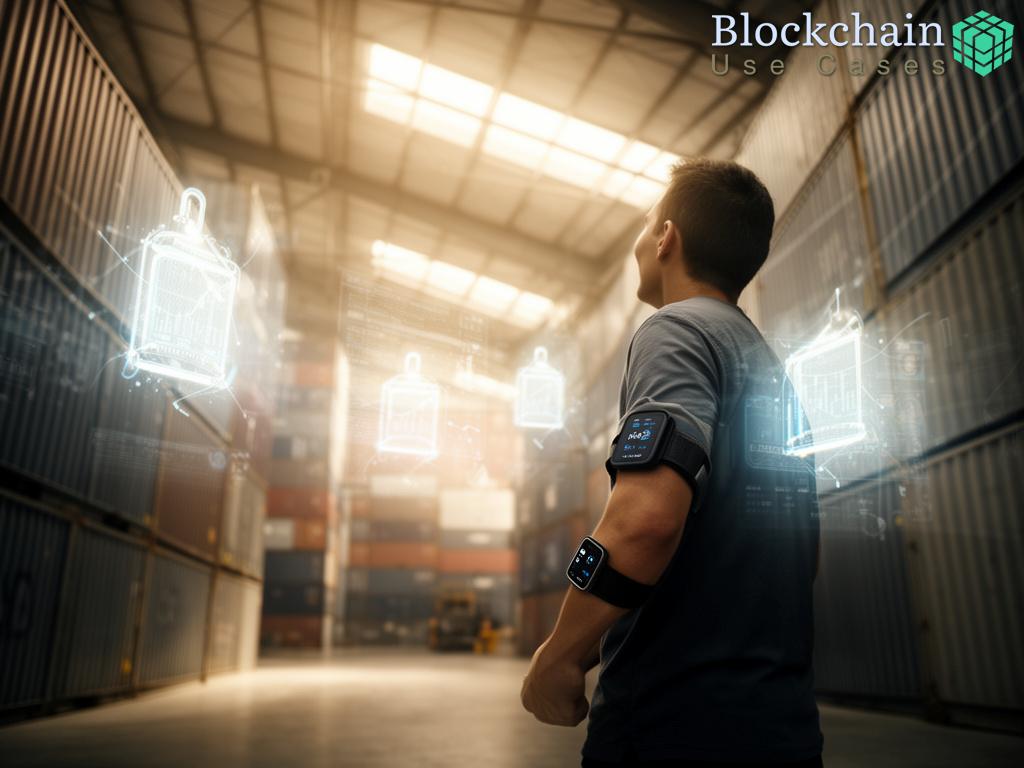

Integrating Digital Twins into Supply Chain Networks
As the global economy becomes increasingly interconnected, supply chains face growing challenges related to transparency, responsiveness, and resilience. The integration of digital twins into decentralized supply chain simulations is redefining how organizations forecast demand, manage logistics, and minimize disruptions. By creating virtual replicas of assets, logistics nodes, and entire supply ecosystems, enterprises are entering a new era of strategic decision-making informed by real-time data.
The concept of a digital twin— a virtual counterpart to a physical system— has evolved from manufacturing environments to complex global supply networks. These dynamic models enable supply chain managers to visualize interdependencies, test assumptions, and assess potential bottlenecks before they occur in the real world. This virtual testing ground reduces operational risk, improves cost efficiency, and provides a unique level of predictive insight.

One of the key breakthroughs comes from combining digital twins with decentralized simulation frameworks. This pairing allows every participant in a supply chain— from suppliers to end distributors— to operate with synchronized real-time data while retaining autonomy over proprietary information. It is a crucial advancement in ensuring trust, scalability, and data security in collaborative industrial ecosystems.
Unlike conventional supply chain management, which often relies on static models and delayed reporting, digital twin-enhanced networks continuously learn and adapt. The comparison below illustrates how this transformation elevates operational agility, transparency, and reliability.
| Aspect | Traditional Supply Chain | Digital Twin-Integrated Supply Chain |
|---|---|---|
| Data Flow | Linear and often siloed | Real-time and interconnected via decentralized networks |
| Predictive Capabilities | Limited, based on past data | Highly predictive using AI-driven simulations |
| Risk Management | Reactive | Proactive with scenario-based planning |
| Transparency | Restricted to visible segments | End-to-end visibility across the entire network |
Integrating digital twins into supply chain networks requires careful planning, technological alignment, and organizational readiness. Companies pursuing this transformation should focus on foundational steps that ensure both scalability and security in a multi-stakeholder environment. Below is a structured list highlighting practical steps organizations can take to initiate their digital twin journey.
Key Implementation Steps
- Data Integration: Establish a common digital infrastructure capable of aggregating data from sensors, ERP systems, and IoT devices into the twin model.
- Simulation Calibration: Configure simulation algorithms based on actual operational dynamics to ensure accuracy in predictions.
- Blockchain Integration: Apply decentralized ledger technology to maintain transparency and trust among supply chain partners.
- AI and Machine Learning: Utilize advanced analytics to detect patterns, optimize logistics decisions, and automate responses to disruptions.
- Continuous Feedback Loops: Regularly synchronize physical processes with their digital counterparts to maintain real-time alignment and performance optimization.
As digital twin adoption accelerates, industry leaders are reporting measurable gains in efficiency, resilience, and sustainability. The ability to simulate entire supply ecosystems before implementing changes provides a decisive competitive edge. In the coming years, these intelligent, decentralized networks will likely serve as the backbone of the next generation of global trade.
Decentralization for Real-Time Visibility and Resilience
As global markets evolve under unpredictable economic conditions, the demand for transparency, adaptability, and collaboration within supply chain networks has never been greater. Decentralized simulation models powered by digital twins are emerging as powerful enablers of these advancements. By distributing data ownership and processing across participating entities, organizations can achieve synchronized decision-making without compromising privacy or operational integrity. This decentralized approach redefines the traditional supply chain, transforming it into a dynamic, intelligent ecosystem capable of anticipating and responding to disruptions in real time.
The strength of decentralization lies in its ability to eliminate single points of failure. When integrated with digital twin technologies, each node in the supply chain acts as both an autonomous decision-maker and a contributor to the collective intelligence of the network. This cooperative framework not only boosts efficiency but also ensures consistent performance during crises such as transportation delays, demand fluctuations, or raw material shortages. Instead of relying on hierarchical control systems, decentralized architectures enable every stakeholder to simulate contingencies, validate outcomes, and execute optimized strategies almost instantaneously.
Through the use of distributed ledgers and peer-to-peer communication channels, enterprises can ensure that data remains verifiable and tamper-proof while maintaining seamless information flow. This strengthens both operational transparency and trust among supply chain partners—critical components for building resilient, future-ready business ecosystems.
One of the most transformative aspects of decentralized digital twin implementation is its impact on visibility and accountability. Traditional systems often struggle to deliver synchronized updates due to data silos and delayed reporting cycles. In contrast, decentralized simulations offer a panoramic, real-time view of interconnected processes across sourcing, production, logistics, and distribution. As updates from each node are reflected instantly in the shared simulation environment, decision-makers gain a continuous, data-driven understanding of the network’s health.
This holistic oversight is particularly valuable when forecasting ripple effects from disruptions. For instance, a port closure or supplier delay immediately triggers automatic recalculations across the network, enabling proactive re-routing or alternate sourcing decisions before a crisis escalates. The resulting agility significantly diminishes downtime and keeps operations running with precision and confidence.
Key Advantages of Decentralized Simulation-Driven Visibility
- Autonomous Data Management: Each stakeholder controls its own dataset, preventing centralized vulnerabilities and ensuring regulatory compliance.
- Instantaneous Updates: Changes in one node propagate across the network, maintaining real-time accuracy in digital twin representations.
- Enhanced Predictive Power: AI-enhanced analytics continuously refine simulations for more reliable forecasting and scenario planning.
- Shared Accountability: Transparent data exchanges create a trustworthy operational environment across the entire value chain.
While centralized systems offer structured oversight, they often struggle with latency and scalability issues. In decentralized digital twin frameworks, the intelligence is distributed—enabling faster responses and adaptive optimization. The contrast below illustrates how this transformation enhances operational performance and resilience across complex ecosystems.
| Planning Model | Data Ownership | Decision-Making Speed | Resilience to Disruption | Scalability |
|---|---|---|---|---|
| Centralized | Held by a single controlling entity | Slower due to data bottlenecks | Moderate; dependent on central authority | Limited by system infrastructure |
| Decentralized | Shared across trusted participants | Rapid, node-level execution | High; self-adjusting network behavior | Expands dynamically with participants |
By enabling every participant to contribute to the collective intelligence of the system, decentralized supply chain simulations are not simply a technological evolution—they represent a paradigm shift toward transparent, adaptive, and resilient commerce. As enterprises continue to navigate global uncertainties, these distributed models will become instrumental in establishing sustainable advantage and operational foresight.
Data Interoperability and Security in Simulated Environments
As supply chains diversify and expand across geographies, the exchange of data between digital twins and decentralized systems becomes a critical determinant of efficiency and resilience. The challenge lies not only in facilitating seamless interoperability among diverse digital ecosystems but also in maintaining the security and integrity of sensitive operational data. In decentralized simulation-driven environments, where thousands of digital entities interact simultaneously, ensuring both trust and fluid connectivity has become a defining priority for modern enterprises.
The strength of decentralized simulations lies in their ability to process real-time information across multiple stakeholders without compromising autonomy. However, this distributed nature also introduces greater vulnerability to cyber threats, unauthorized data access, and synchronization errors. To counter these risks, organizations are adopting end-to-end encryption protocols and zero-trust architectures that validate every interaction within the digital twin ecosystem. Every transaction, whether it involves logistics data, inventory updates, or supplier communications, must be verifiable, immutable, and traceable. This layered approach transforms decentralized ecosystems into robust digital environments where data security is intrinsic rather than retrofitted.
Beyond encryption, intelligent identity management systems are being used to establish trust-based access controls. These solutions dynamically adapt authorization levels based on contextual analytics and predefined risk thresholds, ensuring that sensitive supply chain information remains under secure digital custody. As industries increasingly rely on AI and machine learning for autonomous decision-making, the safeguarding of data sets powering these models becomes an indispensable component of overall cyber resilience.
Across global industries, digital twins are often deployed using varied platforms, standards, and communication protocols. This diversity, while enabling flexibility, can also create data fragmentation and compatibility bottlenecks. To achieve true interoperability, enterprises are turning toward open data frameworks and standardized communication schemas that enable frictionless data exchange between digital twin environments. Through the use of distributed APIs and universal metadata descriptors, information flows can be unified without forcing participants to abandon their native systems.
The integration of semantic data models plays a pivotal role in harmonizing the language of digital twins. When supply chain entities—from raw material suppliers to freight operators—operate under a shared interoperable ontology, simulations become not only more accurate but also more predictive. This cohesion allows a decentralized system to assess cascading effects across various supply layers almost instantaneously, enhancing decision-making precision. Furthermore, integrating blockchain-based data governance transforms interoperability into a secure, transparent process, ensuring that data ownership and consent remain under the direct control of contributing entities.
The future of decentralized simulations is rooted in the ethical and transparent use of data. As companies connect digital twins across organizational boundaries, data ethics and governance become intrinsic to sustaining digital trust. Federated intelligence models offer an effective mechanism here: instead of transferring raw data, they allow decentralized nodes to share insights derived from local computations. This preserves data privacy while maintaining the analytical accuracy of collective simulations, enabling a balance between autonomy and collaboration.
Moreover, transparency in algorithmic processes—ensuring stakeholders can audit how data influences predictive outcomes—adds a vital layer of accountability. In such systems, trust is established not only through technology but also through policy frameworks and shared governance principles. Ultimately, the interoperability and security of simulated environments will define how efficiently industries harness digital twins for predictive logistics, risk mitigation, and operational optimization. In the evolving fabric of decentralized supply chain simulations, it is this synergy of trust, transparency, and technical precision that will shape the next wave of intelligent global trade.
Predictive Analytics for Demand and Production Optimization
As global industries pivot toward hyper-connectivity and intelligent automation, the fusion of predictive analytics with digital twin simulations is revolutionizing how supply chains anticipate fluctuations in demand and optimize production dynamics. In a decentralized ecosystem, the integration of these technologies transcends traditional forecasting boundaries, allowing organizations to interpret multifaceted market signals with precision and speed. Companies are no longer reacting to market shifts—they are pre-empting them, leveraging real-time insights generated from autonomous digital simulations distributed across partner networks. This paradigm shift is ushering in a new era of strategic foresight and operational efficiency.
The strength of predictive analytics in a decentralized supply chain lies in its capacity to transform fragmented data into unified intelligence. By aggregating live inputs from IoT sensors, ERP systems, and logistics platforms within digital twin frameworks, enterprises can simulate demand variations under multiple scenarios. Machine learning models continuously refine these simulations, detecting subtle market shifts, supplier constraints, or consumer behavior changes before they materialize. This predictive prowess turns traditionally reactive operations into proactive ecosystems, where production schedules, inventory levels, and distribution routes are dynamically adjusted in real time.
Decentralized simulations also mitigate the latency challenges of centralized forecasting by enabling each node—be it a factory, warehouse, or supplier—to run localized models. These models independently analyze contextual data while feeding predictive insights back into the global digital twin network. As a result, demand-supply imbalances are identified early, and collective decisions can be executed seamlessly without requiring central command. This distributed intelligence ensures that disruptions are contained and opportunities for optimization are seized instantly.
Predictive analytics acts as the synchronization layer connecting digital twins across production and distribution operations. Through constant data feedback, production planning becomes a dynamic process driven by probabilistic scenarios rather than static schedules. When one plant simulates potential delays, other connected nodes automatically evaluate reallocation strategies such as shifting production loads or diversifying supply inputs. The decentralized simulation framework ensures these adjustments occur autonomously and in harmony across the entire network, enhancing both agility and resilience.
For instance, if predictive algorithms signal an impending shortage of critical materials, the digital twin immediately visualizes alternative supplier scenarios, recalculates logistics timelines, and proposes optimal reordering strategies. This not only minimizes downtime but also reduces operational costs through anticipatory planning. Moreover, the transparent, verifiable data exchanged via blockchain-powered networks provides every stakeholder with the confidence that simulation outputs are accurate and trustworthy, reinforcing enterprise accountability.
The distinction between conventional forecasting and decentralized predictive simulation lies in adaptability and depth of insight. While traditional methods rely on linear models and historical averages, predictive simulations merge AI-driven analytics with continuous data feedback to forecast future outcomes under multiple hypothetical conditions. This is especially crucial in volatile global markets where seasonality, supplier variability, and geopolitical factors can alter planning assumptions overnight.
| Forecasting Aspect | Traditional Model | Predictive Simulation Model |
|---|---|---|
| Data Dependency | Relies on historical datasets | Integrates real-time sensor and partner data |
| Response Agility | Reactive, delayed decision cycles | Instant adaptation to emerging signals |
| Model Accuracy | Static, limited context | Dynamic, continuously self-optimized |
| Collaboration Scope | Centralized with restricted data flow | Decentralized with federated insight sharing |
These comparative insights underline why organizations adopting predictive analytics within decentralized digital twin frameworks are achieving superior demand accuracy and production flexibility. The convergence of autonomous intelligence, secure data exchange, and scalable simulation creates an ecosystem where every decision is both data-verified and forward-looking. In the age of global volatility, such predictive precision is not merely an advantage—it is the foundation of sustainable competitiveness in digital supply networks.
Future Outlook: Adaptive Digital Ecosystems in Supply Chain Management
The rapid pace of digital transformation is pushing supply chain management toward an era defined by adaptive, intelligent ecosystems. As enterprises harness decentralized simulations integrated with digital twin technologies, they are setting the stage for a future where supply networks are self-optimizing, context-aware, and deeply interconnected. These systems will not just react to changes—they will evolve alongside them, guided by real-time intelligence and predictive analytics that continuously refine strategic and operational decisions. The convergence of digital twins, blockchain, and artificial intelligence is forming a powerful triad, marking a decisive leap toward autonomous supply chain ecosystems.
In the near future, adaptive supply chains will function as living digital organisms, where every node—from manufacturing plants to distribution centers—communicates seamlessly through decentralized networks. Unlike traditional systems that rely on centralized command structures, these next-generation networks operate through distributed governance, with each digital twin responsible for its localized optimization while contributing insights to the collective. Machine learning models embedded across the ecosystem will continuously learn from each simulation cycle, enhancing accuracy, and enabling automated adjustments to changing market scenarios.
This autonomy will be complemented by intelligence drawn from continuous data fusion. Predictive and prescriptive analytics will work together to anticipate disruptions before they occur, automatically triggering reallocation of resources or modification of supply routes. The ability of systems to independently coordinate these complex decisions signifies the emergence of a new organizational model—one rooted in collaboration, resilience, and shared data ethics.
Decentralized digital ecosystems are not only transforming operational efficiency but also reshaping business models. The future supply chain will likely operate on an intelligence-as-a-service paradigm, where stakeholders exchange insights, rather than raw data, through secure federated architectures. This shift reduces data exposure while increasing cooperation among competitors and partners alike. As dynamic trust layers evolve, blockchain-enabled smart contracts will become the backbone for automated compliance, auditing, and transactional accuracy.
The adaptability of these ecosystems will encourage diversification of production strategies and create opportunities for localized manufacturing supported by global coordination. Digital twins will allow enterprises to simulate environmental and economic trade-offs, leading to more sustainable resource allocation and carbon-efficient logistics models. In essence, these self-adaptive ecosystems embody the balance between technological advancement and responsible innovation.
Key Characteristics of Future-Adaptive Digital Supply Ecosystems
- Autonomous Decision Frameworks: Machine-driven logic enabling near-zero latency in operational response.
- Federated Learning Models: Collaborative analytics ensuring privacy-preserved intelligence sharing.
- Blockchain-Driven Trust: Immutable records guaranteeing transparency and transactional traceability.
- Dynamic Risk Forecasting: AI algorithms identifying and neutralizing volatility before it impacts performance.
- Green Optimization Metrics: Simulation tools calculating environmental impacts to guide sustainable decision-making.
The ultimate evolution of decentralized digital twins lies in their transition from predictive to prescriptive autonomy. In this model, digital replicas do not merely forecast outcomes—they recommend, negotiate, and execute the most efficient strategies without direct human intervention. The integration of quantum computing and advanced AI modeling could further amplify these capabilities, allowing supply networks to process vast datasets at unprecedented speeds and uncover patterns beyond human perception.
Organizations adopting these advanced systems will benefit from agile forecasting, deeper risk visibility, and continuous optimization across every operational tier. Furthermore, global trade ecosystems will witness a reduction in inefficiencies caused by data asymmetry, as shared simulations facilitate cross-border visibility and precision planning. In this context, decentralized digital twin systems represent not merely a technological milestone but a transformative redefinition of how businesses collaborate and compete in a digitized economy.
As the horizon of digital supply chain management expands, one principle remains clear: adaptability will define success. Those enterprises capable of integrating data-driven autonomy, ethical governance, and decentralized intelligence will spearhead a new standard for transparency, resilience, and sustainability in global commerce.